
Reviewed · AUDIO TOURS
Oslo Self Guided Audio Experience
Oslo can be loud. This tour keeps you in control. You get a mobile audio experience for 17 landmark stops, built for pacing yourself through the city’s rail halls, cathedrals, opera architecture, and big public art. It is also cheap enough that you can treat it like a guided briefing, then go free afterward on your own.
What I like most is the architecture-first storytelling at places such as Oslo Central Station and the Norwegian National Opera and Ballet. I also like the flexibility: you can start and finish where you want, choose the order, and stretch it over multiple days with access links that stay live for up to 6 days.
One thing to consider: the audio is not the deepest historical lecture you might hope for. You should expect solid context and symbolism, but not heavy, detail-dense scholarship at every stop.
In This Review
- Key highlights to know before you go
- How the audio tour works without GPS
- Price and value for a $6 Oslo audio ticket
- A smart route through central Oslo, fjord side, and Frogner
- Sentrum start: Oslo Central Station, Tigeren at Jernbanetorget, Oslo Cathedral
- Oslo Central Station, the station that tells a national story
- Tigeren pa Jernbanetorget, why the city has a tiger nickname
- Oslo Cathedral, where baroque meets Norwegian identity
- Fjord culture stretch: Norwegian National Opera, Deichman Bjørvika, Akershus, City Hall
- Norwegian National Opera & Ballet, walk-on architecture
- Deichman Bjørvika, a public library as a design statement
- Akershus Castle and Fortress, medieval walls plus WWII resistance legends
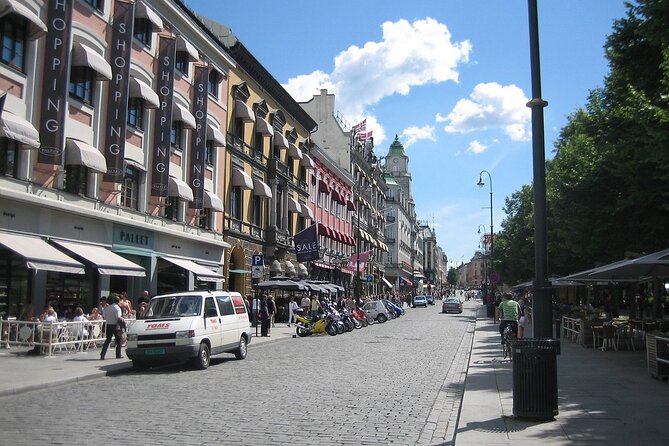
- Karl Johans Gate, a street as Norway’s timeline
- Oslo City Hall, Nobel Peace Prize building with working-story symbolism
- Royal quarter and old churches: Palace Park, St. Olav’s Catholic Cathedral, Old Aker Church
- Aker Brygge, a waterfront rebuilt from shipyard bones
- The Palace Park, democratic access as a design choice
- St. Olav’s Catholic Cathedral, tolerance after centuries of bans
- Old Aker Church, almost a millennium of Oslo on Romanesque stone
- Grunerlokka, Botanical Garden, and Frogner approach: a change of mood
- Grunerlokka, industrial brick turned into a creative district
- Botanical Garden, science and biodiversity, with a side of myth
- Uranienborg Church, red brick, stained glass, and resistance history
- Frogner Park to Vigeland Park: one artist’s emotional city
- Frogner Park, the Vigeland sculpture park logic
- Vigeland Park, gates of life and the Angry Boy moment
- Practical tips so you get the best experience
- Should you book this Oslo Self-Guided Audio Experience?
Key highlights to know before you go
- No GPS dependence. This is an audio tour you steer yourself, using an itinerary map with location popups.
- 17 stops in one playlist. You can commit to the full route or cherry-pick the sights that match your day.
- Free admission listed at most stops. Several major buildings are included without an entry fee, though some interiors cost extra.
- Audio format works in short chunks. Each stop is around 20 minutes, so you can pause, restart, and move on without stressing.
- Strong focus on design and meaning. Expect stories about form, materials, symbols, and wartime roles, not just facts.
How the audio tour works without GPS
This tour is designed for self-guided pacing, not turn-by-turn directions. You are given private access links, one for the full audio playlist and another for an interactive map. The key point is that you will not get handheld navigation like a GPS app. Instead, you use the map to jump to each location’s audio when you are there.
Here is the simple setup you will follow:
- Open the SoundCloud playlist link in your web browser to play each attraction’s audio track.
- Open the Google My Maps link in your web browser, not the Google Maps app, to see headphone icons for each stop.
- When you select a stop on the map, a popup gives you a clickable audio link for that specific location.
To make this smooth, bring fully charged headphones and plan on having internet access. The tour also assumes you have a smartphone, since the “mobile ticket” and links live there.
Timing-wise, the content is built in short segments (about 20 minutes per stop in the audio plan). That matters in Oslo. Even if you only listen to one or two segments, you still get useful context. If you do more, you can build a full half-day or near full day without feeling trapped.
Price and value for a $6 Oslo audio ticket
At $6 per person, this is the kind of purchase that works best when you treat it like a low-cost “orientation plus stories.” You are not paying for transport. You are not paying for an audio device. You are paying for a curated set of explanations that connect major sights.
So what is the actual value?
- You get 17 major locations in one audio playlist and one map, which can save time compared with piecing together apps or reading separate articles.
- Many of the included stops are listed as free for entry at the attraction level, while the tour content still guides you on what to look for inside if you choose to go.
- The audio format lets you stop, listen, and skip. That means you can avoid spending time on sites you do not care about.
Potential disappointment comes from expectations. One review summary highlighted that the information may not feel deep enough for people who want very detailed history everywhere. If you like architecture cues, wartime context, symbolism, and “what am I looking at?” explanations, you will probably be happy. If you want footnoted levels of detail every time, you might feel you move too fast with your ears.
Where the path branches next in Oslo


A smart route through central Oslo, fjord side, and Frogner
Because it is self-guided, you can run this tour like a loop. You can also split it across days. For first-timers, I suggest grouping stops by area so you are not crisscrossing the city for tiny listens.
A practical way to think about the route:
- Start at Oslo Central Station (and the nearby tiger sculpture), then head to Oslo Cathedral.
- Continue toward the Opera and Ballet area and the newer waterfront around Bjørvika and Aker Brygge.
- Work your way to the castle and old-city walk around Akershus, Karl Johans Gate, and the palace gardens.
- Cross into the east-side neighborhood vibe with Grunerlokka, then go up toward Botanical Garden and Frogner.
- Finish with the sculpture sequence at Frogner Park and Vigeland Park.
If you only have 3 hours, pick 5 to 7 stops and skip the rest. If you have 8 to 9 hours, keep listening straight through and add a little time for photos and breaks.
Sentrum start: Oslo Central Station, Tigeren at Jernbanetorget, Oslo Cathedral
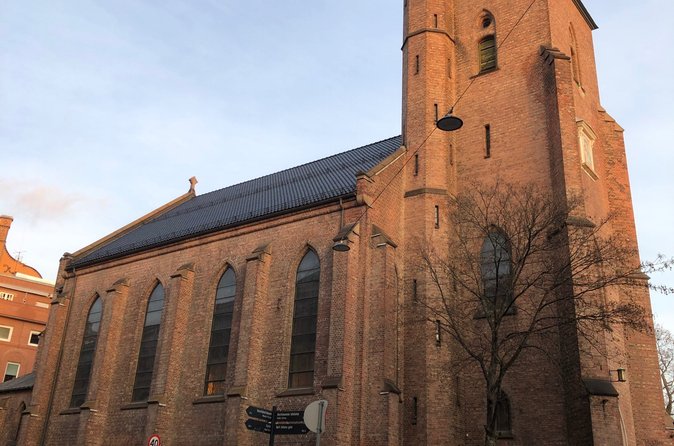
Oslo Central Station, the station that tells a national story
Oslo Central Station is not just a place to catch a train. The audio frames it as a mix of 1854 origins and later redesign, where old grandeur meets modern engineering. You will hear why this station became the heartbeat of Norway’s rail network, and you get wartime story context tied to the building’s importance.
The best part here is what you will notice as you walk:
- Architectural details that are easy to miss when you are focused on platforms.
- The idea of a country showing respect for tradition while building forward.
More routes to read cairn to cairn:
- Oslo To Bergen Self-Guided Full Day Trip with Flåm Railway And Fjord Cruise
★ 4.0 · 69 reviews - Self-Guided 22-Hour Round Trip From Oslo To Sognefjord With Flåm Railway
★ 4.5 · 54 reviews - Oslo Self Guided Walking Tour with an APP
★ 4.5 · 19 reviews - Oslo Viking Quest: Exploration Game and Tour
★ 4.5 · 17 reviews
Tigeren pa Jernbanetorget, why the city has a tiger nickname
Right at Oslo Central Station’s arrival zone, the bronze tiger sculpture (Elena Engelsen) acts as a mental bookmark. The audio explains the nickname Tiger City, linked to a 19th-century poem by Bjørnstjerne Bjørnson, and why Norwegians warmed to a fierce feline that did not originate locally.
This stop is short and that is the point. Use it to reset your attention before you step into the calmer, deeper time layer of the cathedral.
Oslo Cathedral, where baroque meets Norwegian identity
Oslo Cathedral’s story is built around layered reconstructions, starting from the 17th-century foundations. The audio also focuses on hidden symbolism in elements like the pulpit and altar piece, which is exactly what makes this kind of audio tour worth it.
It also brings in WWII occupation context and the cathedral’s significance in royal ceremonies. Even if you are not religious, you can still appreciate how the building keeps showing up in Norway’s major chapters.
Fjord culture stretch: Norwegian National Opera, Deichman Bjørvika, Akershus, City Hall
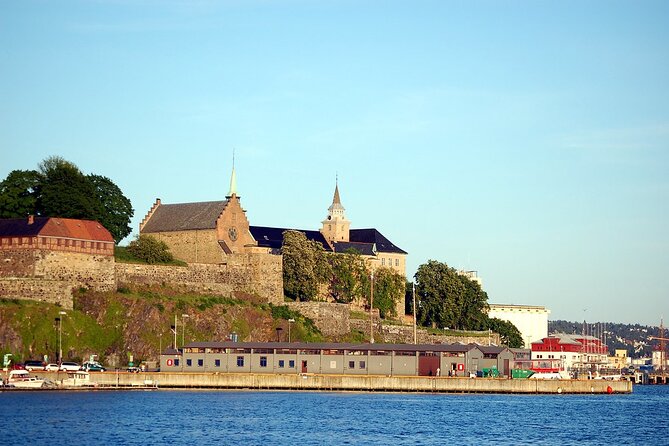
Norwegian National Opera & Ballet, walk-on architecture
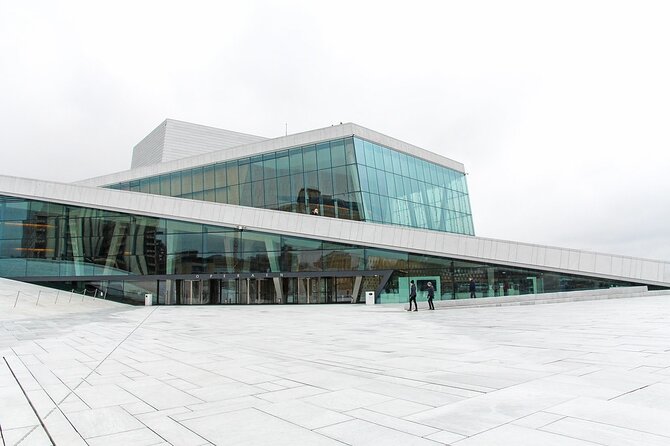
The Norwegian National Opera & Ballet is one of those places where design and public access are part of the point. The audio highlights the Snøhetta design philosophy and explains why this building intentionally blurs the boundary between high culture and public space.
You also get the material and engineering story, including underwater construction challenges and symbolism in the iceberg-like design reference rising out of Oslo Fjord. The audio notes careful selection of the distinctive Italian marble.
Practical heads-up: the audio says indoor tours including backstage and auditoriums require an additional fee. You can still enjoy a lot from the public roof experience, but if you want the inside, plan for that cost.
Deichman Bjørvika, a public library as a design statement
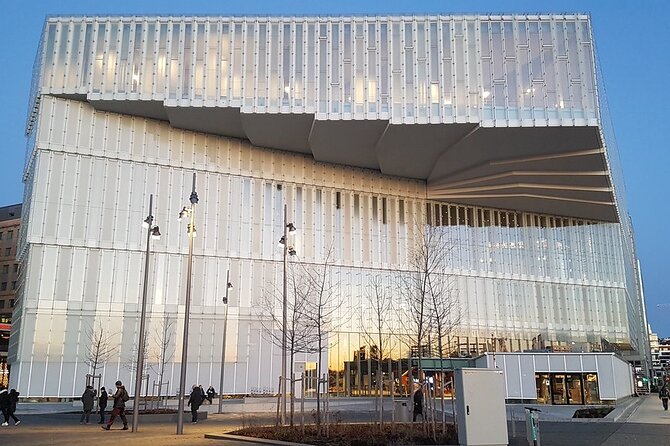
Deichman Bjørvika is a “read the building” kind of stop. The audio explains the transparent design idea as democratic access to information. It also calls out sustainable innovations, including energy-harvesting features, and it mentions the building’s focus on different aspects of human knowledge by floor.
A detail I would not skip is the diagonal lighting concept described as knowledge illuminating the mind. Even if you only glance at it, you will feel how the architecture is trying to guide your attention.
Akershus Castle and Fortress, medieval walls plus WWII resistance legends
Akershus is where the tour shifts from design talk to strategic power. The audio describes the fortress as a stronghold since the 14th century and explains its strategic position controlling sea approaches to Oslo.
What makes this stop memorable in audio form is the combination of:
- Sieges and military innovations across centuries.
- WWII resistance operations said to have been headquartered here.
- The royal mausoleum and the legend of Mantelgeisten, a cloaked spirit patrolling the castle halls.
You should note that there is a fee to enter the interior of Akershus Castle. The tour still includes admission as free at the stop level, so you can walk and listen outside. If interiors matter to you, budget that extra.
Karl Johans Gate, a street as Norway’s timeline
Karl Johans Gate is a long, walkable connector from the Royal Palace area toward the city core. The audio frames it as a street that evolved from a muddy path into Norway’s prestigious address, named after King Karl Johan, who apparently never saw its completion.
The audio also points you toward overlooked building styles, including Neo-classical and Art Nouveau masterpieces. If you like street-level details, this stop rewards you when you slow down and look at façades, not just where you are going.
Oslo City Hall, Nobel Peace Prize building with working-story symbolism
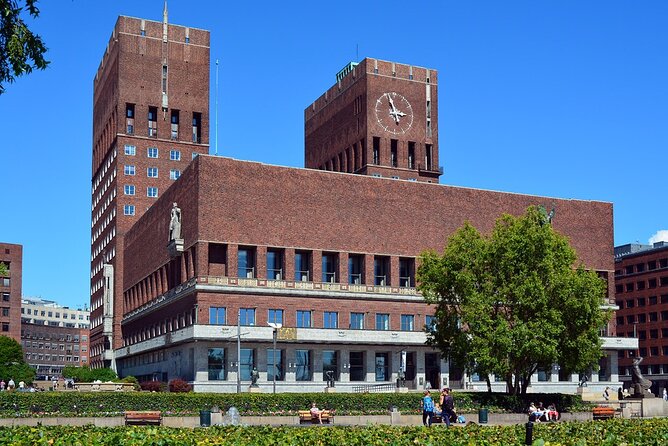
Oslo City Hall is the Nobel Peace Prize site. The audio connects the building’s look to Norway’s shift from monarchy to social democracy, and it points you to murals showing Norwegian history, workers’ rights, and cultural traditions.
Practical detail: the audio explains the astronomical clock and the importance of the Great Hall’s dimensions. It also discusses how the building’s reception was controversial at first, then it became a proud symbol.
The twin towers are described as representing the duality of Norway’s government system. It is the kind of architectural symbolism you would miss if you simply walked past for a quick photo.
Royal quarter and old churches: Palace Park, St. Olav’s Catholic Cathedral, Old Aker Church
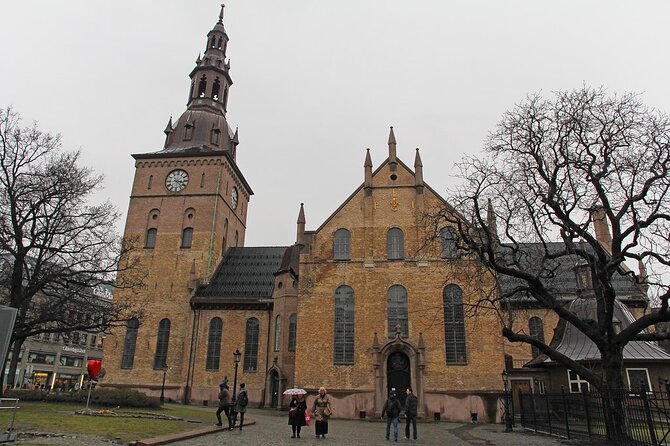
Aker Brygge, a waterfront rebuilt from shipyard bones
Aker Brygge tells the Oslo “reinvention” story. The audio explains how industrial shipyard facilities became valuable real estate and how the area’s transformation changed how Norwegians relate to the waterfront.
You will hear how preserved industrial elements were balanced with modern innovations, and how environmental rehabilitation made it possible. A concept worth remembering is koselig, described as cozy community-friendly public spaces designed to feel good even in winter.
This is a good stop to listen at a slower pace. Sit for a minute, let the audio stories land, then keep walking.
The Palace Park, democratic access as a design choice
The Palace Park audio frames the garden around the Norwegian Royal Palace as a shift from private royal grounds to a public sanctuary. You will learn about hidden monuments, rare tree specimens, and garden design features that even locals might not notice.
A big theme here is that public access reaches right up to the palace steps. The audio connects this to Norway’s democratic values, with an egalitarian message baked into how the grounds are laid out.
St. Olav’s Catholic Cathedral, tolerance after centuries of bans
St. Olav’s Catholic Cathedral is described as a neo-Gothic church telling the story of Catholicism returning to Norway after being banned for centuries. The audio presents it as religious tolerance reborn in a predominantly Lutheran nation.
It also mentions WWII: the church became a sanctuary for refugees, and the clergy played a daring resistance role. If you want one stop that mixes spirituality, architecture, and WWII human stories, this is it.
Old Aker Church, almost a millennium of Oslo on Romanesque stone
Old Aker Church is a “you can feel the age” stop. The audio says it is Oslo’s oldest surviving building, built nearly a millennium ago, with a foundation described as being on former mining shafts.
The tour points out Romanesque austerity and pre-Gothic Norwegian building traditions. You will also hear about runic inscriptions and old stone carvings that puzzle historians, plus the church’s role in the pagan-to-Christian transition. The surrounding cemetery includes graves of prominent Norwegians, adding another layer if you want to linger.
Grunerlokka, Botanical Garden, and Frogner approach: a change of mood
Grunerlokka, industrial brick turned into a creative district
Grunerlokka shifts the vibe. The audio tells a story of a working-class district built around 19th-century industrial revolution housing and brick buildings. Today, those structures are reimagined as creative spaces and trendy apartments, with street art and secret courtyards.
The audio also links the neighborhood to immigration waves and multicultural food influence. It explains the name Grunerlokka via Friedrich Gruner, a businessman whose factories employed much of early modern Oslo. If you want to feel how Oslo grew socially, this is one of the best stops.
Botanical Garden, science and biodiversity, with a side of myth
Oslo’s Botanical Garden is described as a living museum with more than 5,500 plant species, and it also functions as a research facility. The audio emphasizes that Norway treats plants as both public learning and serious science.
The stop highlights:
- An Arctic-Alpine Garden protecting endangered mountain species threatened by climate change.
- A Victorian Palm House with engineering that allows tropical plants to thrive in Scandinavian conditions.
- How plant research connects to cold-resistant crop development.
- Plants used in traditional Norse medicine and mythology.
This is a great choice if you get tired of stone and sculpture and want something slower and more sensory, plus a thinking-person’s nature break.
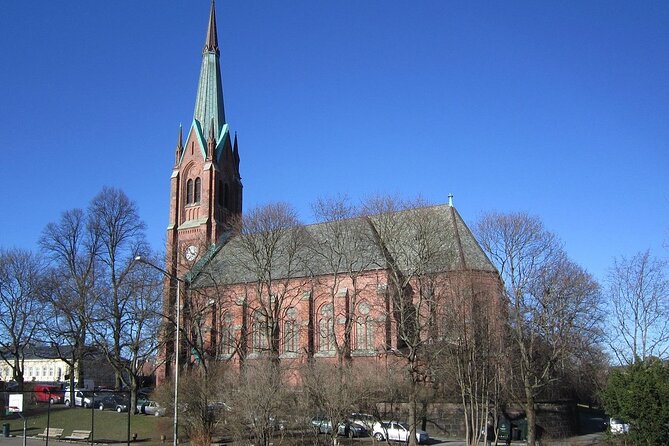
Uranienborg Church, red brick, stained glass, and resistance history
Uranienborg Church is a neo-Gothic landmark in Frogner district, designed by architect Henrik Bull. The audio explains why its distinctive red brick tower is a visual counterpoint to nearby villas, mixing spiritual values with wealth-adjacent surroundings.
You also get the stained glass story and resistance connections during Nazi occupation. The audio mentions wood carvings that include ancient Norse motifs inside Christian iconography, which is a subtle way to see how old and new beliefs were stitched together in the culture.
Frogner Park to Vigeland Park: one artist’s emotional city
Frogner Park, the Vigeland sculpture park logic
Frogner Park is presented as the world’s largest sculpture park dedicated to a single artist, Gustav Vigeland. The audio explains how Vigeland, an industrialist-turned-philanthropist, transformed a former estate into his artistic legacy.
You get a strong focus on how his style developed and why his frank depictions of human forms were revolutionary for the time. The audio highlights technical marvels like the Monolith, carved from a single granite block over 14 years, plus stories about models that inspired specific sculptures.
This stop is not just “look at sculptures.” It is about seeing the human body treated as a universal language.
Vigeland Park, gates of life and the Angry Boy moment
Vigeland Park is described as the crown jewel, with a sculptural storytelling journey. The audio frames it as moving from gates representing life’s beginnings through cycles of human experience.
You will learn about Vigeland’s techniques and why Norway gave him this unprecedented opportunity to build a unified sculptural landscape. The audio calls out the Angry Boy statue as a controversial icon, which is exactly the kind of public art that sparks conversation even when you do not know the details.
The park’s design includes moments meant to provoke both confrontation and contemplation. That matters because it helps you slow down without forcing you to treat every statue as a homework assignment.
Practical tips so you get the best experience
- Decide your vibe before you buy. If you care most about architecture, symbolism, and design, this tour fits well.
- Carry a backup plan for sound. If your phone battery is low or your signal drops, the experience can stall because you need internet access to run the linked audio.
- Listen in chunks. The stops are laid out for short 20-minute segments, so it is smart to match your listening to how long you can comfortably stand and look.
- Skip interiors when you want to stay on budget. The audio notes fees for certain interior experiences at Oslo National Opera and Akershus Castle. You can still get plenty from the outside and public areas.
- Pick fewer stops if you want more depth per stop. Since the main criticism is that the info may not feel deep enough for some people, reducing the number of stops can make the content feel more satisfying.
Should you book this Oslo Self-Guided Audio Experience?
I would book it if you want a low-cost way to understand Oslo’s big landmarks through design and meaning, especially if you like the feel of short, structured audio segments. The map-plus-playlist setup also makes it easy to build your own day without waiting on a group schedule.
Skip or adjust expectations if you want extremely detailed history at every single stop. This tour is best as a guided orientation, not a replacement for a museum-grade lecture.
If you are traveling independently, want control over pacing, and like seeing how buildings and statues tell stories, this is a solid buy for your Oslo day.
Newly marked on the map for Oslo
- Oslo: WWII History Private Walking Tour★ 5.0 · 1 review
- Oslo: All-Inclusive Self-Guided Kayaking & Camping Adventure★ 5.0 · 1 review
- Stand up paddleboard adventure in Leangbukta★ 5.0 · 1 review
- Kayak and Canoe Tour in Lake Bogstad★ 5.0 · 1 review
- Sightseeing Private Tour of Oslo and Viking Ship Museum★ 5.0 · 1 review
- Oslo All Inclusive Private Walking Tour★ 5.0 · 1 review
- 3days tour to Flåm-næroyfjord(or Preikstolen Hiking)-Bergen★ 5.0 · 1 review
- Departure Private Transfer from Oslo City to Oslo Airport OSL by Luxury Van★ 5.0 · 1 review
Audio Tours, compared.

Scenic Fjord Cruise with Audio Guide Commentary
Read our review →
Molde: Atlantic Ocean Road & Varden Audio Guide Bus Tour
Read our review →

Ålesund and Surrounding Islands Audio Guide Tour
Read our review →

Norwegian Coastal Cities: Smartphone Audio Guide App
Read our review →
Bergen in Your Pocket: Landmarks and Lore Audio Tour
Read our review →Browse the lists this tour appears in