
Reviewed · AUDIO TOURS
Akerselva River Meander: A Self-Guided Audio Tour
Oslo changes fast, and the Akerselva makes that shift feel personal. This self-guided smartphone audio tour takes you along a former industrial corridor, now a greenway with bridges, street art by Jussi TwoSeven, Julien de Casablanca, and Anna Woods, and a payoff ending at a cafe by the water. I like that it is flexible, with offline audio you can pause and restart whenever you want.
If there is a drawback, it is the start. A couple of people reported trouble finding the path and even walking without audio when they did not follow the app’s directions, so you’ll want to set up right before you begin and use the in-app navigation if you get turned around.
In This Review
- Key things to know before you press play
- Why the Akerselva river meander is such a smart Oslo walk
- Getting set up with VoiceMap: the 10-minute move that saves the walk
- Start at Vaterland Bridge: your first decision point
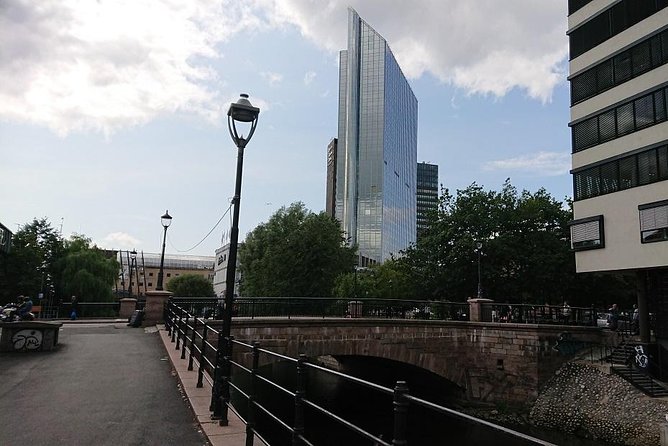
- Ankerbrua and that early river orientation
- The bridges and the uphill reality on the Akerselva
- Street art along the water: where the names matter
- Oslo Spektrum, the Visitor Centre, and Mathallen: useful waypoints
- The waterfall moment: your payoff for pacing yourself
- Ending at Hønse-Lovisas house: cafe time with the river in view
- Price and value: is 7.99 USD a fair trade for a riverside story
- Who this audio walk suits best
- Should you book the Akerselva River Meander audio tour?
- FAQ
- How much does the Akerselva River Meander audio tour cost?
- How long is the audio tour?
- What app do I need to use for the self-guided audio?
- Is the audio available offline?
- Do I need to bring a smartphone and headphones?
- Where does the tour start and end?
- Does the route go upstream or downstream?
- Is the walking route wheelchair-friendly?
- Can I get a refund if I cancel?
Key things to know before you press play
- Self-paced timing: plan for 45 minutes to 2 hours 15 minutes, depending on how often you stop for photos.
- Offline is part of the deal: audio, maps, and geodata work without relying on cell service.
- Akerselva is the spine of the route: the walk follows the river upstream and is about 1.8 miles.
- Street art shows up where you least expect it: international names like Jussi TwoSeven and Anna Woods are part of the scenery.
- You finish at Hønse-Lovisas house: an art gallery and cafe with views as your reward for the walk.
- Wheelchair-friendly, with steep bits: you can do it with a wheelchair, but expect inclines in places.
Why the Akerselva river meander is such a smart Oslo walk
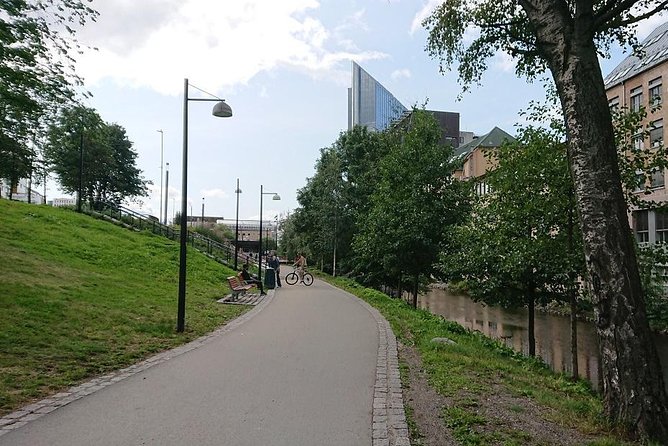
What I love about the Akerselva is how quickly it turns from city to calm. You start in central Oslo and end with that soothing, water-running feeling, even though you are not far from big venues and busy streets.
This audio format also makes the walk feel like a guided stroll without locking you into a group pace. You get a story of how this corridor went from industrial working life to a greener walkway you can actually enjoy, one stop at a time. And because you can pause, you can spend extra minutes looking at street art near the water or just take in the views.
One more practical win: the route passes useful landmarks. You are not just walking into scenery, you are walking toward places like Oslo Visitor Centre and Mathallen Oslo along the way, so you can stitch the audio walk into a bigger day.
Getting set up with VoiceMap: the 10-minute move that saves the walk
You will use your smartphone plus headphones, and the app is VoiceMap. The good news is that the tour includes offline access to audio, maps, and geodata, so you can download before you go and reduce the chance of the audio cutting out.
Before you start walking, do these small things:
- Put your headphones in and make sure the audio is actually playing.
- Check that you can see the correct route in VoiceMap.
- Confirm you can navigate to the start point from where you are standing.
A couple of people had issues finding the path and reported walking without audio when setup did not line up with the route. That is a reminder that the start matters. If you are even slightly unsure, use the navigation tools in the app or contact VoiceMap support right away rather than trying to brute-force the route.
Where the path branches next in Oslo

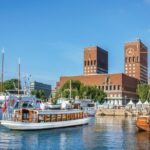
Start at Vaterland Bridge: your first decision point
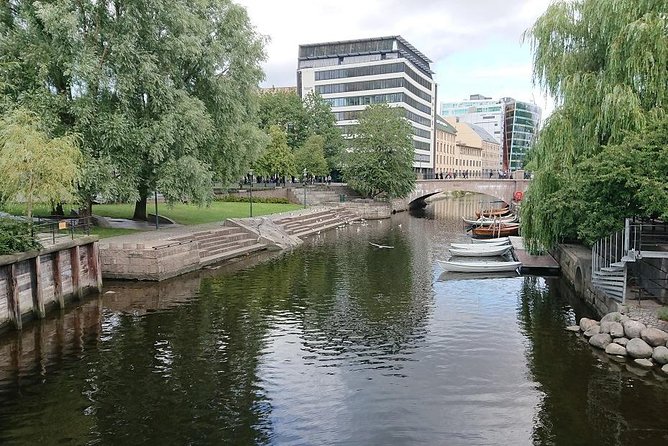
The tour starts at Vaterland Bridge in Grünerløkka, south of Oslo Plaza. This is where you decide how your walk will feel. Go early or mid-morning and you get calmer photo light. Go later and you might enjoy more activity near the attractions along the route.
The start is also on a bridge, and the audio begins with your first connection to the river itself. If you are standing in the right place, the first minute should feel smooth and obvious, because you are already positioned to cross and orient yourself.
Tip from the reality of the route: treat the opening as part of the experience, not a warm-up. Take a moment to confirm you’re in the correct start zone, then press play. It keeps the rest of the walk from turning into guesswork.
Ankerbrua and that early river orientation
One of the first named moments is Ankerbrua. The tour starts on the bridge and then you begin moving along the corridor up the river.
This early segment matters more than it seems. In about a short span, you learn the basic rhythm of the route: cross, follow the water, and keep an eye on where the path shifts. Once you get your bearings, the whole walk becomes easier to manage, especially if you plan to pause for street art or waterfall moments later.
You also get a brief neighborhood stretch where you are not just glued to the water. That is useful because it shows how the river threads through Oslo, not as a separate attraction, but as part of everyday city life.
The bridges and the uphill reality on the Akerselva
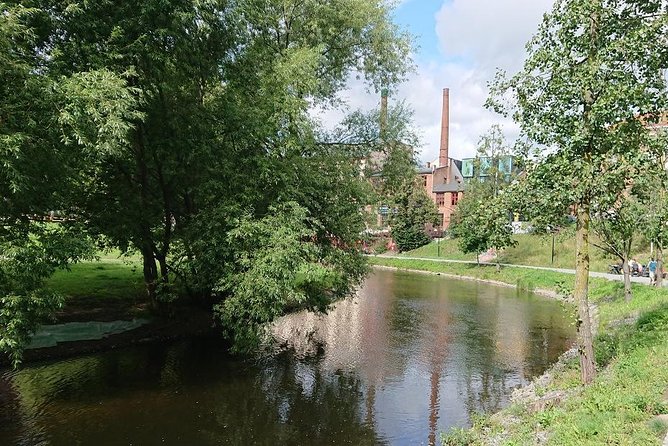
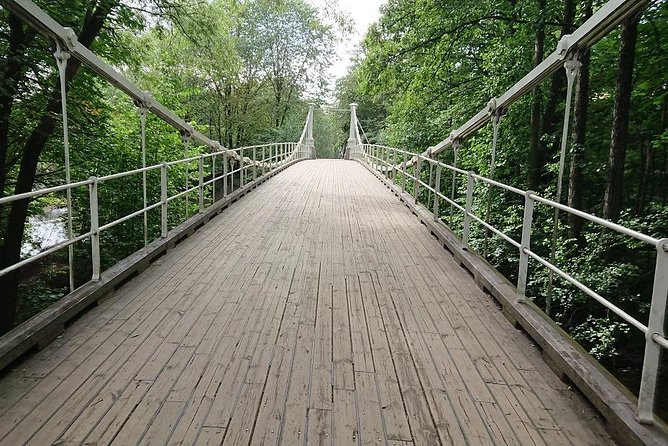
As you move upstream, you will cross over bridges and pass sections that feel more like a working green corridor than a flat park. The walk is about 1.8 miles, and it is wheelchair-friendly in general, but it can be steep in places.
Here is how to plan for that without stressing out:
- If you use a wheelchair, consider choosing a time with good daylight so you can spot inclines clearly.
- If you’re on foot, wear shoes with grip. The route runs near water, and surfaces can be slick when it has rained.
- If you feel the grade, take the audio pauses as your built-in breaks rather than fighting the uphill stretch.
The audio helps because it gives you something to focus on while you climb. Instead of thinking only about your legs, you are listening to how the corridor evolved and what you are seeing as you go.
More routes to read cairn to cairn:
- Oslo To Bergen Self-Guided Full Day Trip with Flåm Railway And Fjord Cruise
★ 4.0 · 69 reviews - Self-Guided 22-Hour Round Trip From Oslo To Sognefjord With Flåm Railway
★ 4.5 · 54 reviews - Oslo Self Guided Walking Tour with an APP
★ 4.5 · 19 reviews - Oslo Viking Quest: Exploration Game and Tour
★ 4.5 · 17 reviews
Street art along the water: where the names matter
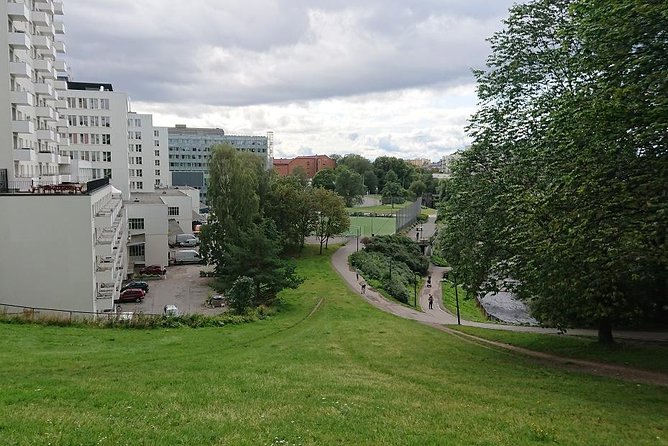
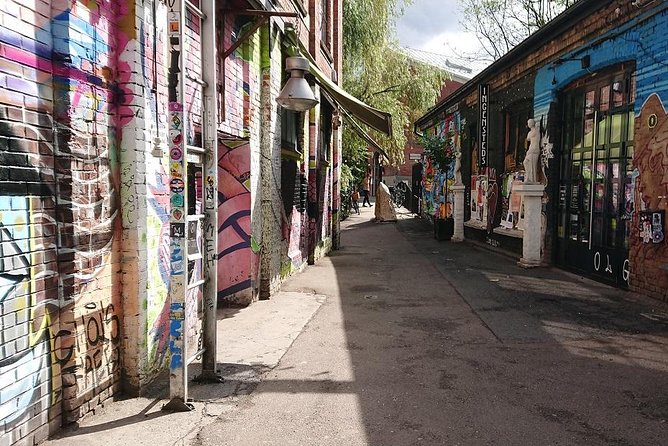
One of the most memorable parts is the river-side street art. As you walk, you can see works by internationally known artists such as Jussi TwoSeven, Julien de Casablanca, and Anna Woods.
What makes this section special is that the art is not stuck in a museum. It is integrated into the way you experience the river: you catch it while moving, you notice textures while looking at the water, and you get that satisfying feeling of seeing contemporary work in a place that also holds older industrial traces.
A practical way to enjoy it: slow down when you see a cluster of pieces. You do not need to sprint to the next audio stop. This is the kind of scenery where 20 extra seconds can turn into a photo you actually like.
Oslo Spektrum, the Visitor Centre, and Mathallen: useful waypoints
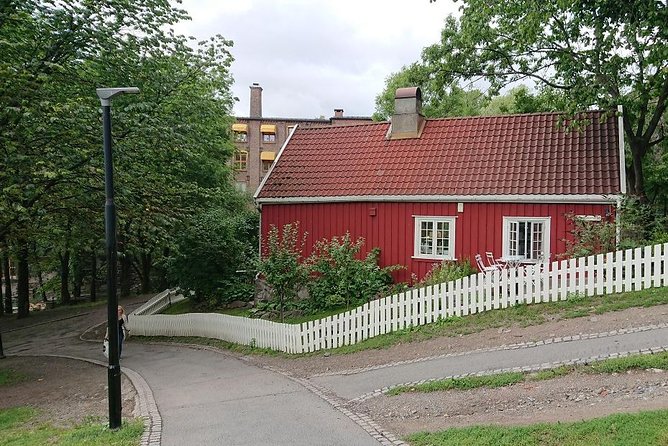
As your route continues, it passes close by to Oslo Spektrum, the Oslo Visitor Centre, and Mathallen Oslo. Even if you do not stop inside any of these places, it helps to know you are not walking in isolation.
If you want an option for food or a quick indoor break, these are the kinds of stops you can connect to with minimal backtracking. That makes the audio walk easier to slot into a day that already includes shopping, a show schedule, or just a market-like pause.
Because the audio is self-guided, you can also decide on the fly. If you want to keep moving, stay focused on the river. If you want a breather, use nearby attractions as your timeout without losing your place.
The waterfall moment: your payoff for pacing yourself
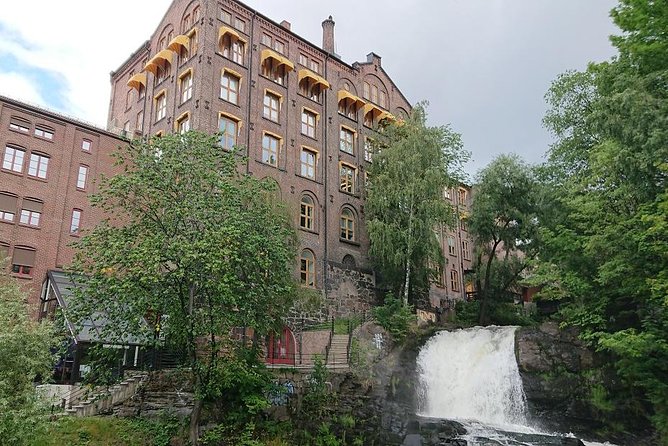
Somewhere along the Akerselva route, the tour brings you past a waterfall. This is your visual reward, the point where the water becomes more dramatic and the walk feels like it is earning your attention.
To enjoy it fully, do not treat it like a quick sighting. Pause, look from the safest viewing area, and give yourself a minute to absorb how the sound changes. Water does not just look different here, it feels different.
This is also a good moment to think about your timing. Your total walk can land anywhere from 45 minutes up to 2 hours 15 minutes. If you want a smooth experience with photos, aiming closer to the longer end is smarter, because the waterfall and street art moments naturally slow you down.
Ending at Hønse-Lovisas house: cafe time with the river in view
The tour ends outside Hønse-Lovisas house, which is an art gallery and cafe on Sandakerveien 2. The idea here is perfect: you finish with a warm stop where you can sit, cool down, and let the river soundtrack linger a bit longer.
In the plan, you reach the end of the audio experience while still in a scenic zone. That matters because it turns the walk into a complete loop, not just a point-to-point route where you are left wandering afterward.
If you are the type who likes to stretch the day, this ending works well. You can grab a drink, browse the gallery space if it is open when you arrive, and decide whether to head back toward downtown or keep exploring the area.
Price and value: is 7.99 USD a fair trade for a riverside story
At $7.99 per person, the cost feels reasonable if you take the walk slow and actually listen. You are paying for a guided narrative delivered in your earbuds, plus offline access to audio and maps that you can reuse thanks to lifetime access in English.
Where the value really shows is how flexible the experience is:
- You can stop whenever you want, including at street art moments.
- You can stretch it out toward the 2 hours range for photos and pauses.
- You can shorten it when you just want the essentials.
If you are hoping for a stop-and-go museum day with tickets included, this is not that. There are no food or museum admissions included. But if you want a walk that teaches you what you are seeing while you exercise, the pricing makes sense.
Who this audio walk suits best
I think this works best for people who like walking at their own pace. You do not need a group rhythm, and the audio format helps you enjoy the corridor even when you are not sure where the story is headed.
It also suits anyone who wants a taste of street art and river scenery in one outing. The route has a built-in mix of bridges, neighborhood sections, waterfall views, and named nearby attractions.
If you have mobility limitations, it is still worth considering. The route is described as wheelchair-friendly, but steep sections exist, so you should plan based on your comfort level and not assume it is flat like a boardwalk.
Should you book the Akerselva River Meander audio tour?
Yes, I would book it if you want an easy, self-paced way to experience Oslo beyond the main highlights. The best parts are the combination of a scenic river corridor, street art by recognizable international names, and a calm finish at Hønse-Lovisas house.
Just do one thing to protect your time: set up your phone and audio before you start, and make sure you are at the correct starting location. If you do that, the tour becomes one of those rare city experiences where you feel like you learned something without feeling like you attended a lecture.
And if you run into trouble finding the path, don’t waste an hour wandering. Use the in-app navigation tools or contact VoiceMap support early, so your walk stays a walk, not a puzzle.
FAQ
How much does the Akerselva River Meander audio tour cost?
It costs $7.99 per person.
How long is the audio tour?
The tour takes about 45 minutes to 2 hours 15 minutes, depending on how long you pause.
What app do I need to use for the self-guided audio?
You’ll use the VoiceMap app on Android or iOS.
Is the audio available offline?
Yes. Offline access is included for audio, maps, and geodata.
Do I need to bring a smartphone and headphones?
Yes. A smartphone and headphones are not included.
Where does the tour start and end?
It starts at Vaterland Bridge in Grünerløkka and ends outside Hønse-Lovisas house on Sandakerveien 2.
Does the route go upstream or downstream?
The route follows the river upstream.
Is the walking route wheelchair-friendly?
It is described as wheelchair-friendly, though it can be steep in places.
Can I get a refund if I cancel?
No. The experience is non-refundable and cannot be changed for any reason.
Newly marked on the map for Oslo
- Oslo Scavenger Hunt and Highlights Self Guided Audio Tour★ 4.5 · 6 reviews
- Oslo easy walk★ 5.0 · 7 reviews
- Oslo: Oslofjord Electric Boat Cookie Cruise★ 3.8 · 7 reviews
- Oslo City Walks: The City of Contrasts★ 3.4 · 7 reviews
- The Oslo Beer Adventure★ 1.9 · 7 reviews
- 7-Day Scenic Scandinavian Tour from Oslo exploring Denmark, Sweden and fjords in Norway★ 4.5 · 7 reviews
- Private Oslofjord Island Hopping Tour★ 4.5 · 8 reviews
- Free Oslo Photo Tour: Iconic & Instagrammable Spots★ 5.0 · 8 reviews
Audio Tours, compared.
Scenic Fjord Cruise with Audio Guide Commentary
Read our review →
Molde: Atlantic Ocean Road & Varden Audio Guide Bus Tour
Read our review →

Ålesund and Surrounding Islands Audio Guide Tour
Read our review →
Norwegian Coastal Cities: Smartphone Audio Guide App
Read our review →
Bergen in Your Pocket: Landmarks and Lore Audio Tour
Read our review →Browse the lists this tour appears in