
Reviewed · VIKING HERITAGE EXPERIENCES
Oslo Viking Quest: Exploration Game and Tour
Puzzle your way through Oslo. This English-language Viking-themed exploration game gives you 11 interactive challenges as you walk between major sights, from the Nobel Peace Center to Akershus Fortress. I especially like the way it keeps you moving and paying attention, because each answer nudges you to look closely at what is right in front of you. I also like the freedom to pause, resume, and start when you want, so it fits real life. One drawback to plan for, the hints can be a little hard to interpret, so you will want patience on a rainy or very cold day.
For the price, $7.20 per person, you are getting a full, self-guided city experience instead of a short photo stop. You’ll use a mobile access code (no physical guide in your group), and your path is designed to teach you Oslo history while you solve the puzzles. The route is flexible enough to make it work for couples, friends, and small groups, since it is a private activity just for your group.
If you have ever felt like standard sightseeing goes too fast, this is a different pace. I like that it is built to stretch how long you stay at each place, and in practice you may finish closer to a few hours if you add side wandering. Still, the game itself is listed at about 1 hour 15 minutes for the main flow, so you can keep it tight if you want.
In This Review
- Key things to know before you start
- How the Oslo Viking Quest works, mobile code and puzzle logic
- Starting at Rådhusgata, then walking Oslo like a game board
- Nobel Peace Center and Oslo City Hall: the puzzles behind peace and power
- Nils Sigurd Aas, Royal Palace, and the University of Oslo: symbols you can actually spot
- Storting and Oslo Cathedral: where national life shows up
- Akershus Fortress and the Resistance Museum: the last leg of the story
- Timing and pacing: how to fit a 1 hour 15 quest into a real day
- Price and value: $7.20 for a self-guided Oslo overview
- Who should do Oslo Viking Quest, and who might skip it
- Quick practical tips before you hit Start
- Should you book the Oslo Viking Quest?
- FAQ
- How long is the Oslo Viking Quest
- What sights will the quest take me to
- Do I need a physical guide
- What language is it offered in
- How do I access the quest
- Can I start the game whenever I want
- How many puzzle challenges are included
- Where do I meet, and where does it end
- Is there free cancellation
- What are the daily operating hours listed
Key things to know before you start
- Self-paced start, no fixed itinerary: begin when it suits you and move at your own pace.
- 11 puzzle challenges: each stage turns a landmark into a question you have to solve.
- Pause and resume anytime: you can step away, warm up, or grab a coffee and come back.
- English, group-only setup: the quest is offered in English and your group is the only one using it.
- Major Oslo highlights in one route: Nobel Peace Center, City Hall, Royal Palace, Storting, Cathedral, and Akershus area.
- You learn by looking around: most answers come from what you notice on site, not from a lecture.
How the Oslo Viking Quest works, mobile code and puzzle logic
This is a mobile quest experience operated by Questo. You do not follow a person, you follow the game. After you book, you get what you need to access the quest on your phone using an access code. Then the app-guided storyline pulls you through a sequence of Oslo landmarks, with you solving a set of challenges to move to the next location.
The format matters because it changes how you see the city. Instead of walking past facades at your usual tourist speed, you slow down just enough to read, observe, and make a connection. The clues are written so you can find answers by looking around at each stop. That is the core of why it works, it turns passive sightseeing into active scanning.
It is also practical in the timing department. The tour is listed at about 1 hour 15 minutes, and it is designed so you can pause and resume anytime. So if you hit a line at a museum you are curious about, or the weather turns, you are not stuck. You can restart the quest from where you left off.
One more detail worth noting: it is private for your group. So you do not have to wait for strangers, and you can keep your pace consistent. That is a real comfort in a city center where everyone else is also trying to fit ten stops into one day.
Starting at Rådhusgata, then walking Oslo like a game board
Your quest starts at Rådhusgata 30B, 0151 Oslo. The end point is at the Scandinavian Star Memorial by Akershusstranda 0150. That start-to-finish setup basically means you are doing a central Oslo to waterfront arc, ending in the Akershus area.
The biggest advantage of this layout is that you do not need complex transit. You can treat it like a scenic walk with landmarks as waypoints. You will likely bounce between civic power, royal symbolism, and national memory, because the stop list is built around exactly those themes.
Also, the operating window listed is Monday through Sunday from 5:00 AM to 9:00 PM. That gives you flexibility if you are planning a full day or you just want a focused morning or afternoon activity.
When you begin, you will essentially be asked to find an answer at each stop to advance to the next location. The game structure feels like a trail, but it does not force you into a rigid schedule. You can start when you want, and then follow the quest from landmark to landmark.
More of the Viking centuries up close:



Nobel Peace Center and Oslo City Hall: the puzzles behind peace and power
The first major stop is the Nobel Peace Center. This place is tied directly to the Nobel Peace Prize and the ideals around war, peace, and conflict resolution. In the quest, you are not just looking at a museum setting, you are searching for clues to answer the challenge and move ahead.
What makes this stage fun is that the center is about big ideas, but your puzzle pushes you to focus on small details. You will walk around to find the information the game needs. That turns the area into an interactive lesson, especially if you like learning through observation more than through reading big plaques from a distance.
Next you move to Oslo City Hall. It is the municipal building for the city council and administration. The current building dates from 1931 to 1950, with a pause during the Second World War. For the puzzle, again, the goal is to look around and find the specific answer that advances you to the next stage.
Here is why I like City Hall in this format. It is a civic building, and the game makes it feel like a living part of Oslo instead of just another landmark you pass by. You end up noticing the building’s story, not only its appearance.
A practical tip at both of these stops: slow down for the first puzzle. Once you understand how the quest tends to word its challenges, the rest usually becomes easier.
Nils Sigurd Aas, Royal Palace, and the University of Oslo: symbols you can actually spot
After City Hall, the quest shifts into three stops that connect art, royalty, and education.
The stop for Nils Sigurd Aas brings you to a person, not just a building. He was a Norwegian sculptor, known for his statue of Haakon VII in the June Seventh Square in Oslo. He also designed Norwegian coins, including the 10-krone and 20-krone coins. In the quest, you look around to find the challenge answer tied to his story.
This is a neat stage because you go from architecture to biography. If you are the kind of traveler who enjoys the human side of monuments, this fits. It also helps you see how culture shows up in everyday objects like currency.
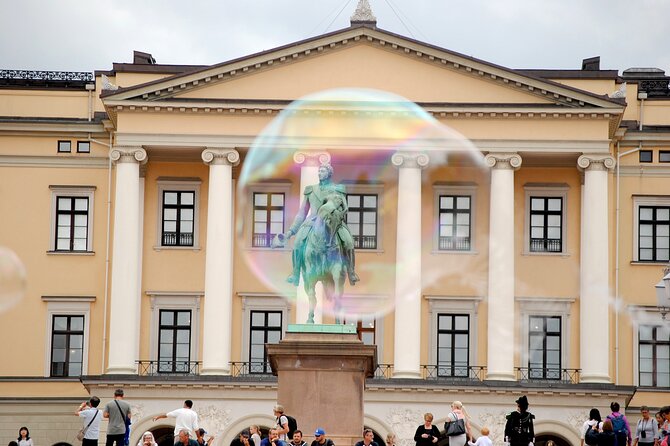
Then you move to the Royal Palace in Oslo. The palace was built in the first half of the 19th century as the residence of King Charles III John of Norway, who was French-born. For your challenge, you will again need to look around and find the correct answer to progress.
The Royal Palace stage often gives people a different kind of satisfaction than museums do. Instead of feeling like you are studying, you feel like you are decoding. The quest encourages you to connect the palace to its origin story.
After that, you visit the University of Oslo. It was named Royal Frederick University until 1939, and it is Norway’s oldest university, located in Oslo. In the game, you hunt for the answer by paying attention to what is visible at the site.
This set of stops makes the quest more than a “see the sights” walk. You are learning how different forces shape Oslo: art, monarchy, and education.
Storting and Oslo Cathedral: where national life shows up
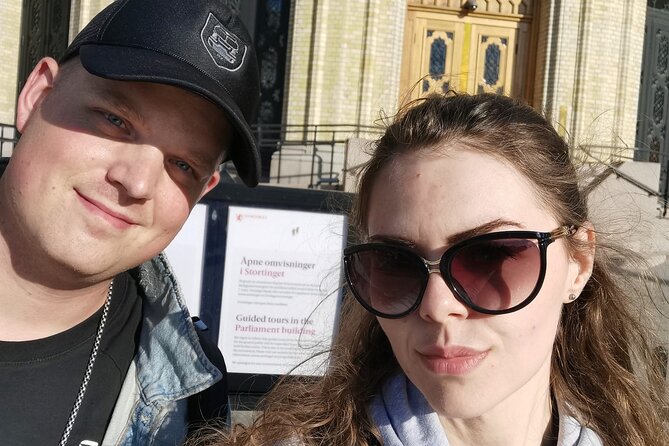
Then the game turns to Norway’s institutions.
The Storting building is the seat of the Storting, Norway’s parliament. It is at 22 Karl Johans gate in central Oslo and was taken into use on 5 March 1866. The building was designed by Swedish architect Emil Victor Langlet. For the quest, the task stays consistent: look around, find the answer, and move to the next location.
This is one of the more satisfying parts of the route if you like how countries organize themselves. You are not reading a textbook. You are standing in the physical setting where decisions happen, and the puzzle makes you search for the precise detail the game asks for.
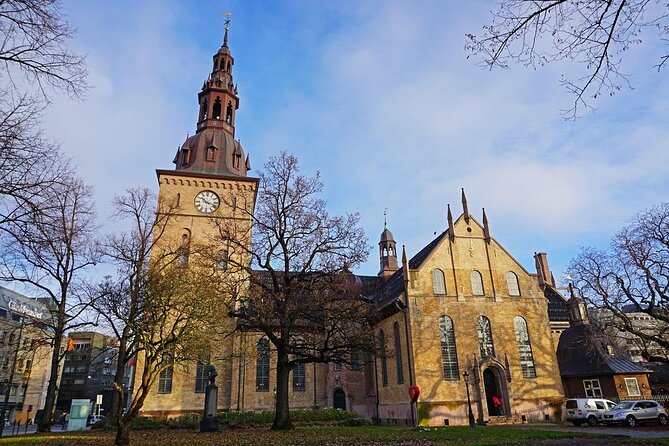
Next is Oslo Cathedral, formerly Our Savior’s Church. The current church dates from 1694 to 1697 and is the main church for the Church of Norway Diocese of Oslo. It is also the parish church for downtown Oslo, and the Norwegian Royal Family and Government use it for public events.
Again, your challenge is built around observation. You look around to find what you need, which is a great way to understand why this building is treated as a key civic and spiritual landmark.
If you are doing this in winter, I suggest planning a quick warm-up break between these two. The puzzle momentum is fun, but you want your brain working when you hit the questions that require careful reading.
More routes to read cairn to cairn:
- Oslo: Scenic Fjord Cruise with Audio Guide Commentary
★ 4.5 · 5,375 reviews - Oslo To Bergen Self-Guided Full Day Trip with Flåm Railway And Fjord Cruise
★ 4.0 · 69 reviews - Self-Guided 22-Hour Round Trip From Oslo To Sognefjord With Flåm Railway
★ 4.5 · 54 reviews - Oslo Self Guided Walking Tour with an APP
★ 4.5 · 19 reviews
Akershus Fortress and the Resistance Museum: the last leg of the story
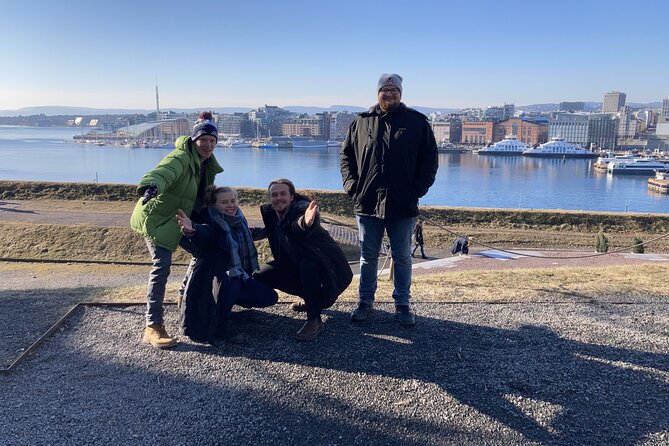
Your final stretch finishes in the Akershus area. The first stop here is Norway’s Resistance Museum, also called the Norwegian Home Front Museum. It focuses on Norwegian resistance during the Nazi occupation from 1940 to 1945. The museum collection includes equipment, photos, and documents from those war years.
In the quest, you still solve the same kind of challenge, look around to find the answer and progress. This can be a heavier tone compared to royal and civic stops, and that contrast is part of why the overall route feels complete. Oslo is not only about who runs things today, it is also about how the country remembers and responds to history.
Then you move to Akershus Fortress, a medieval castle built to protect and serve as a royal residence. You finish this leg by locating the answer needed to complete the challenge sequence.
This ending is smart for two reasons. First, the fortress area is iconic in Oslo. Second, it naturally closes the loop between power and identity. You start with peace ideals, you pass through civic and royal symbolism, and you end with a fortress and wartime memory.
Timing and pacing: how to fit a 1 hour 15 quest into a real day
The quest is listed at about 1 hour 15 minutes, but I would not plan your whole day around the exact number. The puzzle format encourages you to spend time reading and checking details, and it is easy to add extra time if you slow down at any stop.
In practice, I recommend treating 1 hour 15 as the ideal pace for the main route. If you enjoy side exploring, build in extra time. A smoother approach is to do the quest first, then decide on any add-ons near the last stops.
Walking pace matters. Since this is a central Oslo loop, you are likely on foot for multiple stops. Wear shoes you like to walk in, because even if each stage is quick, the total adds up.
Weather matters too. One of the challenges here is not the puzzle itself, it is doing it comfortably in cold or rain. If you get stuck, the key is patience. Take a breath, re-check what the hint is really asking for, and then look again. Many answers are there in plain sight once you know what you are hunting.
Price and value: $7.20 for a self-guided Oslo overview
At $7.20 per person, this is one of those rare-priced city activities that feels practical instead of gimmicky. You are paying for a mobile quest with 11 interactive puzzle challenges, plus an immersive Viking storyline and Oslo history content.
The value comes from three places. First, the content is bundled into a route of major sights, so you are not paying for an experience that only covers one corner of town. Second, there is no physical guide, which keeps the setup simple and flexible. Third, the pause and resume feature is a real asset in a city where weather can change fast.
The major trade-off is that you are doing it yourself. You do not get a person to clarify the tricky clue. If you like learning through the act of looking, that is fine. If you want instant answers, you may find yourself spending extra time.
Still, for many people, the low price is the point. You can try the format without feeling like you need to justify hours of expense, and then you decide if you want more quests later.
Who should do Oslo Viking Quest, and who might skip it
I think this works best for you if you like:
- learning history through observation
- self-guided walking that feels structured but not rigid
- puzzles that nudge you toward famous landmarks you might otherwise skim
It is especially good if you are traveling with people who enjoy a game but still want culture. The format is built to keep attention on the same shared task, which is helpful when everyone has different interests.
You might skip it if:
- you strongly prefer a live guide and Q&A
- you want a calm stroll with zero problem-solving
- you need very clear, step-by-step directions at all times, because the challenges require you to interpret hints while you are out walking
Quick practical tips before you hit Start
These little things make the experience smoother:
- Use a phone battery-friendly plan. You are relying on a mobile access code and the quest on your screen.
- Give yourself an easy buffer in your schedule. The 1 hour 15 timing can stretch if you take time at the landmarks.
- Bring a light layer even in decent weather. You will likely be outside at multiple stops.
- If you get stuck, do the slow approach. Re-read the challenge, then look for the obvious information the landmark is likely to present (names, dates, roles, or featured people).
Should you book the Oslo Viking Quest?
I would book it if you want a low-cost way to see central Oslo with intention. For $7.20, you get a structured route across top landmarks, a Viking storyline, and 11 puzzle challenges that force you to actually notice what you are standing next to.
If your travel style is more about reading a lot and moving fast, this will likely feel rewarding. If you hate puzzles or you are hoping for a guided explanation at each stop, you may find it more frustrating than fun. If that sounds like you, consider a guided option instead.
Bottom line, Oslo Viking Quest is a smart value for travelers who like playful learning and self-paced walking, especially when you have a half day and want the city to feel like an adventure instead of a checklist.
FAQ
How long is the Oslo Viking Quest
The experience is listed at about 1 hour 15 minutes.
What sights will the quest take me to
The quest route includes the Nobel Peace Center, Oslo City Hall, Nils Sigurd Aas, the Royal Palace, the University of Oslo, the Storting building, Oslo Cathedral, Norway’s Resistance Museum, and Akershus Fortress.
Do I need a physical guide
No. It is a private self-guided activity, and there is no physical tour guide included.
What language is it offered in
It is offered in English.
How do I access the quest
You receive a mobile access code for the quest.
Can I start the game whenever I want
Yes. The experience is described as having no fixed itinerary, and you can start when you want.
How many puzzle challenges are included
There are 11 interactive puzzle challenges.
Where do I meet, and where does it end
Start: Rådhusgata 30B, 0151 Oslo. End: Scandinavian Star Memorial, Akershusstranda 0150, Oslo.
Is there free cancellation
Yes. You can cancel for a full refund up to 24 hours before the experience start time.
What are the daily operating hours listed
The listed opening hours are 5:00 AM to 9:00 PM, Monday through Sunday.
Newly marked on the map for Oslo
- Oslo Scavenger Hunt and Highlights Self Guided Audio Tour★ 4.5 · 6 reviews
- Oslo easy walk★ 5.0 · 7 reviews
- Oslo: Oslofjord Electric Boat Cookie Cruise★ 3.8 · 7 reviews
- Oslo City Walks: The City of Contrasts★ 3.4 · 7 reviews
- The Oslo Beer Adventure★ 1.9 · 7 reviews
- 7-Day Scenic Scandinavian Tour from Oslo exploring Denmark, Sweden and fjords in Norway★ 4.5 · 7 reviews
- Private Oslofjord Island Hopping Tour★ 4.5 · 8 reviews
- Free Oslo Photo Tour: Iconic & Instagrammable Spots★ 5.0 · 8 reviews
Viking Heritage Experiences, compared.
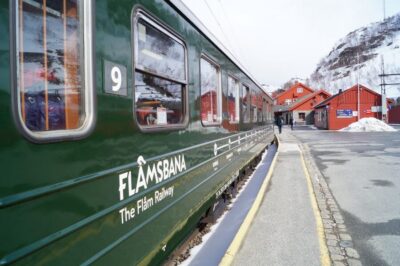
Viking Village, Nærøyfjord Cruise & Flåm Railway
Read our review →

Guided tour – Viking Village, Nærøyfjord Cruise and Flåm Railway
Read our review →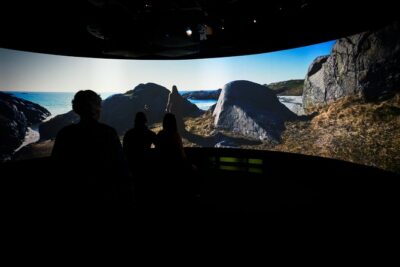
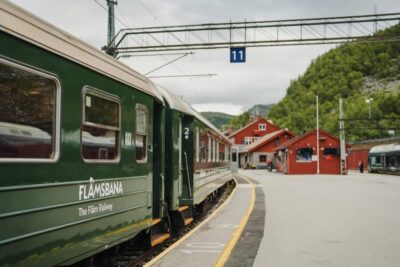
Viking Village, Nærøyfjorden Cruise and Flåm Railway
Read our review →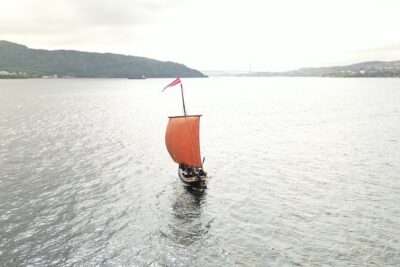
Bergen Fjord Experience Aboard Viking-style Ship
Read our review →
Guided E-Bike Tour in Haugesund: city, vikings, Rising Tides
Read our review →
Haugesund Viking Cruise – The Viking Farm and Viking Planet
Read our review →Browse the lists this tour appears in