
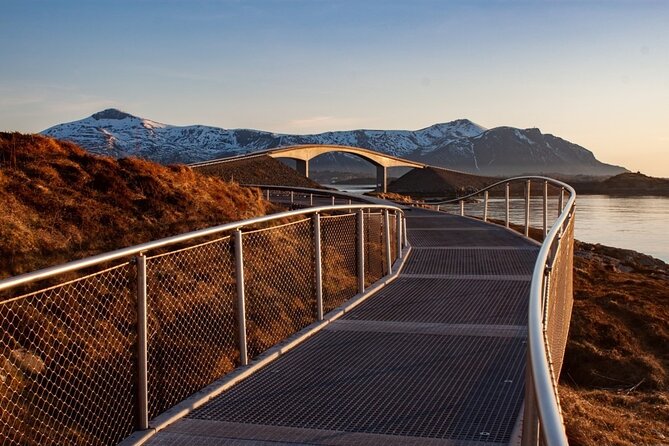
Reviewed · AUDIO TOURS
Molde and Atlantic Ocean Road Audio Tour
Bridges, fjords, and a cheese stop. This audio tour strings together Molde highlights and the jaw-dropping Atlantic Ocean Road, with built-in photo breaks and stories about marble, electricity, and even clipfish drying. You’ll ride through coastal viewpoints, then hop off for short walks where the sea air does most of the talking.
I especially like the photo-time structure. You get a longer stop at Eldhusøya for views and a peninsula walk, then a quick but high-up moment at Varden for the big Molde-and-islands picture.
My one real consideration: the experience relies on a phone audio app, so your plan should include downloading and using it smoothly, plus packing working headphones before you board.
In This Review
- Key takeaways before you go
- Molde’s icons and the “Hotel Seilet” sail-shaped landmark
- Malmefjorden, marble mining since 1938, and 40 km of concert caves
- Eide electricity history and the marble-limestone industry
- Atlantic Ocean Road and Hustadvika: the 8 bridges that steal your attention
- Eldhusøya photo stop plus Håholmen’s clipfish and Ragnar Thorseth
- Farstadsanden northern sand dunes and Elnesvågen’s Jarlsberg birthplace
- Varden panorama viewpoint at 407 m above sea level
- Price and phone-app reality check for a 3.5-hour drive
- Should you book the Molde and Atlantic Ocean Road audio tour?
- FAQ
- How long is the Molde and Atlantic Ocean Road audio tour?
- Is the tour offered in English?
- Do I need to bring headphones?
- What app do I need for the audio?
- Are there included admission tickets?
- Where do I meet if I am on a cruise ship?
- How many people are on this tour?
Key takeaways before you go
- Molde first, then the Atlantic Road: you’ll start with town landmarks before the sea drive steals the show.
- 8 kilometers, 8 bridges: the Atlantic Ocean Road stretch includes multiple bridge moments and tight sea-islet views.
- Short, focused stops: Eldhusøya gets about 30 minutes, Varden gets about 15 minutes, so bring your camera habits.
- Marble and caves in the middle of it all: you’ll hear how mining started in 1938 and how a 40 km cave system hosts concerts and events.
- Hustadvika can be tricky in bad weather: shallows and sandbanks can make parts harder when conditions aren’t great.
- Group size is capped at 45: larger than a private car, but small enough to keep it manageable.
Molde’s icons and the “Hotel Seilet” sail-shaped landmark
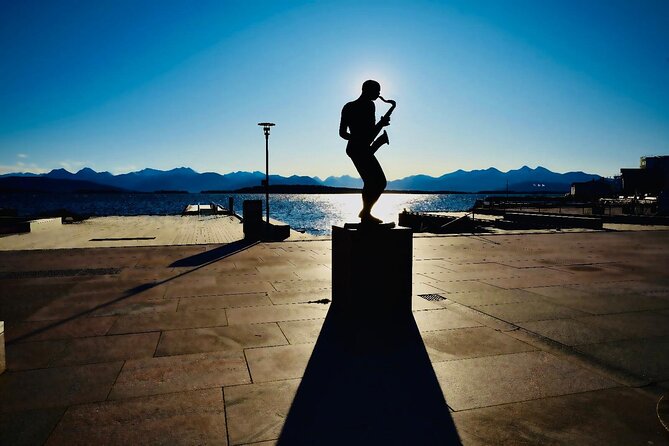
You’ll begin with Molde itself, and it’s a smart warm-up. The route is built to show the city’s signature spots without demanding you navigate streets on your own. Expect well-known landmarks like the Rose Maiden, the Jazz Boy, and the Rosegarden, plus sights such as the football stadion and Moldegård.
Even if you’re not into statues, these stops work as orientation. Molde is a town shaped by water and mountain views, and the landmarks help you “place” the scenery you’ll chase later on the Atlantic Ocean Road. One fun piece you’ll notice from the bus is Hotel Seilet, designed in the style of the Burj al Arab with its sail-like shape and 82 m height. It’s one of those buildings that makes you look twice, because the coast towns of Norway rarely show that kind of dramatic silhouette.
If you’re traveling with a cruise schedule, the start matters too. You’re on a tight, set route, so this Molde leg helps you feel like you actually saw something even before you reach the bridges.
Malmefjorden, marble mining since 1938, and 40 km of concert caves
Next comes the region’s “why,” the stuff behind the views. You’ll pass by the hiking and skiing area, then reach Malmefjorden, a fjord that can freeze in winter. The reason is unique enough to remember: freshwater in the last part of the fjord can make freezing possible in ways you might not expect elsewhere.
Then the tour shifts to marble. The surrounding mountains have high-quality marble, and marble mining began here in 1938. The marble has mainly been used for paper production, which is a detail I didn’t expect before I heard it, and it makes the industry feel more connected to everyday life than just “mines in the hills.”
You’ll also hear about a cave system, about 40 km long, where concerts and events take place today. That contrast is part of the charm: you’re riding through a coastal-world scenery, but the story you’re following is about underground spaces built from geology and repurposed for music.
The takeaway for you: even if you only remember one thing from this section, remember that Norway’s dramatic scenery often has an industrial backbone. Here, it’s marble and caves, not just fjords and fog.
Where the path branches next in Alesund

Eide electricity history and the marble-limestone industry
Before the ocean road, there’s a brief detour into local identity. You’ll pass through Eide, and the tour includes a history about the region’s electricity. That’s not the kind of fact you usually get on a typical scenic drive, and it adds texture to the ride.
Eide’s main business is marble and limestone manufacturing companies, so the stories connect directly to what you’re seeing. Even if you don’t stop anywhere for photos here, this leg helps you understand why these towns look the way they do. Coast towns aren’t just postcard backdrops. They run on power networks, quarries, and the industries that turn raw stone into usable products.
If you like tours that explain more than scenery, this section is a win.
Atlantic Ocean Road and Hustadvika: the 8 bridges that steal your attention
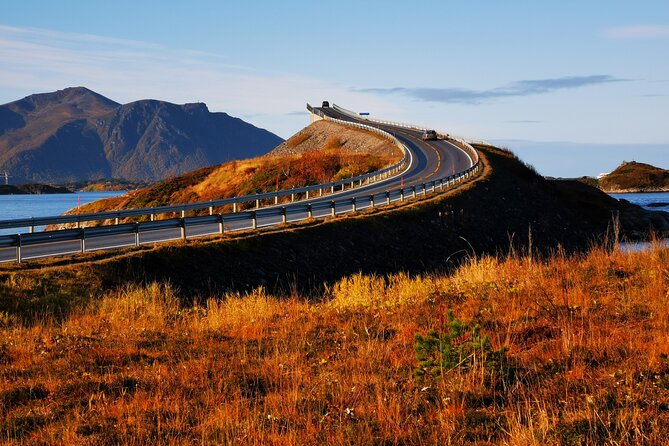
Now you reach the reason most people pick this trip. You’ll cross the Atlantic Ocean Road, about 8 km long, with 8 bridges and stunning views of many little islets. It’s scenic driving at its most cinematic: sea to one side, bridges and water movement to the other, and repeated chances to look forward and sideways as the route bends.
You’ll also hear about Hustadvika, the open stretch by the sea that’s known by fisherman and cruise ships. One practical warning is built into the experience: in bad weather, parts can be difficult to pass because of shallows and sandbanks. That matters for you because it’s not just discomfort. In tough conditions, the operator may need to adjust timing or even change the route if roads restrict travel.
So, if your trip day looks wild, don’t panic. Build in a little flexibility mindset. The route is spectacular, but it’s also a real working coastline. Water and weather are calling the shots.
For photography, this is the area where you’ll want your plan. Know where you want to stand, keep your phone ready, and be quick when the bus slows. The best bridge views are often the moments between places, not long stops.
Eldhusøya photo stop plus Håholmen’s clipfish and Ragnar Thorseth
You’ll make a dedicated stop at Eldhusøya, including a photo-focused pause of about 30 minutes. This is where you get a proper chance to step out and feel the Atlantic air instead of just watching through glass. You’ll have the best view of the bridges and the option for a walk around the peninsula, which adds a more personal touch to the big road moments.
Then the route introduces Håholmen, a place with a past that explains the coastal economy. In older times, it was a clipfish island. Clipfish is one of the drying methods for fish in southwestern Norway, and it’s a reminder that these coastal spots supported real livelihoods long before tourism.
Today, Håholmen includes a small hotel and a Viking museum linked to the former owner and adventurer Ragnar Thorseth. If you like history that’s rooted in a specific person and a specific place, this stop adds that human angle.
One practical note: this is still an audio-based, limited-time setup. You won’t have hours to wander. Use your time like a local: quick photos first, then a short look around so you don’t feel rushed.
More routes to read cairn to cairn:
- Molde: Atlantic Ocean Road & Varden Audio Guide Bus Tour
★ 4.1 · 473 reviews - Geiranger: Bus Tour with Multilingual Audio Guide
★ 4.0 · 317 reviews - Bergen: Self-Guided Round-Trip Full-Day Excursion
★ 4.5 · 158 reviews - Bergen: Troll Museum Entry Ticket + audio guide
★ 4.3 · 88 reviews
Farstadsanden northern sand dunes and Elnesvågen’s Jarlsberg birthplace
After the Viking-flavored story, you’ll hit two spots that feel very different, in a good way.
First, you’ll learn about Farstadsanden, described as the world’s northernmost formation of sand dunes. In summer, locals enjoy Farstadsanden for swimming and surfing. Even if you’re visiting off-season, hearing that the dunes are real and not just a nice rumor makes the region feel even more surprising.
Next is Elnesvågen, the municipality of Hustadvika. This is where the tour turns food-world famous. Elnesvågen is the birthplace of Jarlsberg cheese, one of Norway’s best-known cheese brands. If you’re a foodie, this is a satisfying connection point. It’s also a reminder that coastal Norway isn’t only about fish and scenery, it’s about products that travel far beyond the region.
These stops may be short, but the stories stick because they connect the coast to something tangible. Sand dunes, swimming, surfing, and cheese origin, all from the same coastline you just saw on the Atlantic Ocean Road.
Varden panorama viewpoint at 407 m above sea level
Finally, you’ll climb to Varden the Molde Panorama, reached at 407 m above sea level. This is the big-picture moment. From here, you can expect a great view of Molde and the fjord landscape with its many islands. On a clear day, you can also see the Romsdal Alps with 222 mountain peaks.
That “clear day” line is key for you. If the weather is crisp and you’ve got decent visibility, this viewpoint can feel like the crown jewel. If it’s foggy, you still get height and perspective, but the alps may not show.
The stop itself is about 15 minutes. That’s enough time to take in the view, snap a few photos, and move along before the group reshuffles. If you want wide-angle shots, do them early. Waiting until the end often means the best light shifts or people start moving.
Also, plan for the fact that the viewpoint access is steep. Even if you’re not walking much, you’ll feel the climb in the bus route up and down.
Price and phone-app reality check for a 3.5-hour drive
At $83.94 per person for about 3 hours 30 minutes, this is priced like a mid-range excursion. For the money, you’re not just buying a ride. You’re paying for a guided narrative delivered through your own phone and for transportation that hits multiple types of sights, from city landmarks to remote coastline.
Value comes from two places:
- you get admission tickets included at key stops like Eldhusøya and Varden
- you cover a full bundle of stories, including marble mining history and the electricity tale in Eide, not just “look at the road”
But here’s the honest part. The tour’s format is audio via an app (GuideToGo-official), and you’re required to bring your own headphones. Some people love this setup when it works well. Others get frustrated when the app is slow, when people didn’t expect it to be phone-based, or when they can’t get audio working at the right moment.
If you want this tour to feel smooth, do three things before you board:
- Download the GuideToGo-official app in advance
- Bring headphones that definitely work with your phone
- Give yourself time at the start to confirm the audio is running, not just downloading
Group size is capped at 45 travelers, which is helpful. It keeps things from becoming a total crowd mess, but it doesn’t turn this into a private tour. Expect a bus dynamic where you’ll get the key moments, then move on.
Also keep pickup details in mind if you’re on a cruise. The info you’ll get says there are two cruise terminals in Molde, and pickup is at the port where your vessel is docking. When ships overlap, meeting points can get confusing fast, so make sure you confirm where the bus actually goes, not just what you think is nearby.
If you’re the type who prefers a live guide to answer questions, this is not that. This experience leans on audio, self-led listening, and quick photo stops.
Should you book the Molde and Atlantic Ocean Road audio tour?
Book it if:
- you mainly want the Atlantic Ocean Road experience with photo breaks
- you don’t mind a self-guided feel, as long as the audio works on your phone
- you like variety, city landmarks plus coastal viewpoints plus a few history-food nature stories
Skip it if:
- you strongly want a human guide at all times to handle timing and questions
- you’re worried about app downloads, battery life, or headphone compatibility
- you prefer longer stops over quick photo windows
If you’re on the fence, here’s the simplest way to decide: this tour can be great for scenery value, especially on a clear day. But your enjoyment depends heavily on the audio format and the day’s logistics. If you show up prepared, you’ll likely feel it was worth the price for a compact, scenic hit of western Norway.
FAQ
How long is the Molde and Atlantic Ocean Road audio tour?
It lasts about 3 hours 30 minutes.
Is the tour offered in English?
Yes, the audio tour is offered in English.
Do I need to bring headphones?
Yes, the tour asks you to bring your own headphones.
What app do I need for the audio?
You should download GuideToGo-offical on your mobile phone before the tour.
Are there included admission tickets?
Yes. Admission tickets are included for the Eldhusøya photo stop and for Varden the Molde Panorama.
Where do I meet if I am on a cruise ship?
Pickup is at the cruise port where your vessel is docking. Molde has two cruise terminals.
How many people are on this tour?
The tour has a maximum of 45 travelers.
Newly marked on the map for Alesund
- Alesund Private Excursion Viking`s islands★ 4.0 · 6 reviews
- All About the Fjords in One Tour by Bus and Boat from Ålesund★ 3.0 · 7 reviews
- Ålesund – Geiranger – Ålesund Sightseeing Roundtrip★ 4.5 · 8 reviews
- Seakayak And Hike in Ålesund★ 5.0 · 11 reviews
- Alesund: Private Tour to the Viking Islands★ 4.9 · 11 reviews
- Private tour from Ålesund to Geiranger up to 15 people★ 5.0 · 11 reviews
- Private shore excursions Ålesund Trollstigen-Trollroad in small (1-4)groups★ 5.0 · 12 reviews
- Ålesund: Fjord Tour with Lunch on MS Bruvik★ 4.3 · 13 reviews
Audio Tours, compared.
Scenic Fjord Cruise with Audio Guide Commentary
Read our review →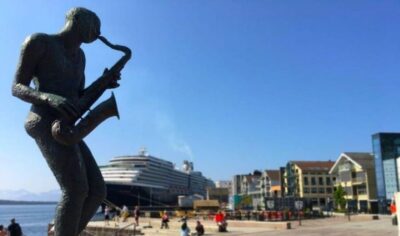
Molde: Atlantic Ocean Road & Varden Audio Guide Bus Tour
Read our review →

Ålesund and Surrounding Islands Audio Guide Tour
Read our review →
Norwegian Coastal Cities: Smartphone Audio Guide App
Read our review →
Bergen in Your Pocket: Landmarks and Lore Audio Tour
Read our review →
Browse the lists this tour appears in