
Reviewed · HISTORICAL TOURS
Downtown Oslo: Self-Guided Highlights and History Audio Tour
Oslo reads like a story on foot. This 40-minute self-guided audio tour connects key downtown sights to the city’s older roots, from shipyards to rail history and royal grounds. It’s offered in English, and you follow the route at your own pace.
I love two things right away: the offline VoiceMap access (audio, maps, and geodata), and how the route is tight and practical. You get a bite-sized loop with five major stops, so you can wrap it into nearly any Oslo day without losing half your afternoon.
One watch-out: audio tours can go stale, and one of the reported downsides was information feeling out of date. Keep your eyes open for on-site signage and treat the tour as guidance, not a substitute for what’s happening right now.
In This Review
- Key highlights worth your attention
- The 40-minute downtown loop, from Rådhusplassen to Østbanehallen area
- Price and value: what $9.99 buys you in Oslo
- Stop 1: Aker Brygge and why Oslo built on shipyard memories
- Stop 2: Nobel Peace Center in a former station
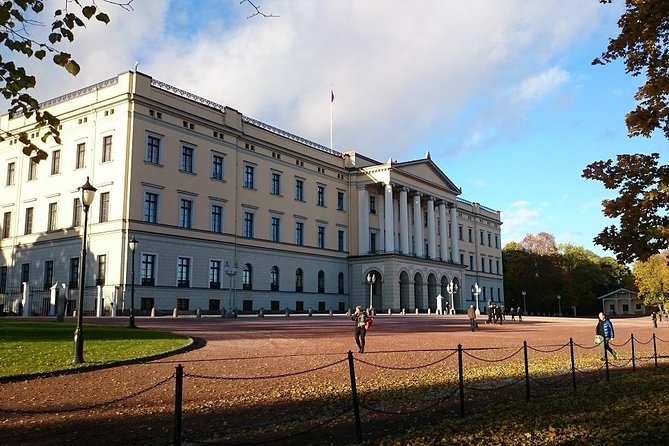
- Stop 3: Royal Palace park, ponds with fountains, and 1840s planning
- Stop 4: Karl Johan Avenue, Oslo’s main street since the 1500s
- Stop 5: Østbanehallen reopened in 2015, now a public hub
- How to use the VoiceMap audio so it feels effortless
- Who this tour suits best in Oslo
- Final take: should you book this Downtown Oslo audio walk?
- FAQ
- How long is the self-guided downtown Oslo audio tour?
- What language is the tour available in?
- How much does the tour cost?
- Is offline access included?
- Do I need to bring a smartphone?
- Are museum tickets included for stops like the Nobel Peace Center?
- Where does the tour start and end?
- Is the tour near public transportation?
- Are there any limits on group size and are service animals allowed?
Key highlights worth your attention
- Offline audio and maps via the VoiceMap app, so you can keep moving without constant signal
- Aker Brygge’s shipyard past, a modern meeting spot built on older industrial bones
- The Nobel Peace Center in a former station, with rail-era context baked into the building
- Royal Palace park details, including ponds with fountains and a nod to the 1960s
- Karl Johan as a long-running main street, linked to the city since the 1500s
- Østbanehallen’s 2015 reinvention, now a public hub with shops, food, and the Oslo Visitor Center
The 40-minute downtown loop, from Rådhusplassen to Østbanehallen area
This experience is designed as a quick downtown walk. It takes about 40 minutes (approx.), and you’re meant to move stop to stop with audio prompts in your ear rather than a live guide. The start point is Rådhusplassen and the end is HavnelageretLangkaia 1, 0150 Oslo, which is a convenient handoff back toward the harbor side of the center.
You’ll appreciate this pacing if you want context without committing to a full guided tour. Oslo’s central area is easy to navigate on foot, and a self-guided route lets you slow down when something catches your eye, like a building facade, a pond view, or a street detail.
There’s also a practical benefit for planning: the tour is available essentially any time of day. The provided hours show 12:00 AM to 11:59 PM, so you’re not boxed into a narrow departure window.
Price and value: what $9.99 buys you in Oslo
At $9.99 per person, this is cheap in the way that matters. You’re not paying for museum tickets. You’re paying for audio guidance plus offline navigation support through a curated slice of central Oslo.
That means your money goes to two real advantages:
- You can understand what you’re looking at, even if you’re a first-timer.
- You don’t need to keep checking your phone for directions, because the tour supports offline access to audio, maps, and geodata.
The main value question is also simple: you have to have a smartphone to run the VoiceMap app. The tour does not include a phone, and it does not include transportation or food. If you already plan to walk and you have your device, the price makes sense for a low-effort cultural primer.
Where the path branches next in Oslo


Stop 1: Aker Brygge and why Oslo built on shipyard memories
Your first major stop is Aker Brygge, a shopping and dining area made on the remains of an old shipyard. It’s a reminder that Oslo’s waterfront didn’t start as a lifestyle district. It started as working infrastructure.
What I like about this stop is the contrast. You’re standing in a place that now feels polished and modern, but the name of the game is still the same: water nearby, people gathering, and the everyday rhythm of the city. The tour frames Aker Brygge as a popular meeting spot after work, so you can spot the social energy even if you visit outside peak hours.
Possible drawback: if you’re expecting only historical structures, you might feel like you’re getting atmosphere more than artifacts. Aker Brygge is built up for commerce and hangouts. The “history” here is in the layers, not in a preserved dock you can climb onto.
Still, it’s a smart opener. It sets the theme for the rest of the tour: Oslo keeps reusing older places and giving them new roles.
Stop 2: Nobel Peace Center in a former station
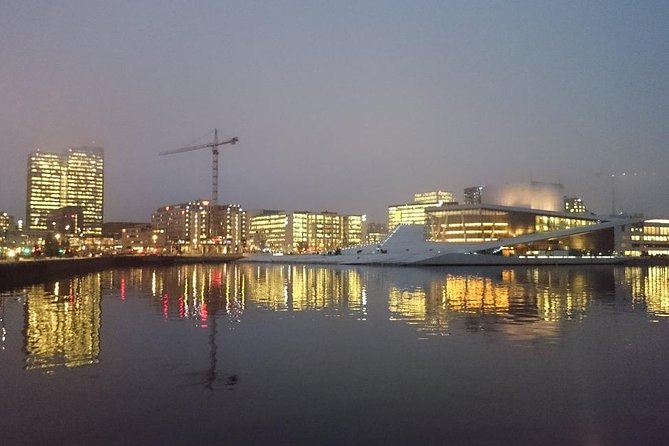
Next up is the Nobel Peace Center building. It used to be an old railway station, specifically where trains from the western parts of Norway arrived. Today, the building is a museum focused on the Nobel Peace Prize and on Alfred Nobel, plus stories of past winners.
This stop works well for audio because the building itself carries the narrative. You don’t just read about prizes and founders. You’re in a structure that once functioned as a gateway, a place where people arrived from elsewhere with new ideas and news.
One thing to keep in mind: the tour does not include museum tickets. So plan on experiencing the site in a self-guided way. If there’s an exhibit you want to see deeply, you’ll need to add that separately with your own ticket.
If you’re trying to understand why Oslo is so comfortable telling world-stakes stories in a downtown setting, this is the moment. The peace theme lands in a building that once welcomed travelers from farther away.
Stop 3: Royal Palace park, ponds with fountains, and 1840s planning
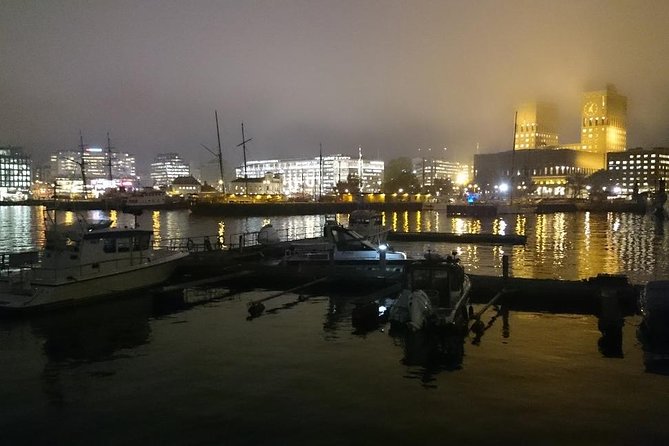
The route then heads to the park surrounding the Royal Palace. The tour notes that the park was built during the 1840s, with majestic trees, well-kept lawns, and ponds that include fountains.
This is where I’d slow down, even if your audio keeps moving. Parks like this are meant for unhurried viewing, not sprinting from one “fact” to the next. If the weather cooperates, the ponds and fountains give you a natural visual break, and the scale of the trees adds that formal, slow-moving feeling you often get near royal residences.
There’s also an unexpectedly human detail: the park served as a base for hippies in the mid-1960s. That contrast is useful. It keeps the Royal Palace grounds from feeling like a sealed-off history exhibit. It reads like a place people actually used, even when their style did not match the postcard.
A small consideration: parks can vary by season and daylight. Since your tour timing is flexible, use daylight when you can, so you can enjoy the lawns, pond views, and fountain area rather than only hearing about them.
Still ahead on the route through Oslo:
- Oslo: Oslo Fjord Sightseeing Cruise by Sailing Ship
★ 4.5 · 5,790 reviews - Oslo: Scenic Fjord Cruise with Audio Guide Commentary
★ 4.5 · 5,375 reviews - Oslo Nature Walks: Island Hopping Tour
★ 4.8 · 2,713 reviews - Oslo: 24 or 48-Hour Hop-On Hop-Off Sightseeing Bus GrayLine
★ 4.0 · 2,088 reviews
Stop 4: Karl Johan Avenue, Oslo’s main street since the 1500s
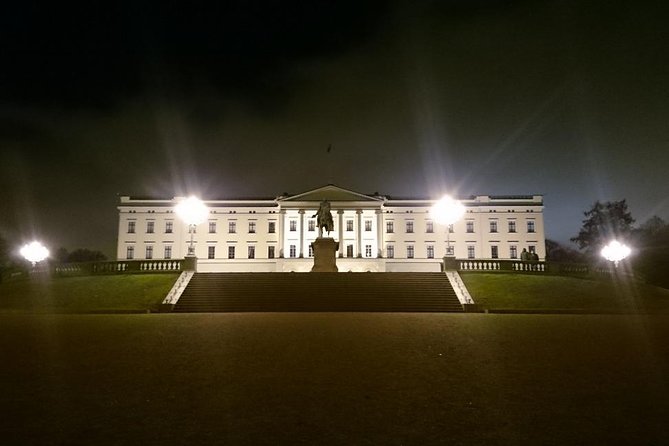
Now you’re on Karl Johan Avenue, often shortened to Karl Johan. The tour explains that the street’s early sections were established in the 1500s, and since 1852 it has been known as Karl Johan, named after the King.
This is one of the most practical stops on the route because it helps you understand how Oslo organizes itself. If you learn where Karl Johan runs, you also learn how to orient your day. It’s the kind of street you’ll naturally want to walk again later, even after your audio timer ends.
What makes it interesting is the long timeline. You can look at a street full of shops, storefronts, and daily foot traffic, then remember it traces back centuries. Even without dramatic monuments, streets carry meaning through continuity.
Potential drawback: depending on the day and time, Karl Johan can feel like you’re just walking in a normal city corridor. If you’re the type who gets more from individual buildings than from street energy, you may want to pair this stop with a short side stroll off the main axis.
Still, as an orientation tool, Karl Johan is worth the audio time. You’ll leave with a better sense of where you are in the city.
Stop 5: Østbanehallen reopened in 2015, now a public hub
The final stop is Østbanehallen, which used to be the central railway station for Norway’s northern routes. After a complete transformation, it reopened in 2015, and now it houses shops, restaurants, a hotel, and the Oslo Visitor Center.
This ending point is clever. You move from royal grounds and a main street into a transit building that has reinvented itself. It’s still a place people pass through, but now it serves as a central downtown gathering space, not only a departure point.
Why this matters for you: Østbanehallen is a great place to orient for what comes next. With an Oslo Visitor Center on site, you’re in the right zone for maps, planning, and making your next choices without cramming everything into the audio session.
It also helps explain Oslo’s pattern of reinvention. Rail infrastructure becomes civic space. Old arrivals become new rhythms.
One more consideration: like the Nobel Peace Center, this stop can involve spaces where you might want to go inside for a specific purpose. The tour does not include tickets, so think of Østbanehallen as a guided exterior and general walk-through experience unless you choose add-ons yourself.
How to use the VoiceMap audio so it feels effortless
This tour is built for self-navigation. That means the “how” is part of the experience.
Here’s how I’d make it work smoothly:
- Download the VoiceMap app ahead of time and make sure the tour content is ready for offline use.
- Bring headphones that are comfortable for walking. If audio is muffled, you’ll miss the key explanations.
- Glance at the map occasionally, but don’t obsess over it. The route is short, so small timing shifts are fine.
- Treat the audio as context, then look for the physical proof with your own eyes. That is the best way to avoid disappointment if any detail feels outdated.
The reported criticism about out-of-date information is a real reminder. Facts can change: openings, displays, signage, and minor details can shift. If you’re flexible and use the audio as a guide to what matters, you’ll likely enjoy the walk anyway.
Who this tour suits best in Oslo
This one is ideal if you:
- Want a low-cost way to connect five central sights to one story of Oslo’s development
- Prefer walking at your own speed, with audio that you control
- Like outdoor city experiences more than long museum sessions
- Travel with a tight schedule and want a meaningful downtown loop in under an hour
It may be less satisfying if you want deep museum time included, since tickets or entrance fees are not included. You’ll still see and understand a lot, but you won’t have a fully guided, inside-everything itinerary.
The group size cap is 10 travelers, which suggests the experience is designed to stay small and manageable, even though it’s self-guided. It’s also listed as having service animals allowed, and it’s near public transportation, which can matter if you want to arrive close to the start point.
Final take: should you book this Downtown Oslo audio walk?
I think you should book this tour if you want a smart, budget-friendly way to get oriented in central Oslo and understand why the buildings and streets mean something. The offline support is a big deal, especially in a city where you’ll probably be busy looking around more than checking your screen.
I would not book it expecting perfectly current details. One of the main negatives tied to the experience was that some information felt out of date. If you go in with flexible expectations and use signage and your own observations to confirm what you see, this is still a solid way to turn a simple walk into a guided story.
If you already have a smartphone and you want an easy 40-minute downtown highlight loop, this is a yes.
FAQ
How long is the self-guided downtown Oslo audio tour?
It takes about 40 minutes (approx.).
What language is the tour available in?
The audio tour is offered in English.
How much does the tour cost?
The price is $9.99 per person.
Is offline access included?
Yes. You get offline access to audio, maps, and geodata through the VoiceMap application.
Do I need to bring a smartphone?
Yes. The tour does not include a smartphone, and you need one to use the VoiceMap app.
Are museum tickets included for stops like the Nobel Peace Center?
No. Tickets or entrance fees are not included for museums or other attractions.
Where does the tour start and end?
It starts at Rådhusplassen, Oslo, Norway and ends at HavnelageretLangkaia 1, 0150 Oslo.
Is the tour near public transportation?
Yes, it is listed as near public transportation.
Are there any limits on group size and are service animals allowed?
The maximum group size is 10 travelers, and service animals are allowed.
Cairn to Cairn
- Oslo To Bergen Self-Guided Full Day Trip with Flåm Railway And Fjord Cruise★ 4.0 · 69 reviews
- Self-Guided 22-Hour Round Trip From Oslo To Sognefjord With Flåm Railway★ 4.5 · 54 reviews
- Oslo Self Guided Walking Tour with an APP★ 4.5 · 19 reviews
- Oslo Viking Quest: Exploration Game and Tour★ 4.5 · 17 reviews
Newly marked on the map for Oslo
- Oslo Scavenger Hunt and Highlights Self Guided Audio Tour★ 4.5 · 6 reviews
- Oslo easy walk★ 5.0 · 7 reviews
- Oslo: Oslofjord Electric Boat Cookie Cruise★ 3.8 · 7 reviews
- Oslo City Walks: The City of Contrasts★ 3.4 · 7 reviews
- The Oslo Beer Adventure★ 1.9 · 7 reviews
- 7-Day Scenic Scandinavian Tour from Oslo exploring Denmark, Sweden and fjords in Norway★ 4.5 · 7 reviews
- Private Oslofjord Island Hopping Tour★ 4.5 · 8 reviews
- Free Oslo Photo Tour: Iconic & Instagrammable Spots★ 5.0 · 8 reviews
Historical Tours, compared.

Reindeer Camp and Sami Cultural Tour with Lunch
Read our review →
Sámi Reindeer Sledding and Sami Cultural Tour
Read our review →


Browse the lists this tour appears in