
Reviewed · HISTORICAL TOURS
Oslo: Small Group History, Art & Secrets Tour
Oslo packs surprises into three hours. This small-group walk ties royal-era landmarks to modern Oslo, and it stops inside Deichman Library for a calm, design-forward break. I love how the route keeps you oriented, from the medieval feel of fortress streets to the bright statements of the waterfront. The trade-off is simple: it is a solid walking tour, so it is not ideal if you have mobility limits.
You also get a guide who knows how to explain the why behind the sights, not just point at them. In real-world terms, guides like Martin, Anders, Monica, and Michael have been praised for patient answers and a good sense of timing, which matters on a wet or windy day in Oslo. One more thing to consider: the tour focuses on exterior landmarks and a library interior, not multiple museum ticket entries.
In This Review
- Key points to know before you go
- Royal Palace to Nobel Peace Center, a good start for first-time direction
- Oslo City Hall and the National Theater, where Oslo’s public face meets art
- Karl Johans Gate and Parliament, royal power with street-level details
- Akershus Fortress to Bank Square, medieval edges and modern systems
- Oslo Stock Exchange and the waterfront, a smart bridge to modern Oslo
- Deichman Bjørvika Library, the interior stop that feels like a breather
- Timing, small-group size, and what the 3 hours really feel like
- Who this Oslo history, art, and secrets tour is best for
- Value check: $35 for guided structure and a world-class library stop
- Should you book this tour or plan something else?
- FAQ
- How long is the Oslo Small Group History, Art & Secrets Tour?
- Where do I meet the guide?
- What’s included in the price?
- Are museum tickets included for all stops?
- How many people are in the group?
- What languages are available for the guide?
- Is the tour suitable for wheelchair users or people with mobility impairments?
Key points to know before you go
- Deichman Library inside: one of Oslo’s best-designed public spaces, built for light and quiet.
- Royal, civic, and modern in one loop: palace, city hall, parliament, then opera and the pier.
- Oslo’s rebuild story: you’ll hear how the city came back after devastating fires.
- Finance and trade stops: Bank of Norway area and the Oslo Stock Exchange connect history to today.
- Water views without detours: Opera House and the Munch Museum show up from the pier side.
- Small group, up to 10: more questions, less rushing, easier pacing.
Royal Palace to Nobel Peace Center, a good start for first-time direction
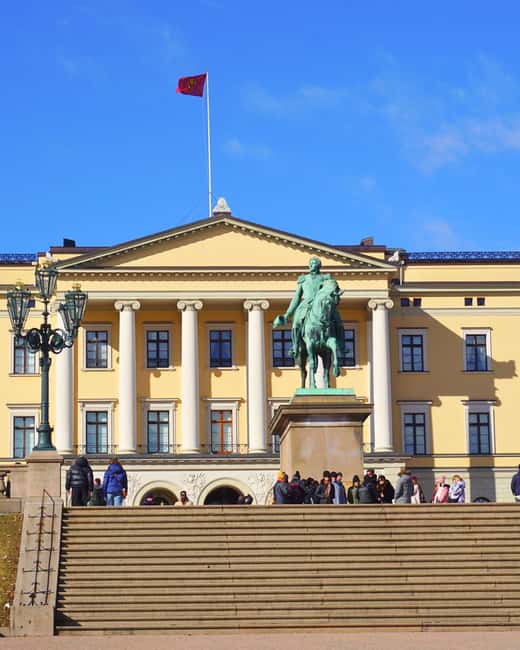
The tour starts right in front of the Royal Palace, with the guide holding an open red umbrella. If you arrive a few minutes early and do a quick look around Slottsparken, you’ll get your bearings fast. From the start, the vibe is “walkable and coherent,” not a random smash of photo stops.
One thing I like is how the early stops set the tone. You head toward the Nobel Peace Center next, and you get a chance to connect Oslo’s identity as a capital with the stories people attach to it. Then the walk turns civic, with Oslo City Hall coming up for photos and explanation. You’re not stuck in one theme.
Tip for you: keep your camera ready, but also keep some mental space for details. The guide tends to explain what you’re seeing in plain language, which helps the rest of the walk click.
Oslo City Hall and the National Theater, where Oslo’s public face meets art
After Nobel Peace Center, you’ll move into the city’s official-looking core. The City Hall stop is quick but meaningful because it gives you context for Oslo’s modern public life. Even if you only catch the exterior, you’ll learn what sits behind the architecture and the city’s sense of ceremony.
Next is the Norwegian National Theater for another photo stop and a short visit. This is the part of the tour where “history and art” starts to feel real. You’re watching how culture gets staged in public buildings, and you’re picking up names and themes that show up later when you hear about Oslo’s cultural evolution.
If the weather turns, this section is still workable. It is not a long slog between stops, and you’ll have scenic breaks in your walking flow as the route continues.
Where the path branches next in Oslo


Karl Johans Gate and Parliament, royal power with street-level details
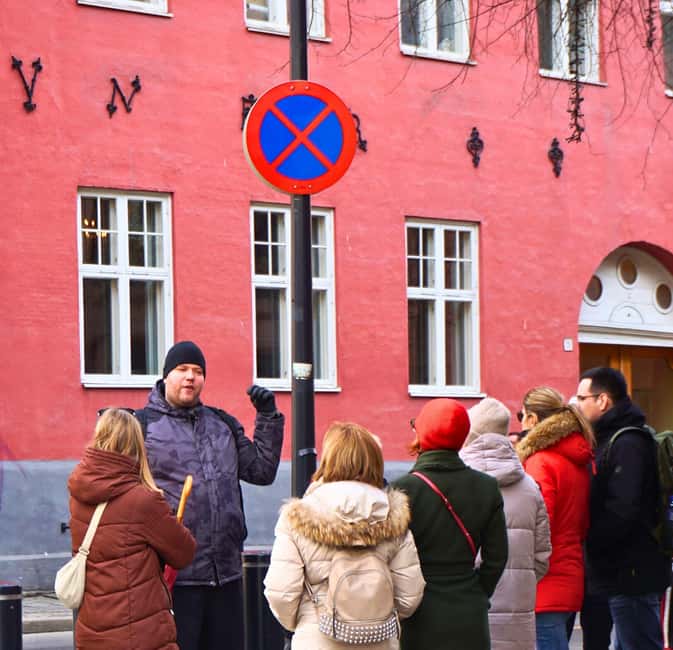
Karl Johans Street (Karl Johans Gate) is one of Oslo’s great spine streets. On this walk, it is not just a corridor for photos. The guide uses it to connect the feel of the city with the politics and power that shaped it, including the shift from old-world traditions to the modern capital.
The Norwegian Parliament stop is where you’ll slow down a bit. You’ll get a guided look with context, so the building stops being just a shape and becomes a symbol. The same applies to Christian IV’s Glove, which comes next as a photo stop plus guided details. It sounds quirky on paper, but these smaller, specific landmarks are what make the tour feel like it has secrets instead of just scenery.
If you’re the type who likes to ask questions, this is a good moment to use them. The group is small, and the guide’s pacing usually leaves room for clarifications.
Akershus Fortress to Bank Square, medieval edges and modern systems
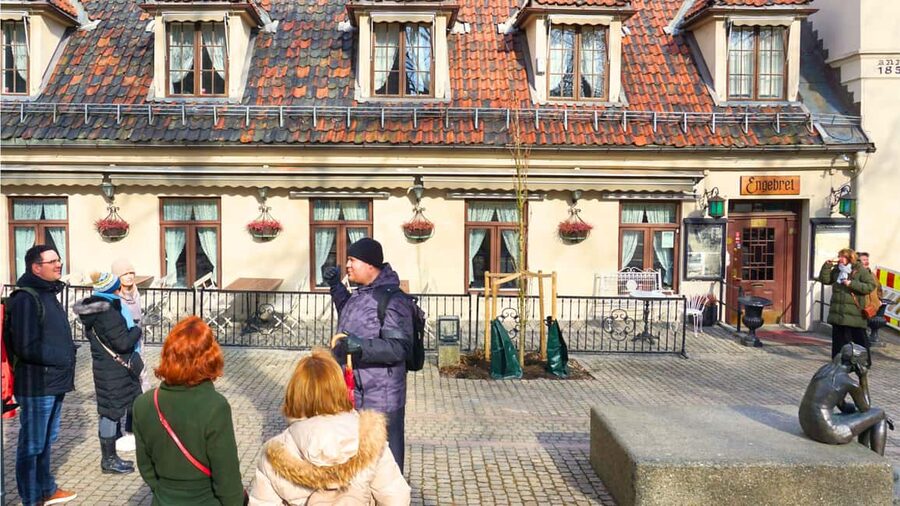
Then you shift toward Akershus Fortress. Expect a photo stop, guided tour, and a walk segment as you take in the fortress viewpoint. This is where the medieval-to-modern arc becomes physical. Fortress walls and coastal angles remind you that Oslo was shaped by defense, trade, and geography long before it became what it is today.
From there, you move into Bank Square and toward the Bank of Norway area. The tour doesn’t treat money as boring background. You’ll hear how trade and finance helped shape Oslo into a modern Scandinavian hub. That connection is useful if you wonder why certain parts of a capital look the way they do, or why major institutions took root where they did.
One practical note for you: wear shoes with grip. Oslo sidewalks can be slick, especially outside the core streets. You’ll be glad you did when the route turns into slightly more uneven, historic-city walking.
Oslo Stock Exchange and the waterfront, a smart bridge to modern Oslo
The Oslo Stock Exchange stop is another quick but guided moment. You get photos and context that tie earlier city stories to present-day commerce. This section pairs well with Akershus because it contrasts old defensive planning with newer economic power.
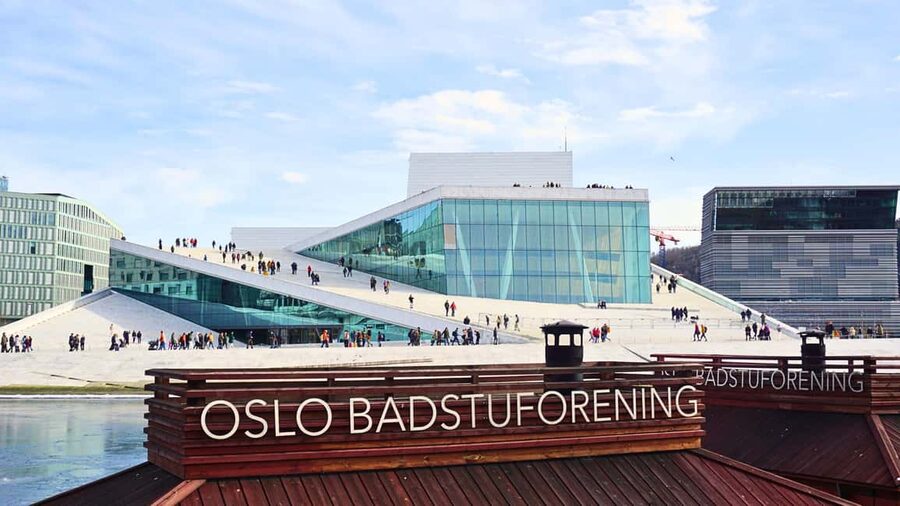
Then comes the payoff: the waterfront. You’ll enjoy views overlooking the Oslofjord and you’ll see modern landmarks like the Oslo Opera House. From the pier side, the Munch Museum also shows up in the view line, which is a nice way to include big-ticket sights without turning the walk into a museum day.
This is also where you’ll likely notice why the tour works as a half-day plan. It gives you skyline and water without requiring you to buy extra tickets to multiple attractions. You get the “I see why people love this city” moments, plus the why behind them.
Still ahead on the route through Oslo:
- Oslo: Oslo Fjord Sightseeing Cruise by Sailing Ship
★ 4.5 · 5,790 reviews - Oslo: Scenic Fjord Cruise with Audio Guide Commentary
★ 4.5 · 5,375 reviews - Oslo Nature Walks: Island Hopping Tour
★ 4.8 · 2,713 reviews - Oslo: 24 or 48-Hour Hop-On Hop-Off Sightseeing Bus GrayLine
★ 4.0 · 2,088 reviews
Deichman Bjørvika Library, the interior stop that feels like a breather
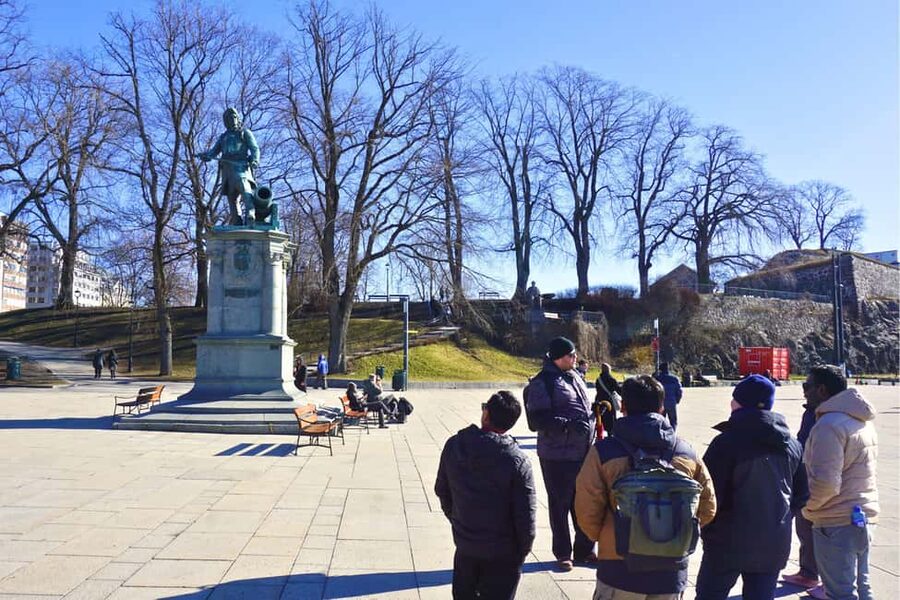
The standout interior is Deichman Bjørvika. You’ll step inside for free time and to admire the innovative design in a light-filled, calm space. The library is described as award-winning and among the most beautiful libraries in the world, and the tour’s focus makes sense. After several outdoor stops, stepping into a bright, public building is like hitting reset.
Why it matters for you: libraries are where a city shows its priorities in real life. You’re seeing Oslo’s modern approach to public life, design, and accessibility to culture. Even if you are not a book person, the space itself tells a story.
You also get a longer break window here compared to some earlier photo stops. That time helps you catch your breath, refill water, and avoid the last-20-minutes fatigue that can wreck a walking tour.
Pro tip: bring your camera, but also put it away for a minute. The light inside is part of the experience, and you’ll enjoy it more if you pause rather than only shoot.
Timing, small-group size, and what the 3 hours really feel like
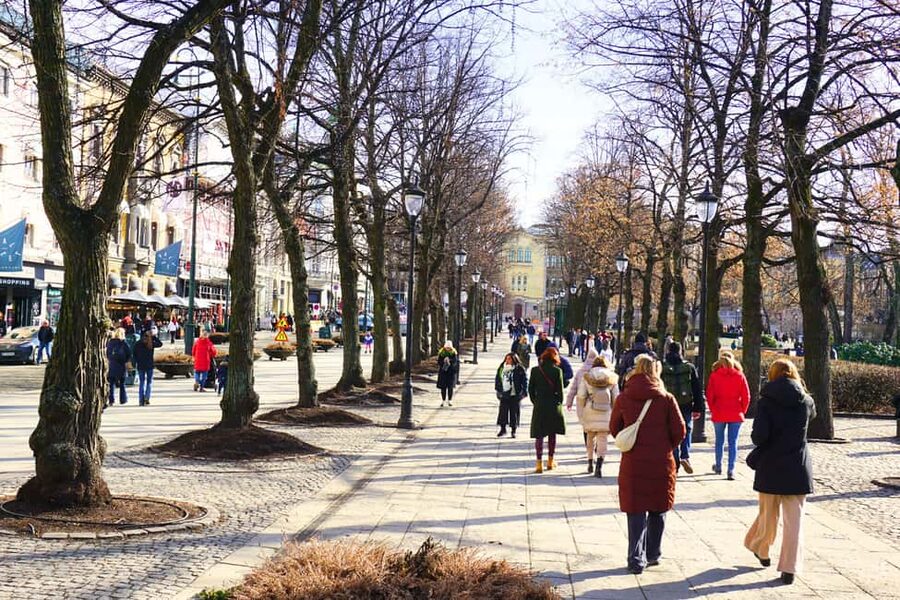
The tour runs about 3 hours, and it moves at a brisk but reasonable city pace. With a group limited to 10 participants, it stays interactive. Guides such as Anders and Martin have been noted for making time for questions and adjusting timing so slower walkers still hear everything.
You should expect a lot of short segments: photo stops, guided explanations, and small walks between clusters of sights. That structure is exactly why this works as a first or second day activity. It helps you understand the layout and themes of Oslo, so later you can explore on your own without feeling lost.
The biggest consideration is mobility. The tour is not suitable for people with mobility impairments or wheelchair users. If you fall into that category, it might be better to plan a different format with less walking.
Who this Oslo history, art, and secrets tour is best for
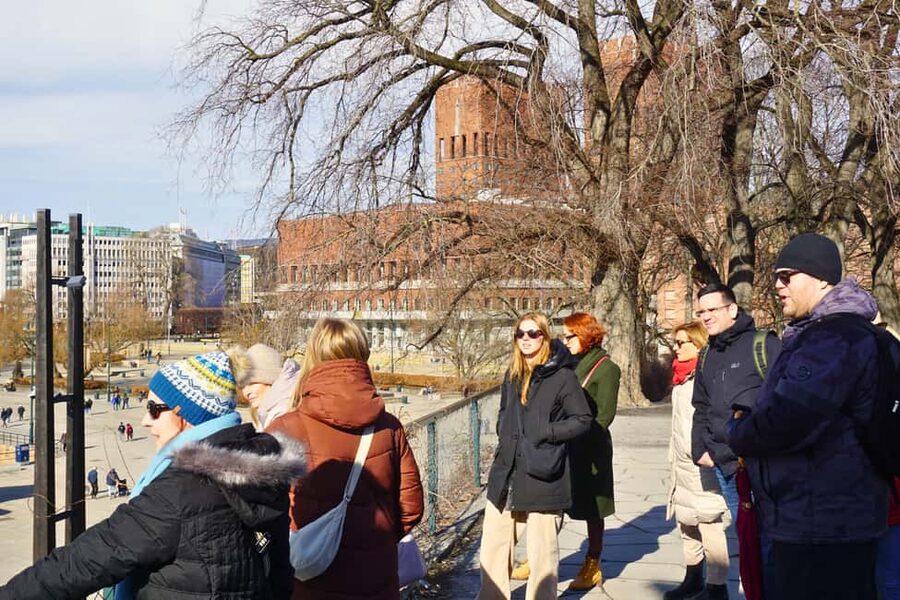
This is a good fit if you want:
- A focused Oslo history walking tour with modern landmarks mixed in
- Street-level context around royal squares, civic buildings, and waterfront icons
- A guided visit to Deichman Library without buying multiple museum tickets
- A small-group setup where you can ask questions in English, Italian, German, or Spanish
It’s also a strong choice for first-timers. The route hits key areas like Karl Johans Gate, the parliament area, and the Opera House waterfront, so you leave with a mental map of how Oslo “holds itself together.”
If you already know Oslo well and only want deep museum time, you might find the format too exterior-heavy. This walk is designed to be efficient, not to replace a full museum day.
Value check: $35 for guided structure and a world-class library stop
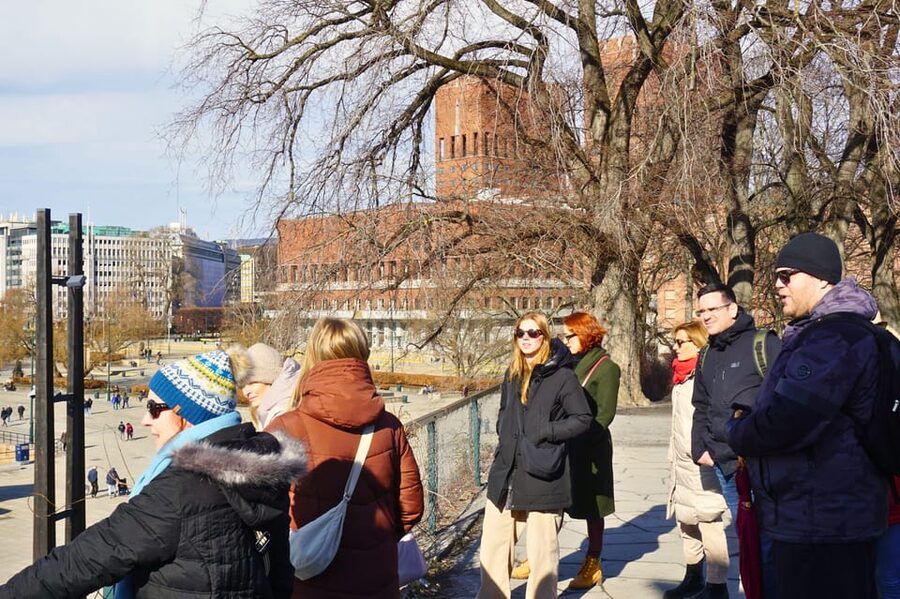
At around $35 per person for a 3-hour guided experience, the value comes from two things: the guided storytelling and the included interior visit. Deichman Library alone is the kind of stop that can justify time and cost because it is not just a facade. The tour includes entry there, and that shifts it beyond a purely outdoor highlights walk.
You should also understand what not to expect. Museums beyond the Deichman Library interior are not included with tickets. The Opera House and Munch Museum show up from the pier side as views, not as included entry in this tour format. So if you want to go inside multiple museums, you’ll still need to plan those separately.
On days when weather changes fast, the structure helps too. Short segments plus break times keep the tour from turning into one long, uncomfortable grind.
Also worth noting: the tour provider offers free cancellation up to 24 hours in advance for a full refund, and you can reserve now and pay later. That makes it easier to protect your schedule if you’re still building the rest of your Oslo plan.
Should you book this tour or plan something else?
I’d book it if you want an efficient introduction that mixes Oslo’s civic core, royal-era context, rebuild stories, and modern waterfront landmarks, with a real interior stop that feels special. If you like asking questions and you want a guide who can tie architecture and institutions to everyday city life, this small-group format is a smart use of time.
I would skip it if you want mostly museum entry, or if the amount of walking would be a problem for you. Also, if you already plan to spend lots of time at libraries and design-focused spaces, double-check whether you’ll get enough new information out of a short walk.
If you’re on your first visit and you want Oslo to make sense quickly, this is the kind of tour that leaves you with both photos and context.
FAQ
How long is the Oslo Small Group History, Art & Secrets Tour?
It lasts 3 hours.
Where do I meet the guide?
You meet in front of the Royal Palace, look for the guide with a red umbrella open.
What’s included in the price?
The tour includes a guided tour with a local guide, scenic views, and entry into Deichman Library.
Are museum tickets included for all stops?
No. Ticket entries to museums are not included.
How many people are in the group?
The group is limited to 10 participants.
What languages are available for the guide?
The guide speaks Spanish, Italian, German, and English.
Is the tour suitable for wheelchair users or people with mobility impairments?
No, it is not suitable for people with mobility impairments or wheelchair users.
Newly marked on the map for Oslo
- Oslo Scavenger Hunt and Highlights Self Guided Audio Tour★ 4.5 · 6 reviews
- Oslo easy walk★ 5.0 · 7 reviews
- Oslo: Oslofjord Electric Boat Cookie Cruise★ 3.8 · 7 reviews
- Oslo City Walks: The City of Contrasts★ 3.4 · 7 reviews
- The Oslo Beer Adventure★ 1.9 · 7 reviews
- 7-Day Scenic Scandinavian Tour from Oslo exploring Denmark, Sweden and fjords in Norway★ 4.5 · 7 reviews
- Private Oslofjord Island Hopping Tour★ 4.5 · 8 reviews
- Free Oslo Photo Tour: Iconic & Instagrammable Spots★ 5.0 · 8 reviews
Historical Tours, compared.

Reindeer Camp and Sami Cultural Tour with Lunch
Read our review →
Sámi Reindeer Sledding and Sami Cultural Tour
Read our review →



Browse the lists this tour appears in