
Reviewed · GUIDED WALKS IN OSLO
Oslo: Historic Myths & Legends Evening Walking Tour
The streets start telling stories fast. This Oslo Historic Myths & Legends Evening Walking Tour links Norse folklore to real landmarks, so the city feels like a living book. I love how the guide uses characters like trolls, nisse, and huldra to explain why people acted the way they did, and I love the visual punch of the wooden friezes on Oslo City Hall. One drawback to plan for: in winter, the wind can be sharp, so pack warm layers and solid shoes.
The pacing is relaxed and geared for first-timers, but it still feels specific because you stop at meaningful places like Christiania Torv and Akershus Fortress. If you want a simple intro to Oslo’s past with plenty of story energy, this is a strong pick. Just note it is not for kids under 13, and it is not suitable for people with mobility impairments or wheelchair users.
In This Review
- Quick take: what makes this tour worth your time
- Where the night story starts at Oslo City Hall
- Vikings, trolls, nisse, and huldra, and why those stories stick
- Christiania Torv, where Oslo’s everyday life overlaps history
- Akershus Fortress: medieval engineering with a human edge
- Bankplassen and the darker side of justice and theft
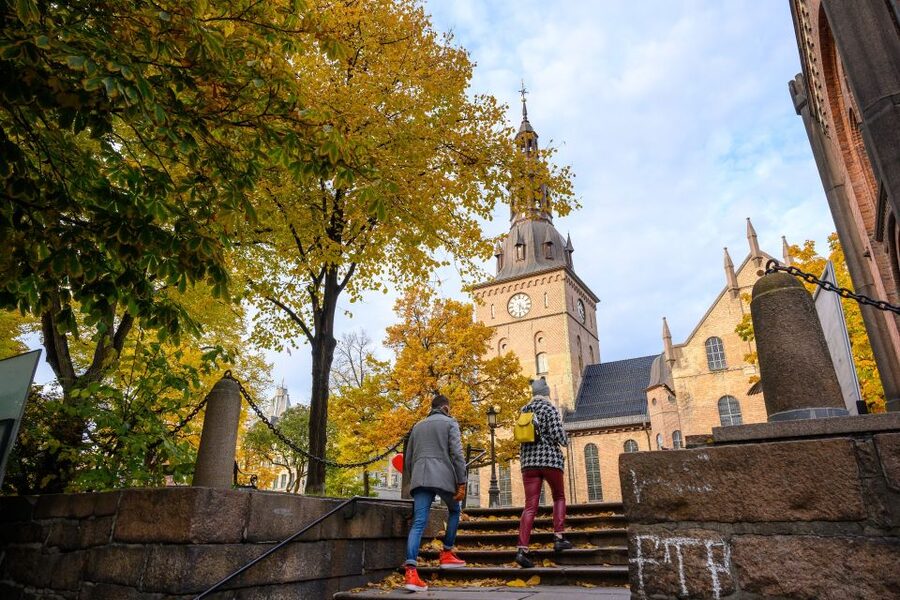
- Oslo Cathedral: the quieter counterpoint
- How to make the most of a 2-hour evening walk
- Who this tour is best for
- So, should you book the Oslo Historic Myths & Legends Evening Walking Tour?
Quick take: what makes this tour worth your time
- Myths tied to places you can actually see, from City Hall to the fortress grounds
- Storytelling that feels practical, not just fantasy, with themes like justice and theft
- Norse characters in context, including trolls, nisse, and huldra
- A strong evening atmosphere, especially when Oslo turns dramatic in winter light
- Weather and cold matter, since you are walking outside for the full 2 hours
Where the night story starts at Oslo City Hall
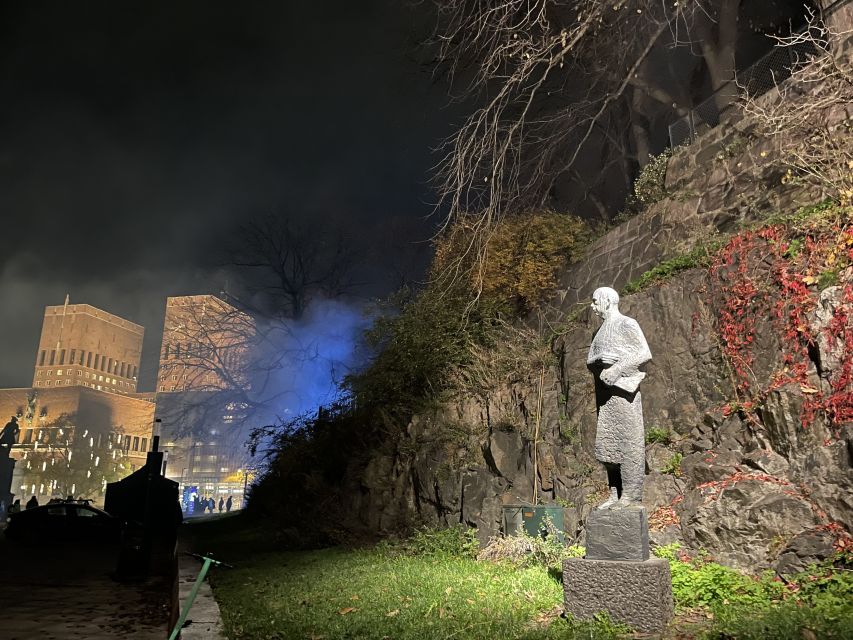
You meet your guide near the Swans fountain at the entrance of Oslo City Hall, on Fridtjof Nansen’s square. That matters because City Hall is not just a stop, it is your entry point into how Oslo remembers itself. Even before you move, the setting helps you understand the theme: myths are not sealed in museums. They show up in art, architecture, and local memory.
Inside and around City Hall, the tour puts a spotlight on wooden friezes that depict Vikings beliefs. You do not need a background in Old Norse to follow along. The guide turns those visuals into stories, explaining how Viking-era life was shaped by seafaring, survival, and superstition. In plain terms, you start to see why folk beliefs were useful, not random. They explained the unknown, supported community rules, and helped people feel prepared for storms, illness, bad luck, and risk.
One of the strongest parts of this opening segment is how it sets expectations. You hear about Norse myths, but you also hear how they were treated like part of everyday decision-making. That framing changes how you look at everything you see later, including the more official, medieval world of Akershus Fortress.
And yes, you’ll probably hear plenty of humor. Multiple guides connected with this walk are praised for keeping the energy up while still answering questions, including guides named Maria and Anastasia. That makes a difference when you’re learning in the dark, when concentration is harder and the wind is louder.
Vikings, trolls, nisse, and huldra, and why those stories stick
After City Hall, the tour leans hard into the cast of characters that live in Norwegian folklore. You will hear about mischievous trolls, kind-hearted nisse, and the mysterious huldra. The key is that the guide does not treat them like costumes for tourists. You get the sense that these figures shaped behavior, especially around home, the edge of the woods, and the moments when people felt vulnerable.
This is a smart approach for a walking tour. Myths work best when you connect them to human needs. For example, trolls and other unsettling beings often fill the role of caution signs, explaining why certain places felt dangerous. Nisse stories often tie back to household routines and respect, which is basically social glue. Huldra brings that other layer, the sense that nature and the hidden world have rules you should not ignore.
Even better, the guide ties the stories to Oslo in a way that helps you spot patterns. In the reviews, people highlight things like death themes and very specific folk ideas such as fear of flutes and protection through bells. You do not need to remember every detail to benefit. What you take away is the mindset: folklore was a toolbox. It helped people interpret fear, luck, and morality long before modern explanations existed.
This section also fits the timing. An evening walk gives myths extra atmosphere. In broad daylight, legends can feel like trivia. At dusk, with streets lit and the fortress looming ahead, the stories feel closer to the kind of mood they were meant to create.
More Guided Walks in Oslo



Christiania Torv, where Oslo’s everyday life overlaps history
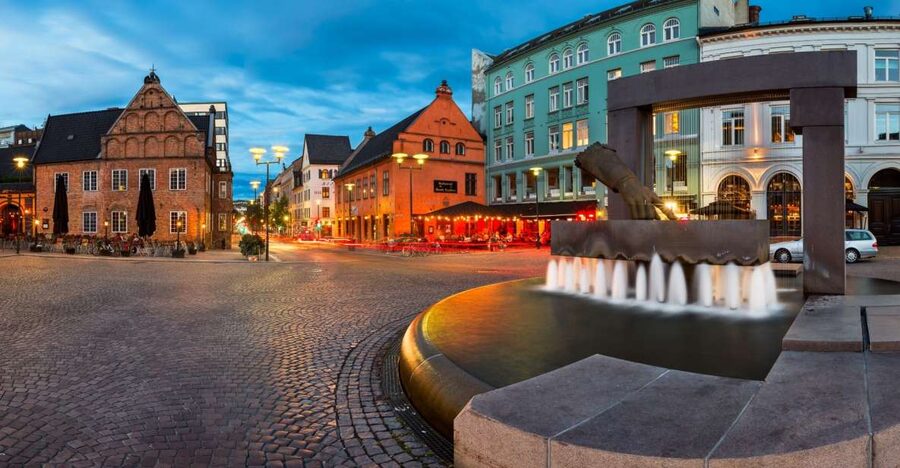
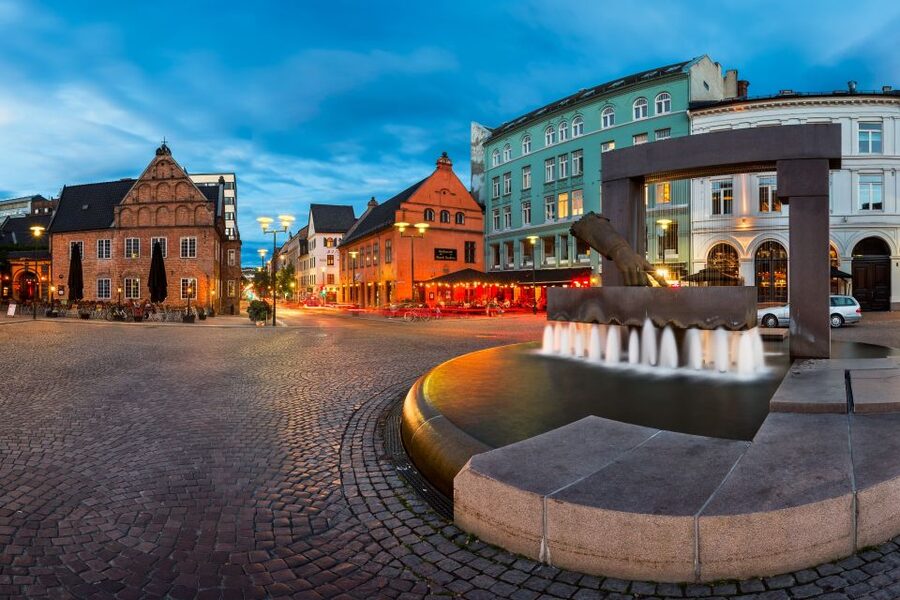
Next up is Christiania Torv, a historic square with a long record of daily life. This is where the tour shifts from the myth characters to real city life. A square like this is where people gathered, traded, argued, celebrated, and handled the small emergencies that make history.
For your understanding of Oslo, Christiania Torv works as a bridge stop. You get a chance to anchor the stories you heard at City Hall in the rhythm of the city. The guide uses events and stories tied to Oslo’s development to show how the same place can carry different meanings over time.
What I like about this stop is that it supports two different travel styles. If you like stories, you’re happy because you get myth and history tied to a specific setting. If you are more practical, you still get value because squares are how you learn a city’s layout fast. You start to build a mental map for the rest of your stay, and you can return later to explore at your own pace.
Akershus Fortress: medieval engineering with a human edge
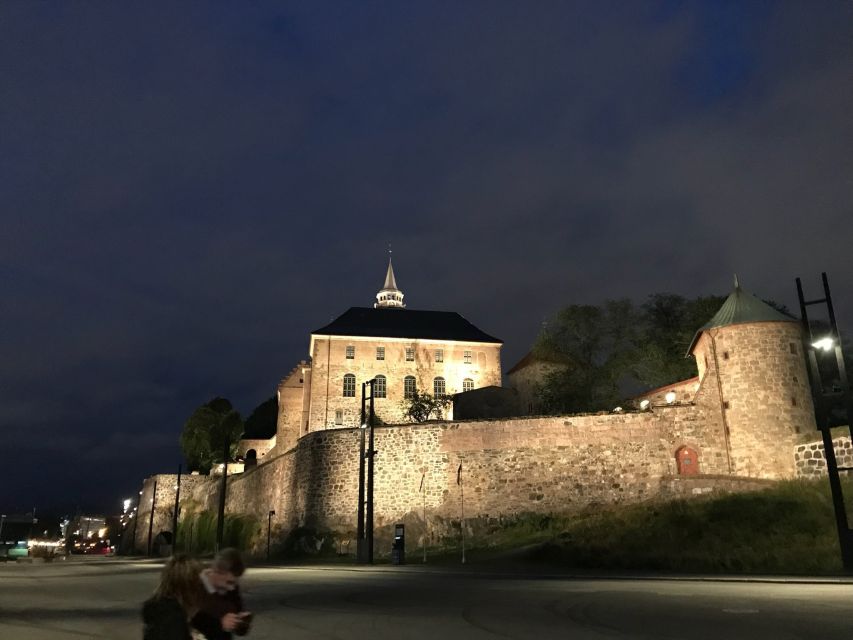
Then you move toward Akershus Fortress, and the tour’s tone tightens. This is not just pretty scenery. Akershus is a major symbol of protection and power across the ages, and the guide treats it as an engineering problem with a life-and-death purpose.
You learn about the fortress’s design and the way it reflects medieval engineering. That might sound technical, but it comes through as practical. You start noticing why walls are shaped the way they are, how defenses are planned, and why certain areas mattered more than others. When the guide explains that the fortress served as a defensive answer to centuries of uncertainty, the place makes immediate sense.
The most emotionally memorable angle is the human side. You hear stories connected to prisoners held within the fortress walls and what happened to them. Those episodes turn a structure into something personal. You stop thinking only about stone and strategy, and you start thinking about the cost of crime, conflict, and rule in a time when justice was harsh.
This stop also delivers on the “evening walk” promise. From the surrounding areas, you get strong visual impact, and the fortress presence can feel bigger in night light. It is a great contrast to the earlier myth-heavy part of the tour, because now you see how fear and protection played out in official systems, not folklore alone.
If you are visiting in winter, this is also where weather becomes your main enemy. People frequently note battling snow and wind during this walk. That’s your cue to wear layers that handle cold, and keep your shoes grippy.
Bankplassen and the darker side of justice and theft
After the fortress, the walk heads toward Bankplassen. This is where the tour gets very story-driven in a different way. Instead of heroic legends, you hear about daring heists and intricate robberies that once shook the city.
More importantly, the guide connects those theft stories to the medieval justice system. You get a sense of how crimes were handled, and how punishment fit into the bigger goal of control. In other words, the tour is not only about who stole. It is about what a society tried to protect and how it reacted when trust broke.
This is one of the most satisfying themes on the itinerary, especially if you like history that includes people behaving badly. It also explains why folklore and myth existed alongside official law. When you have strict systems, you still need myths to interpret fear, guilt, and consequences. The tour keeps that tension visible.
It also helps you see Oslo differently after. Instead of treating the center as a clean list of attractions, you start noticing that cities run on rules, punishment, and rumor, not just monuments.
More of Norway between waymarks, on foot:
- Central Oslo Guided Walking Tour with Local Guide
★ 4.5 · 278 reviews - Oslo: Private Walking Tour with a Local
★ 4.5 · 263 reviews - Oslo: Snowy Forest Torchlight Walk with Campfire
★ 4.6 · 254 reviews - Oslo Grünerløkka Food & Culture Walking Tour
★ 4.5 · 230 reviews
Oslo Cathedral: the quieter counterpoint
The tour also includes Oslo Cathedral, and this stop is a useful contrast. By this stage, you have heard about Norse superstition, fortress protection, and rough justice. A major church landmark changes the mood without breaking the theme.
I like it because it reminds you that Oslo’s identity was never one single belief system. Folk characters like trolls and nisse may have shaped everyday talk, but institutions shaped daily life too. A cathedral stop gives you that broader timeline feeling, from older myth language to the formal power structures of Christian Oslo.
You do not need to know theology to enjoy it. You just need to let it act as a mood reset. It makes the evening feel balanced: eerie and dramatic stories up front, and then a calmer, older anchor at the end of the walk.
How to make the most of a 2-hour evening walk
This tour is 2 hours, which is a sweet spot. Long enough to cover multiple landmarks and themes. Short enough that you stay engaged even if it gets dark fast, which is common in winter.
Here’s what I think helps you get the most value:
- Come ready to listen, not to speed-walk. The point is story and context.
- Wear comfortable shoes with good grip, since you are outside for the full duration.
- Plan for cold wind. People mention it often, so treat winter conditions like part of the itinerary.
- Ask questions when you have them. The guide style described in the experience feedback is interactive, and that makes the myths easier to remember.
- Use it as an intro day plan. Many travelers treat it like the first thread that ties Oslo together, then they branch out to museums and neighborhoods afterward.
Price-wise, it is $42 per person for a live English speaking guide and taxes included. That can feel like a lot until you do the math in your head. You are getting two hours of narration tied to several big-name sights, plus cultural context you would struggle to assemble on your own in a single afternoon. Also, you are not paying extra for transport in the tour price, and you get the benefit of not having to connect the dots yourself.
One practical thing: food and drinks are not included, and there is no hotel pickup and drop-off. That is normal for walking tours, but it means you should eat beforehand and budget for a warm drink after.
Who this tour is best for
This is a strong fit if you:
- Want an Oslo introduction that is more fun than a checklist of landmarks
- Like Norse mythology and folklore, but also want the stories tied to real places
- Enjoy history with a human edge, including crime, punishment, and justice
It may be a poor fit if you:
- Need step-free routing or wheelchair access, since it is not suitable for wheelchair users or people with mobility impairments
- Want a purely “ghost hunt” style night, because the tour specifically avoids underground exploration, even if ghost and underground kingdom stories come up as legend
For families, note the minimum age is 13, so it is really aimed at teen and adult travelers.
So, should you book the Oslo Historic Myths & Legends Evening Walking Tour?
If you want Oslo with personality, I think this tour earns its place. City Hall gives you symbols and art, Christiania Torv gives you the pulse of daily life, Akershus Fortress delivers medieval defense and prisoner stories, and the walk keeps turning the volume up with thefts and justice. The tour also stays accessible in length, which makes it easier to fit into a busy schedule.
Book it if you like storytelling that explains why people believed what they believed, and if you’re okay spending two hours outside in evening weather. Skip it if cold nights and walking long distances are a problem for you, or if you are looking for an underground, ghost-hunting expedition rather than cultural and historical legend.
If you do book it, bring comfortable shoes, dress for wind and dark, and go in expecting myths tied to real architecture. That is when this walk clicks.
Long Northern Evenings
- Oslo: Fjord Evening Cruise with Shrimp Buffet★ 4.5 · 1,956 reviews
- Oslo Fjord Evening Cruise with Shrimp Buffet on a Sailing Ship★ 4.0 · 170 reviews
- Oslo Fjord Evening Live Rock music cruise with Shrimp buffet★ 4.9 · 15 reviews
- Tromsø: Evening Aurora Cruise (dinner optional)★ 4.4 · 1,570 reviews
More Historical Tours in Oslo
- Oslo: Small Group History, Art & Secrets Tour★ 4.6 · 127 reviews
- Oslo City Walks – Historic River Walk★ 5.0 · 31 reviews
- A Well Balanced History and Food Tour with Focus on the Scandinavian Kitchen★ 4.5 · 29 reviews
- History and Secrets of Oslo Tour★ 5.0 · 26 reviews
Newly marked on the map for Oslo
- Oslo Scavenger Hunt and Highlights Self Guided Audio Tour★ 4.5 · 6 reviews
- Oslo easy walk★ 5.0 · 7 reviews
- Oslo: Oslofjord Electric Boat Cookie Cruise★ 3.8 · 7 reviews
- Oslo City Walks: The City of Contrasts★ 3.4 · 7 reviews
- The Oslo Beer Adventure★ 1.9 · 7 reviews
- 7-Day Scenic Scandinavian Tour from Oslo exploring Denmark, Sweden and fjords in Norway★ 4.5 · 7 reviews
- Private Oslofjord Island Hopping Tour★ 4.5 · 8 reviews
- Free Oslo Photo Tour: Iconic & Instagrammable Spots★ 5.0 · 8 reviews
Guided Walks in Oslo, compared.
Guided Walking Tour of Central Oslo with Local Guide
Read our review →


Central Oslo Guided Walking Tour with Local Guide
Read our review →


Browse the lists this tour appears in