
Reviewed · HISTORICAL TOURS
History and Secrets of Oslo Tour
Oslo gets personal in three hours. This small-group walk threads royal history to the Nobel Peace story, then lands you by Oslo’s bold modern sights, like the Opera House and Central Station.
You’ll like how the route feels like one storyline instead of a list of monuments, and how the guide work centers on humor and real local context. You’ll also appreciate the tight timing, with quick stops at major hits and free entry noted for each one.
One watch-out: it’s still a walking tour (about 3 hours), so if you’re sensitive to cold weather or long stretches on foot, plan your layers and pacing.
In This Review
- Why This Walk Feels Worth Your Time
- From the Royal Palace to 1300 Years of Oslo Royal Lore
- Nobel Peace Center at Aker Brygge, Where Peace Gets a Prize
- Oslo City Hall Murals and the Stage for the Nobel Ceremony
- Strolling the Palace to Central Station Boulevard Like a Local
- Christian IV’s Glove and the Long Arc of Norwegian Democracy
- Akershus Fortress Grounds and Harbor Views, Including a Bell Moment
- Bankplassen, Norway’s Economy, and a Modern-Capital Reality Check
- Deichman Bjørvika: The Most Beautiful Library Stop You Will Actually Enjoy
- Oslo Opera House Views at the Pier, Plus Munch Museum Across the Water
- Ending at Oslo Central Station by the Tiger, Ready for Your Next Plan
- What You Gain Most: Storytelling, Humor, and Real Local Tips
- Who This Tour Is Best For, and When It Might Not Fit
- Should You Book This Oslo History and Secrets Tour?
- FAQ
- How long is the Oslo History and Secrets Tour?
- Where does the tour start and end?
- Is the tour offered in English?
- Do I need to buy tickets for the sights?
- What group size should I expect?
- Is it suitable for someone with moderate physical fitness?
- Can I get a full refund if I cancel in time?
Why This Walk Feels Worth Your Time
- A small group of up to 10 keeps questions easy and the pace human.
- Nobel Peace Prize history gets explained where it actually happened, in Oslo City Hall and the Nobel Peace Center.
- Royal to modern Oslo links 1300 years of story to today’s fjord-side design, including Deichman Bjørvika.
- Story-driven route takes you from the Palace area down the main boulevard toward Central Station.
- Harbor views and a memorable moment at the medieval fortress, including a bell moment some people mention.
- Practical after-tour help shows up in guide tips for food and what to do next.
From the Royal Palace to 1300 Years of Oslo Royal Lore
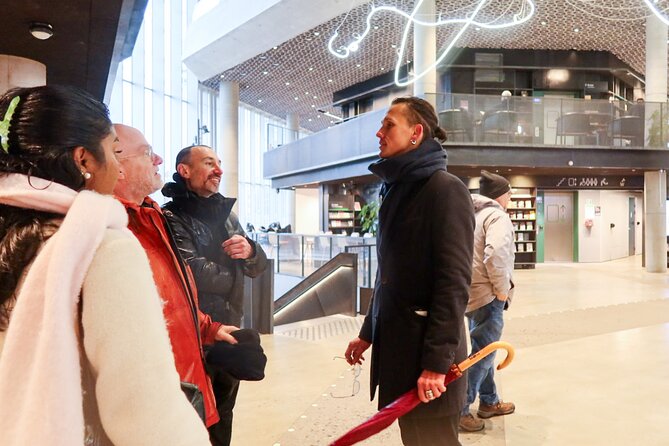
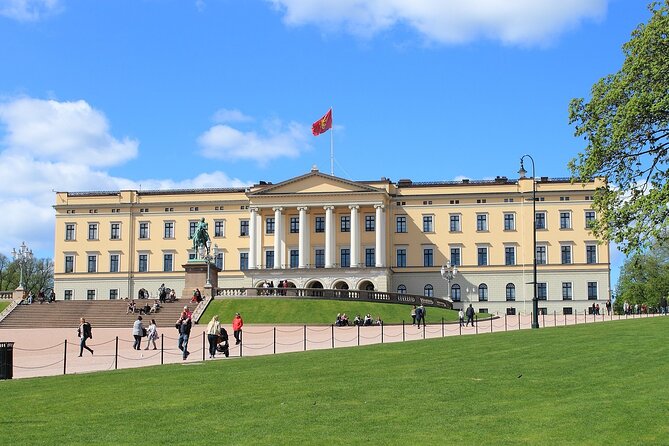
The tour starts at the Royal Palace (Slottsplassen), and the first stretch sets the tone. You begin with the big picture, built around the last 1300 years of royal and city history, so the rest of the walk clicks into place. Even if you only know Oslo from fjord photos, this first stop frames how power, rebuilding, and national identity shaped what you see today.
I like that the tour doesn’t treat history like a textbook. It uses the palace area as an anchor, then keeps feeding you “why does this matter” context as you move. You get a clearer sense of how today’s Oslo is connected to older decisions, especially the kind that came from ruling families and major political shifts.
If you’re traveling solo, this opening also helps you settle in fast. The group is small, and the guide’s style tends to encourage quick conversation between stops, not just one-way lecturing.
Nobel Peace Center at Aker Brygge, Where Peace Gets a Prize
Next you head to the Nobel Peace Center at Aker Brygge, by the fjord. This is housed in the former West Railway Station, and that detail matters, because the building itself supports the theme. It connects movement, industry, and international reach to the Nobel Peace Prize story.
Inside, you’ll see modern exhibitions and short films that explain the Nobel Peace Prize and its laureates. What I appreciate is that the focus stays practical and human: peace, human rights, and global cooperation, explained through exhibits rather than abstract slogans. The tour also highlights the annual rhythm of the Nobel Peace Prize, noting that the center hosts the official exhibition for the current laureate.
A big value here is location. You’re not just learning about Oslo’s role in global history, you’re doing it while standing in one of the most iconic fjord-side neighborhoods. If you like photos, this stop gives you both indoor story and outdoor framing.
Where the path branches next in Oslo

Oslo City Hall Murals and the Stage for the Nobel Ceremony
From there, you move to Oslo City Hall, where the Nobel Peace Prize ceremony happens each year. This stop is brief but focused, and it’s worth treating it like the “context layer” between museum learning and the street-level city story.
The tour points you toward the meaning behind the building’s murals and sculptures, which matters because they’re not just decorations. They’re visual reminders of Norway’s history, stitched into architecture you pass only once unless you know what to look for. When you understand what the artwork is communicating, the building stops being intimidating and becomes readable.
If your time in Oslo is short, this is a strong use of it. You get a major headline site, plus the “why it looks the way it does” explanation that turns sightseeing into understanding.
Strolling the Palace to Central Station Boulevard Like a Local
After the City Hall stop, you head out for a calmer segment along Oslo’s main boulevard, the stretch that connects the Palace area to Central Station. The point here is not an extra museum. It’s rhythm.
You’ll walk past elegant architecture and soak up street life and cultural landmarks along the way. This kind of segment is where you start to feel the city’s tempo, notice how neighborhoods link up, and spot the small details that you’d usually miss when rushing from stop to stop.
I also like this middle walking stretch because it resets your brain. After Nobel-focused storytelling, you get a more everyday Oslo view, including how the city’s layout guides your movement.
Christian IV’s Glove and the Long Arc of Norwegian Democracy
One of the distinctive city stories on this route is Christian IV’s Glove, a historic square founded by King Christian IV, the Danish-Norwegian king who rebuilt Oslo after a devastating fire in 1624. The tour uses this square to connect a specific historical event to how modern Oslo took shape, including the link to the name Christiania.
This is the kind of stop that makes Oslo feel less generic. You’re not just seeing a plaza, you’re hearing why the place exists in its current form and how a ruler’s decisions still show up in the city’s street identity.
Then the walk continues toward the Parliament building, where you hear how Norwegian democracy developed over the centuries. This is another “meaning” stop, not a long visit. It helps you connect the prize and the national story. Peace prize sites and democracy landmarks don’t feel like separate topics anymore, they start reading as the same long conversation about governance, rights, and national values.
If you like political history but don’t want a lecture, this combo works well.
Still ahead on the route through Oslo:
- Oslo: Oslo Fjord Sightseeing Cruise by Sailing Ship
★ 4.5 · 5,790 reviews - Oslo: Scenic Fjord Cruise with Audio Guide Commentary
★ 4.5 · 5,375 reviews - Oslo Nature Walks: Island Hopping Tour
★ 4.8 · 2,713 reviews - Oslo: 24 or 48-Hour Hop-On Hop-Off Sightseeing Bus GrayLine
★ 4.0 · 2,088 reviews
Akershus Fortress Grounds and Harbor Views, Including a Bell Moment
Next comes one of the most dramatic scenery shifts on the walk: the medieval fortress overlooking the harbor. The tour frames it around defense and survival, explaining its role in protecting Oslo and its place in Norwegian history.
The fortress setting does more than provide views. It gives you a physical sense of why the city needed strong protection and how Oslo’s relationship with the harbor has always mattered. Even in a short stop, the harbor perspective changes how you picture the city’s past.
One moment people call out is by the harbor, where they mention being able to ring a bell. If that’s your kind of “only in the moment” memory, this stop is worth paying attention to. It’s exactly the sort of small detail that makes a walking tour stick in your mind.
Bankplassen, Norway’s Economy, and a Modern-Capital Reality Check
At Bankplassen, you head to the Bank of Norway area, where the story shifts toward trade, banking, and innovation. The tour ties those ideas to how Oslo grew into a modern capital.
This part of the route is useful because it adds a practical dimension. If the earlier stops taught you about identity and politics, this stop helps you understand the everyday engine behind a city. Banking and trade might sound dry on paper, but in Oslo, they’re tied to ports, movement, and the kind of long-term planning that shapes neighborhoods and institutions.
You’ll likely find yourself looking at the city’s formal buildings with a new question in mind: who funded this, who benefited, and what changed over time?
Deichman Bjørvika: The Most Beautiful Library Stop You Will Actually Enjoy
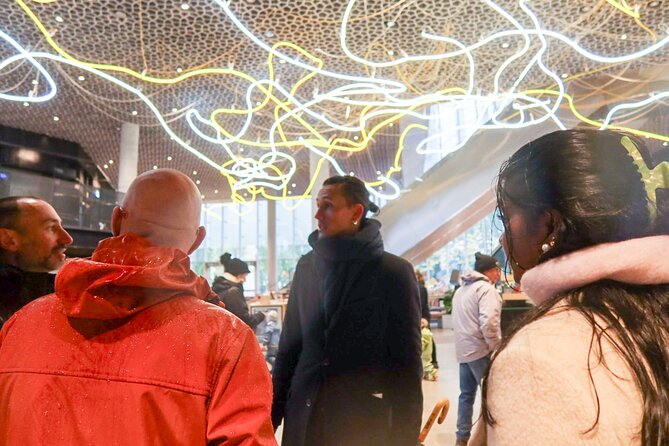
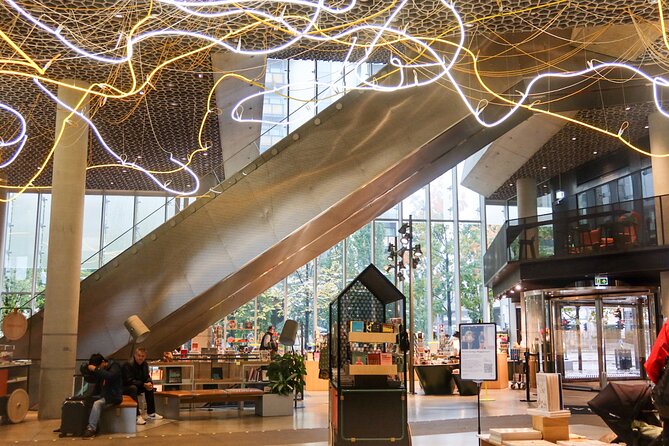
From Bankplassen you move toward Deichman Bjørvika, stepping inside the library. The tour notes it as the most beautiful library in the world, and while beauty is always subjective, the description matches what makes this stop work: bright, light-filled interiors and a calm atmosphere.
This is a great breather stop. It’s not about speed. It’s about design and how space shapes mood. If you’ve been walking and want one place that feels like you can exhale, this is it.
I also think this stop helps you see Oslo beyond statues and ceremonies. Libraries, public services, and architecture all tell you what a country values in daily life, not just what it celebrates once a year.
Oslo Opera House Views at the Pier, Plus Munch Museum Across the Water
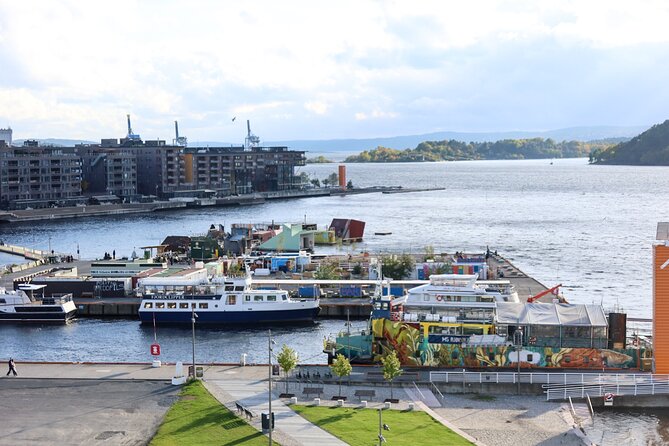
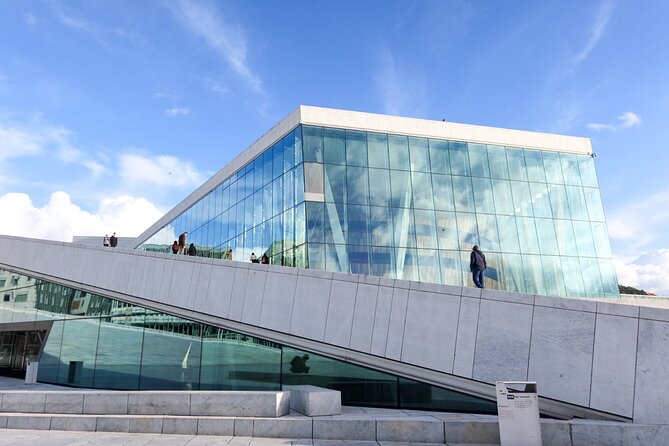
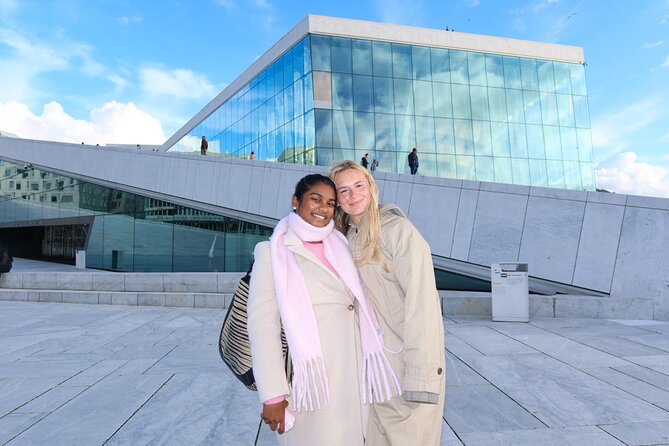
Then you reach the Oslo Opera House area with a short break by the pier. Here the tour leans into one of the best ways to enjoy Oslo’s modern skyline, using water as the framing tool.
You’ll get views of the Opera House and the Munch Museum across the water. Even with a short stop, it gives you that signature Oslo feeling: fjord light, dramatic angles, and modern culture placed right where the city breathes.
If you’re thinking about photo timing, this is one of the better spots because you’ll have a few good angles without needing a ticketed entry or a long detour.
Ending at Oslo Central Station by the Tiger, Ready for Your Next Plan
The tour finishes at Oslo Central Station, specifically by the tiger in front of the building. It’s a smart ending point because it puts you at the center of transit and makes onward planning easy.
Also, a lot of guides share recommendations right after the main route. People mention restaurant suggestions and even ideas for continuing exploration, like a boat ride to keep the fjord theme going. If your guide offers a next step, it’s often a good match for the story you just heard. You’ve been learning about Oslo as a city of connections, so continuing with transport by water or by train feels natural.
From a practical standpoint, finishing at Central Station is ideal if you’re catching a train, meeting someone, or just want to reset with a meal nearby.
What You Gain Most: Storytelling, Humor, and Real Local Tips
The most praised aspect of this tour is how the guide work turns short stops into lasting understanding. Guides including Martin, Monika, Radu, Anders, and Magnus are repeatedly described as charismatic, funny, warm, and engaging. That matters because this itinerary is packed with themes, Nobel history, democracy, royal rebuilding, and modern city design. Without a guide who can keep it flowing, it would feel like a checklist.
Here’s what you can realistically expect from that style:
- You’ll get historical context, not just names.
- You’ll have space for questions and small talk, which keeps the experience friendly.
- You’ll come away with practical tips for what to do next, often with restaurant ideas that feel local rather than generic.
Small group size also helps. With up to 10 people, you’re less likely to feel like you’re being rushed through.
Who This Tour Is Best For, and When It Might Not Fit
This is a good fit if you:
- Want a first visit to Oslo to feel organized and satisfying.
- Like connecting big themes, Nobel Peace Prize, democracy, rebuilding, and modern culture.
- Prefer walking with a guide who tells stories and keeps things fun, not stiff.
It may not be your best match if you:
- Don’t enjoy walking for a few hours in varied weather.
- Want long museum time at a single site. This is about covering a lot with smart stop lengths, not deep stays.
If you travel with kids, the tour data only says moderate physical fitness is recommended, not whether it’s child-focused. So you might want to judge based on your family’s tolerance for walking and short stops.
Should You Book This Oslo History and Secrets Tour?
I’d book it if your goal is to get oriented quickly and still learn real context. The route is built around high-impact Oslo themes: royal history, the Nobel Peace Prize and ceremony site, Norway’s democratic story, fortress defense, finance and innovation, and modern architecture. That mix is rare in a single 3-hour walk.
If you’re the type who likes getting a short, useful introduction with a guide who can point you toward good food and smart next steps, this tour fits that travel style. And if you’re traveling solo, the small group setup and the guide’s conversation-friendly tone can make it feel less lonely and more social.
If you’re deciding last minute, here’s the simplest test: do you want Oslo in one “story-driven sampler” from Palace to Central Station? If yes, book it. If you only want a long museum visit or you hate walking, look for a different format.
FAQ
How long is the Oslo History and Secrets Tour?
It runs for about 3 hours.
Where does the tour start and end?
It starts at the Royal Palace, Slottsplassen 1, and ends at Oslo Central Station, at Jernbanetorget 1, by the tiger in front of the train station.
Is the tour offered in English?
Yes, the tour is offered in English.
Do I need to buy tickets for the sights?
The tour notes admission ticket free for the listed stops, so you should not need paid entry for those particular stops.
What group size should I expect?
The tour has a maximum of 10 travelers.
Is it suitable for someone with moderate physical fitness?
Yes, travelers should have a moderate physical fitness level.
Can I get a full refund if I cancel in time?
Yes. You can cancel up to 24 hours in advance for a full refund. If you cancel less than 24 hours before the start time, the amount paid is not refunded.
Newly marked on the map for Oslo
- Oslo Scavenger Hunt and Highlights Self Guided Audio Tour★ 4.5 · 6 reviews
- Oslo easy walk★ 5.0 · 7 reviews
- Oslo: Oslofjord Electric Boat Cookie Cruise★ 3.8 · 7 reviews
- Oslo City Walks: The City of Contrasts★ 3.4 · 7 reviews
- The Oslo Beer Adventure★ 1.9 · 7 reviews
- 7-Day Scenic Scandinavian Tour from Oslo exploring Denmark, Sweden and fjords in Norway★ 4.5 · 7 reviews
- Private Oslofjord Island Hopping Tour★ 4.5 · 8 reviews
- Free Oslo Photo Tour: Iconic & Instagrammable Spots★ 5.0 · 8 reviews
Historical Tours, compared.

Reindeer Camp and Sami Cultural Tour with Lunch
Read our review →
Sámi Reindeer Sledding and Sami Cultural Tour
Read our review →



Browse the lists this tour appears in