
Reviewed · GUIDED WALKS IN OSLO
Oslo: Best of Oslo Walking Tour
Oslo rewards slow walking. This guided route strings together the city’s power, old streets, and waterfront in just two hours, then hands you an app to keep going. I really like how the tour explains the meaning behind sites like the Norwegian Parliament and the Opera House, not just their shapes. I also like that you get a guided foundation, plus an included audio route so you can return at your own pace.
One thing to consider is weather. In winter, sidewalks may be icy or snow covered, and one guest reported difficulty for a wheelchair during a snowy tour, even with an accommodating guide.
In This Review
- Key Stops and Why They Matter
- Where This Tour Fits In Your Oslo Plan
- Starting Points: Nobel Peace Center or University Area
- Paleet to the Norwegian Parliament: Learning Oslo’s Rules of the City
- Grand Hotel and Oslo’s Big-Stage Architecture
- Oslo Opera House: The City’s “Ocean Pearl” Moment
- Christiania and Kvadraturen: Why Oslo Changed Its Name
- Oslo Cathedral and Stortorvet Area: The Old Core Feeling
- Akershus Fortress and Langkaia: Fortress Views Without the Whole Detour
- Oslo City Hall and Nearby Cultural Corners
- Aker Brygge, Tjuvholmen, and the Oslo Second City Hall Flavor
- Royal Palace and National Theater: Finishing the Loop With Grand Style
- The App: How to Turn 2 Hours Into a Longer Oslo Day
- Price and Value: Is $38 Worth It for This Walking Tour?
- Who This Tour Suits Best (And Who Might Prefer Something Else)
- Little Details That Make It Feel Smooth
- Should You Book This Oslo Walking Tour?
- FAQ
- How long is the Oslo walking tour?
- How much does the tour cost?
- What languages are the guided tours available in?
- Where do I meet the guide for the English tour?
- Where do I meet the guide for the German tour?
- What is included in the tour price?
- Is entry to attractions included?
- How do I access the app after the tour?
- Can I cancel for a full refund?
Key Stops and Why They Matter
- Nobel Peace Award story, with context beyond the postcard
- Storting (Norwegian Parliament) and Karl Johan as the city’s political spine
- Christiania, Oslo’s earlier center, where the city’s name changes make sense
- Opera House and waterfront viewpoints that work great even on gray days
- Aker Brygge and Tjuvholmen, modern Oslo’s more playful, artsy side
- Audio app access that turns a 2-hour walk into a longer self-guided loop
Where This Tour Fits In Your Oslo Plan
If you want the fast lane to understanding Oslo, this is a smart first or second day activity. The walking time is listed as about 2 hours, and that matters because it gives you a solid orientation without wiping out your whole day. Oslo can feel spread out, but this route concentrates on the core: Sentrum, the historic center, and the waterfront corridor.
The price is $38 per person for the guide and app. That is not cheap for a walking tour, so I’d treat it like “buying clarity.” You’re paying for live narration in English or German, plus a sightseeing app route you can use afterward. If you like history told with real street-level details, it usually feels like good value.
Group size seems to vary. In the feedback I saw, groups ranged from small (around four) to larger sets (around thirteen). That can change the vibe, but the key is that the format stays manageable because the stops are close and the pacing is designed around listening.
Starting Points: Nobel Peace Center or University Area
You get two starting location options. Depending on what you book, you’ll meet near:
- Nobel Peace Center (Brynjulf Bulls plass 1), or
- Universitetsplassen
Meeting points can also change slightly by option, so it’s worth checking your voucher before you head out.
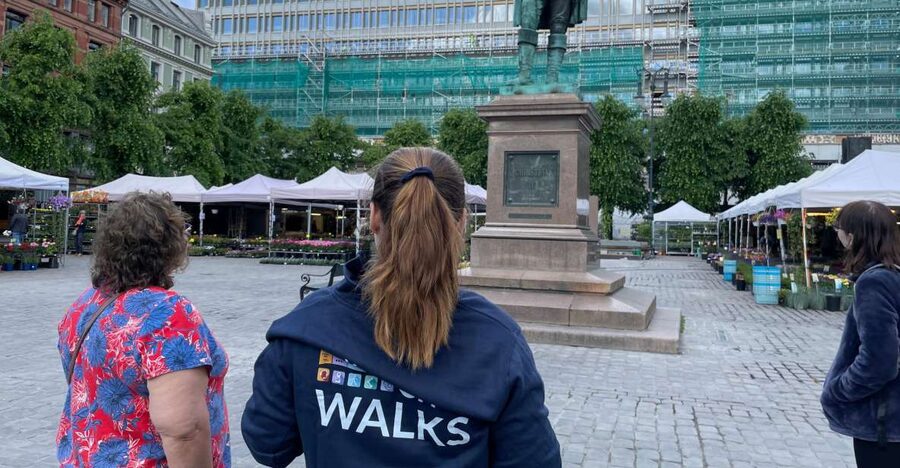
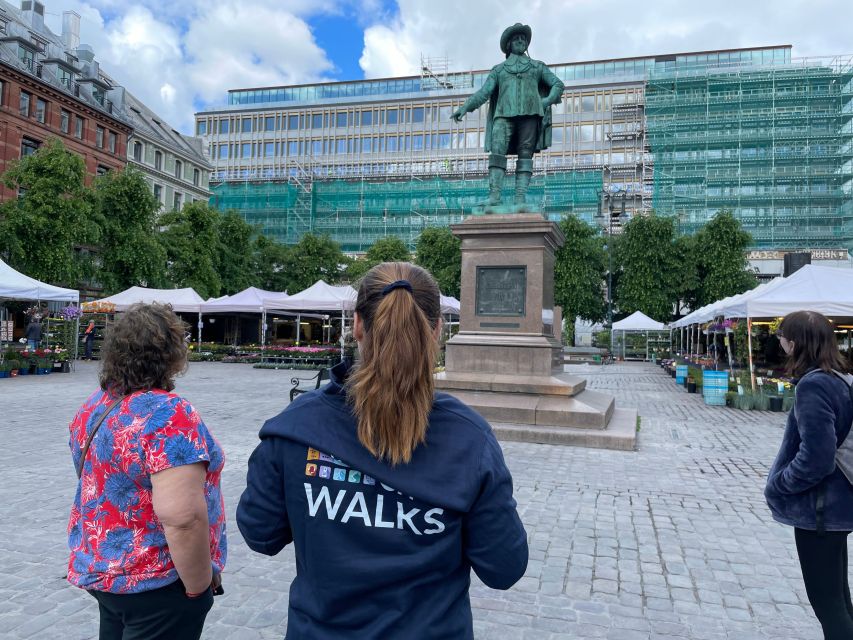
If you choose the English tour, the guide meets near the statue of P.A. Munch by the Faculty of Law building entrance at University Aula, Karl Johan Str. 47. If you choose the German tour, the meeting is at the Nobel Peace Center.
Arrive about 5 minutes early if you can. Even small delays can cause you to miss the handoff into the first story.
More Guided Walks in Oslo



Paleet to the Norwegian Parliament: Learning Oslo’s Rules of the City
A classic way to meet Oslo is through the places where decisions get made, and this tour leans into that. It passes by the Paleet area, then moves into the heart of government around the Norwegian Parliament.
This is one of the tour’s best ideas: you don’t just see the building, you learn how the city and country organize themselves. The Parliament stop is also where the tour’s tone often clicks for people who don’t think they like politics. Instead of dry facts, you get stories that explain why the Norwegian people care about institutions and civic life.
You’ll also hit Karl Johan Street and other landmarks tied to Oslo’s identity. Karl Johan is the main boulevard of sorts, and walking it with a guide helps you understand why it became the city’s central walkway rather than just a long street with shops.
Grand Hotel and Oslo’s Big-Stage Architecture
From there, the route keeps feeding your “how Oslo is built” curiosity. The itinerary includes the Grand Hotel area and then continues into major sight corridors where architecture plays a daily role, not a museum role.
Why this works: Oslo’s style is modern and clean, but it has layers. During a short 2-hour walk, the guide’s job is to connect the layers so you start spotting patterns. Reviews praised guides for pacing and clarity, and the best moments often came from comparisons, like how different districts reflect different eras.
If you like to photograph buildings, this is a good segment. You will have multiple chances to frame Oslo’s center with landmark backdrops, especially as the tour transitions toward the waterfront.
Oslo Opera House: The City’s “Ocean Pearl” Moment
The Norwegian Opera House is one of those places you can’t fake your interest in. It is active. People move around it. It sits right where city energy meets water views.
On this walk, you get a guided pass by the Opera House, and the narration is meant to help you read it, not just point at it. The tour highlights how it functions as a symbol for Oslo’s modern identity.
Practical tip: even if you do not enter, you can still enjoy the setting. On many days you will be able to spot people relaxing nearby and using the space in a casual way, which helps you picture how locals use their landmarks.
More of Norway between waymarks, on foot:
- Central Oslo Guided Walking Tour with Local Guide
★ 4.5 · 278 reviews - Oslo: Private Walking Tour with a Local
★ 4.5 · 263 reviews - Oslo: Snowy Forest Torchlight Walk with Campfire
★ 4.6 · 254 reviews - Oslo Grünerløkka Food & Culture Walking Tour
★ 4.5 · 230 reviews
Christiania and Kvadraturen: Why Oslo Changed Its Name
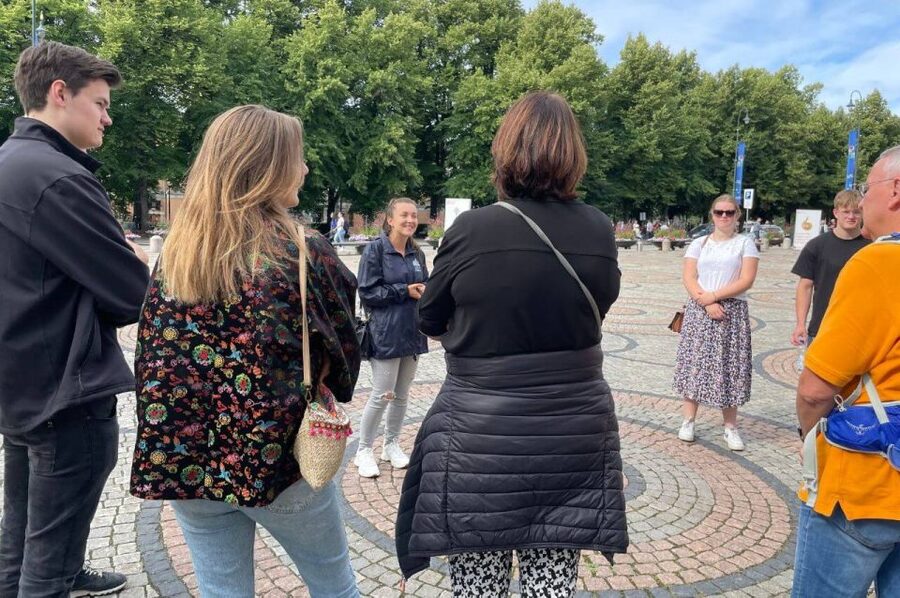
Here’s where the tour shifts from “big public buildings” to “what the city used to be.” You visit the historical center area tied to Christiania, and you also pass through Kvadraturen.
This part is especially valuable if you’ve ever wondered why Oslo has had different names over time. The tour explains the timeline of changes across the last 300 years, and that context makes older street patterns feel less random. You start seeing Oslo as a city that keeps re-centering itself, not just expanding outward.
You will also pass or stop near Christiania Torv. That space helps break up the walking rhythm, and it’s a good moment to reset your brain before the waterfront fortress segment.
Oslo Cathedral and Stortorvet Area: The Old Core Feeling

Oslo Cathedral is on the route, and the point here is atmosphere. Big civic buildings can feel official and distant, but religious architecture often makes the city feel more human and continuous.
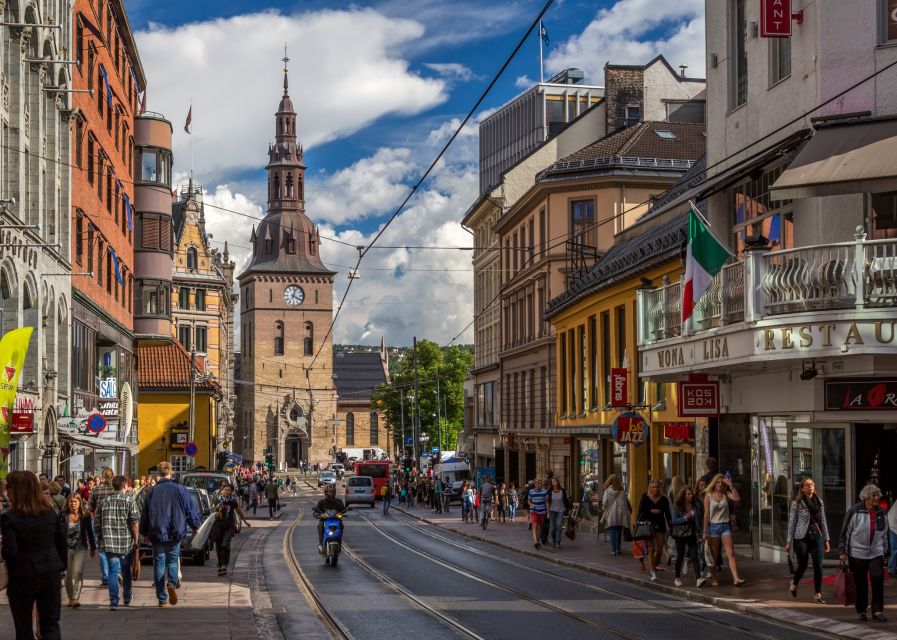
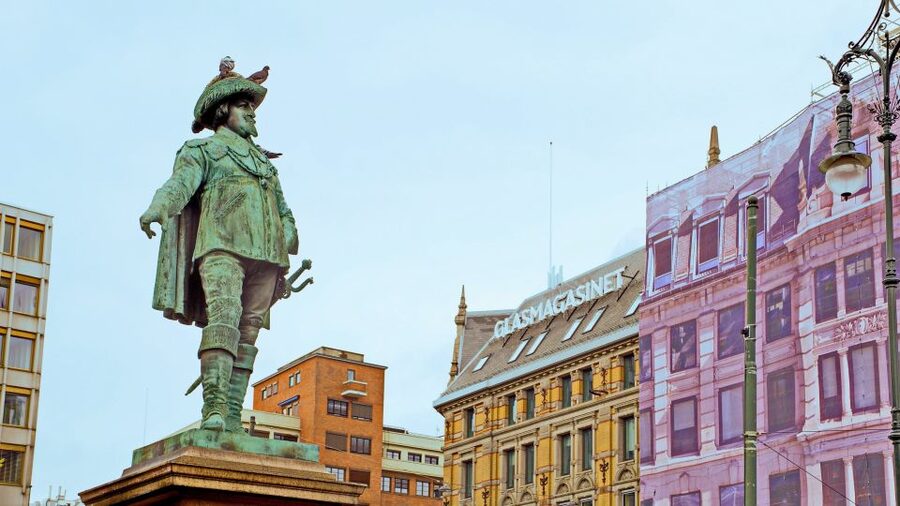
From there, the walk continues through the Sentrum zone, including the Stortorvet area and places like Glasmagazinet Stortorvet. These stops tend to land well because they connect culture with daily life. You are not only seeing museums from outside, you’re learning why certain areas became cultural magnets.
If you like café breaks, you’ll also pick up ideas from your guide for where to grab something afterward. In the feedback I read, guides pointed out good coffee spots and even recommended specific baked treats, which is exactly the kind of practical knowledge that turns a walking tour into a day planner.
Akershus Fortress and Langkaia: Fortress Views Without the Whole Detour
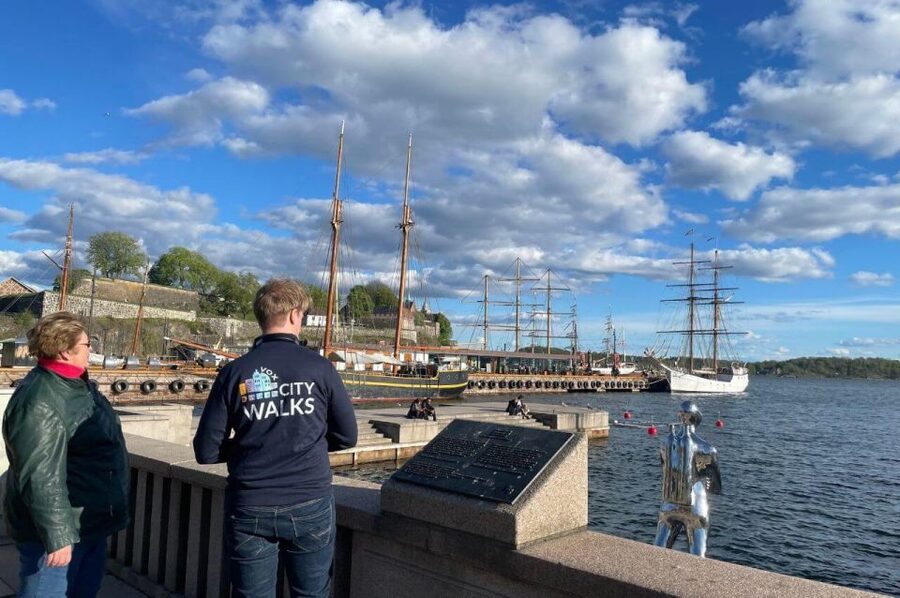
The route includes Akershus Fortress and the Langkaia area. You get the benefit of fortress energy without committing to a full fortress visit with long lines and extra time. For many people, this is a sweet spot because you get the skyline impact and the sense of water-edge defense.
Akershus also helps you understand Oslo geographically. The city’s waterfront is not a backdrop. It is part of the story of how Oslo grew and why people settled near the water.
If you want a simple self-guided follow-up after your tour, this segment sets you up to know where to look next, because you’ll remember the angles and sightlines.
Oslo City Hall and Nearby Cultural Corners
Oslo City Hall is another major stop. This is one of those buildings that feels important even from a distance, and a guided pass helps you understand why it carries weight as a city symbol.
The route also includes stops or passes around other cultural landmarks, including Anatomigården. These kinds of details matter because they show you Oslo’s personality. It’s not all government and modern design. There are smaller cultural pockets too.
This segment is a good reminder that a “best of” walking tour should do more than list famous sights. It should teach you what kind of city you’re in. For me, City Hall and the nearby landmarks often signal a city that likes public art, public buildings, and public storytelling.
Aker Brygge, Tjuvholmen, and the Oslo Second City Hall Flavor
Now you’re into the waterfront fun zones, including Aker Brygge and Tjuvholmen. These are the areas where Oslo shifts into something more relaxed, artsy, and modern.
Aker Brygge is often a favorite because it mixes views, shops, and places to sit. Tjuvholmen adds a different feel, leaning toward design and gallery culture. Even if you do not go inside anything, you get the “what to expect” sense quickly.
The tour also includes references to Oslo’s Second City Hall and Gamle rådhus. That helps connect the waterfront modern vibe back to older civic identity, so the contrast feels intentional rather than accidental.
If you enjoy walking where other people stroll, this section is a great use of your legs. It is also where the city looks most photogenic, especially if clouds break for a bit.
Royal Palace and National Theater: Finishing the Loop With Grand Style
As the walk wraps up, you pass major cultural and ceremonial landmarks like the Royal Palace and the Norwegian National Theater.
These stops give a final “big Oslo” snapshot. You understand that Oslo is a capital, not just a pretty city with a harbor. You also notice how the city’s central streets and public buildings connect like a thread.
The tour ends at either Universitetsplassen or the Nobel Peace Center, depending on your booking. That drop-off flexibility is practical. It means you are not forced into one end of the city after a short walk.
The App: How to Turn 2 Hours Into a Longer Oslo Day
One of the best value pieces here is the sightseeing app included with your tour. After you finish the walk, you scan the QR code on your voucher to access the guided audio route.
That matters because Oslo is a place where walking works, but only if you know where to go next. The app route includes highlights like:
- Frogner Stadion
- Norwegian Parliament (again as a self-guided reference point)
- Trinity Church
- Karl Johan monument
- Grensen
- Aamodt Bridge
and more
Think of the app as your “memory map.” You finish the tour with context, and then the audio route helps you expand into neighborhoods and landmark areas you might otherwise skip.
If you are short on time, this is also a great move because you can pick and choose what fits your energy level, without joining another paid group tour.
Price and Value: Is $38 Worth It for This Walking Tour?
Here’s how I’d judge the value. You pay $38 for:
- Live guided commentary in English or German
- A structured 2-hour walk through major sites
- Access to an included audio-guided app for continued exploring
The guide portion is the real cost driver, and it’s also the part that’s easiest to waste if the storytelling is weak. The feedback here was strongly positive about guides being clear, friendly, and good at pace. Names that came up include Minji, Olaf, Anastasia, Amelia, Oliver, Csilla, Judit, Judith, and others, and the pattern was consistent: guides explained the meaning behind places and helped people orient.
The app makes it feel less like you “buy only a walk.” If you use the audio route afterward, you stretch your money further.
So, is it worth it? If you want your first Oslo day to come with context, yes. If you already know Oslo well and just want to roam, you might not need a guide at all.
Who This Tour Suits Best (And Who Might Prefer Something Else)
This tour is a great fit for:
- First-time Oslo visitors who want fast orientation
- People who like stories tied to architecture and civic life
- Travelers who prefer walking but still want structure
- Anyone who wants an easy way to plan where to spend more time
It might be less ideal if:
- You hate walking in the cold or wet
- You are sensitive to slippery sidewalks in winter (this came up in feedback)
- You want deep museum time, since entries are not included
Little Details That Make It Feel Smooth
A few practical touches show up repeatedly in the feedback:
- Guides start on time and keep a reasonable pace
- People appreciate that the guide can handle questions without dragging
- Larger groups received audio support like earpieces in at least one case, which can be a big help on busy streets
- Even in rain or snow, the tour continues in a way that keeps it enjoyable
Also, it’s worth knowing the tour includes sightseeing passes rather than guaranteed entry tickets. That means your time stays focused on street-level highlights.
Should You Book This Oslo Walking Tour?
Book it if you want a short, high-impact Oslo overview that helps you navigate the city and understand what you’re seeing. The combination of live storytelling plus an app audio route is the big reason it works, especially on a tight schedule.
Skip it or choose another format if you already have Oslo mapped out and you only want museum time or long scenic stops. For most people, though, this is an efficient way to get oriented, then go explore with confidence.
FAQ
How long is the Oslo walking tour?
The tour duration is about 2 hours.
How much does the tour cost?
The price is listed as $38 per person.
What languages are the guided tours available in?
The live commentary is offered in English or German.
Where do I meet the guide for the English tour?
For the English tour, meet near the statue of P.A. Munch by the Faculty of Law building entrance at University Aula, Karl Johan Str. 47.
Where do I meet the guide for the German tour?
For the German tour, meet at the Nobel Peace Center, Brynjulf Bulls plass 1.
What is included in the tour price?
Included items are the guided walking tour, live commentary in English or German, and a sightseeing mobile app.
Is entry to attractions included?
No. Entry to attractions is not included.
How do I access the app after the tour?
Scan the QR code on your voucher to access the sightseeing app.
Can I cancel for a full refund?
The activity offers free cancellation up to 24 hours in advance for a full refund.
Newly marked on the map for Oslo
- Oslo Scavenger Hunt and Highlights Self Guided Audio Tour★ 4.5 · 6 reviews
- Oslo easy walk★ 5.0 · 7 reviews
- Oslo: Oslofjord Electric Boat Cookie Cruise★ 3.8 · 7 reviews
- Oslo City Walks: The City of Contrasts★ 3.4 · 7 reviews
- The Oslo Beer Adventure★ 1.9 · 7 reviews
- 7-Day Scenic Scandinavian Tour from Oslo exploring Denmark, Sweden and fjords in Norway★ 4.5 · 7 reviews
- Private Oslofjord Island Hopping Tour★ 4.5 · 8 reviews
- Free Oslo Photo Tour: Iconic & Instagrammable Spots★ 5.0 · 8 reviews
Guided Walks in Oslo, compared.
Guided Walking Tour of Central Oslo with Local Guide
Read our review →


Central Oslo Guided Walking Tour with Local Guide
Read our review →


Browse the lists this tour appears in