
Reviewed · GUIDED WALKS IN OSLO
Oslo & Vigeland Park Private Walking Tour
Oslo can feel like a maze on day one, but this route makes it click fast. You get a professional guide who ties the sights together with clear city history, plus private pacing that lets you ask questions as you go. You’ll hit big-name landmarks like the Nobel Peace Center, the Royal Palace, and Oslo’s main pedestrian street, then end at Vigeland Park with time to take it all in.
The main trade-off is time: Vigeland Park gets about 1 hour, so if you want to linger on sculptures, angles, and details, plan to do your own return visit or communicate your priorities early.
In This Review
- Key Points That Make This Tour Worth Your Time
- Your Oslo “Orientation First” Route
- Nobel Peace Center: A Former Station With Nobel Prize Meaning
- Oslo City Hall, Nationaltheatret, and the Royal Palace in One Sweep
- Oslo City Hall: Art That Reads Like Civic Pride
- Nationaltheatret: Theater as a National Public Square
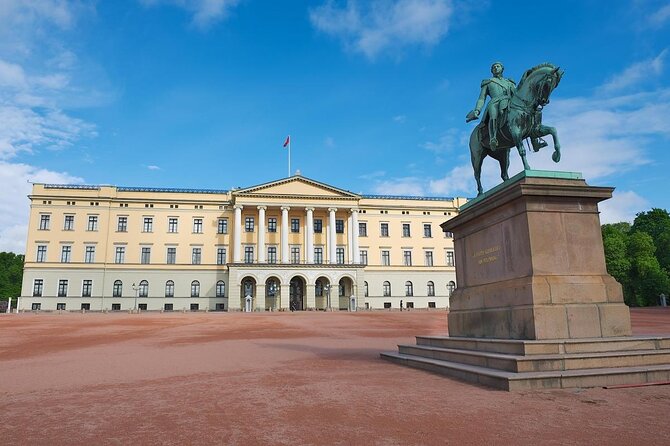
- The Royal Palace: Where Royal Life Meets Official Space
- Karl Johans Gate and Parliament: Pedestrian Oslo and Democracy on Display
- Akershus Fortress and the Oslo Fjord View
- Bankplassen and Christian IV’s Glove in Kvadraturen
- Bankplassen: The Old Bank Square Clue
- Christian IV’s Glove: Renaissance Planning and a Name Change
- Vigeland Park: One Sculptor, Over 200 Works, and a Chance to Choose Your Favorite
- How Much Is This Private Tour, and What Do You Really Get?
- Who This Tour Suits Best
- A Quick Reality Check on Timing and Weather
- What to Expect From the Guide
- Should You Book This Oslo and Vigeland Park Private Walk?
- FAQ
- How long is the Oslo and Vigeland Park private walking tour?
- Where does the tour start and end?
- Is the tour private?
- What sights will I see during the tour?
- Are there admission fees for the stops?
- Do I get transportation included to Vigeland Park?
- What is the physical difficulty like?
- What is included in the price, and what is not included?
Key Points That Make This Tour Worth Your Time
- Strong guide-led storytelling that connects Nobel Prize Norway, royal life, and everyday civic symbols
- Free entry stops that cover a lot of Oslo without paying extra for each landmark
- Private format, so the pace can flex with your questions and photo stops
- A realistic walking mix including gravel or unpaved paths in parts of the route
- Vigeland Park at the end, so you can extend your visit on your own after the tour ends
- Public transport included to Vigeland Park, which helps you spend more time looking and less time figuring transit
Your Oslo “Orientation First” Route
This tour works best for you if it’s your first morning (or first day) in Oslo and you want a clean hit list without feeling rushed. The flow is simple: you start at the Nobel Peace Center, move through central landmarks on foot, and finish at Vigeland Park. It’s designed to help you understand where everything sits, why it matters, and how modern Oslo layers itself over older eras.
Even the structure of the walk helps. You’re not just passing buildings, you’re getting context as you go. That matters because Oslo has a strong sense of planning, and the city’s story shows up in street layout, civic architecture, and public spaces. With a guide, you notice those patterns instead of only snapping photos and moving on.
Nobel Peace Center: A Former Station With Nobel Prize Meaning
You start at the Nobel Peace Center, set in a former train station. That alone gives the place extra character, because you’re stepping into a building with its own past, not just a modern visitor site. Expect an explanation of Alfred Nobel, and why the Nobel Peace Prize is connected to Norway. This is one of those stops where the building helps you remember the story, because the setting feels practical and historical at the same time.
You’ll also get that useful practical effect: after you learn the Nobel Peace thread here, the rest of your Oslo walk feels less like random landmarks. Everything starts linking back to what Norway celebrates and how the country chooses to communicate its values.
More Guided Walks in Oslo


Oslo City Hall, Nationaltheatret, and the Royal Palace in One Sweep
After the Nobel Peace Center, the route shifts into “civic Oslo,” where architecture and art reflect Norwegian life.
Oslo City Hall: Art That Reads Like Civic Pride
Oslo City Hall is home to the local government, and it’s also known for characteristic architecture plus artworks with motifs tied to Norwegian history, culture, and working life. You’re in and out quickly, but the stop is long enough for the guide to point out what to look for. That’s the difference between seeing a facade and actually noticing the messages built into it.
This is also a great place for your first good “visual anchoring” in the city. Once you’ve watched how the artworks are integrated, you start spotting similar details elsewhere.
Nationaltheatret: Theater as a National Public Square
Next is Nationaltheatret, the National Theatre. It has been Norway’s main arena for Norwegian classic and innovative productions, plus grand celebrations, for about a century. The big value here is context. If you know what this building represents, it stops being just another landmark and becomes a clue to how Oslo channels culture as a public identity.
More of Norway between waymarks, on foot:
- Taste of Oslo Walking Tour
★ 4.5 · 282 reviews - Central Oslo Guided Walking Tour with Local Guide
★ 4.5 · 278 reviews - Oslo: Private Walking Tour with a Local
★ 4.5 · 263 reviews - Oslo: Snowy Forest Torchlight Walk with Campfire
★ 4.6 · 254 reviews
The Royal Palace: Where Royal Life Meets Official Space
The Royal Palace is the official residence of the current Norwegian monarch, and many members of the Royal Court work here. This stop is quick, but it’s still meaningful because it clarifies what the palace is in practical terms, not just as a photo opportunity. You’ll also get a feel for how royal presence fits into the modern city.
If you like landmark days where you learn why each stop matters, this cluster does that well.
Karl Johans Gate and Parliament: Pedestrian Oslo and Democracy on Display
Once you’re moving through central streets, you’ll hit Karl Johans Gate, the main pedestrian street of Oslo. It’s named for King Karl III Johan, who lived in the 1800s. This is where the tour starts to feel like a walk in the real city, not a sequence of museum entrances. The street name alone becomes a small lesson in how Oslo honors its monarchy through everyday geography.
Then you’re at the Norwegian Parliament, known as Stortinget, which overlooks Eidsvolls Plass. It’s described as one of Norway’s most important symbols of democracy. The short stop works well because it’s paired with everything you’ve already been seeing. You’ve watched civic art at City Hall, you’ve seen public culture at Nationaltheatret, and now you understand where the country’s democratic identity is staged.
Akershus Fortress and the Oslo Fjord View

Next comes Akershus Castle and Fortress, also called Akershus Slott og Festning. This place has layers: a medieval fortress that was turned into a Renaissance royal residence by King Christian IV in the 1600s. That blend of time periods is exactly why a guide helps here. If you know what to look for, you can start reading the building like a timeline.
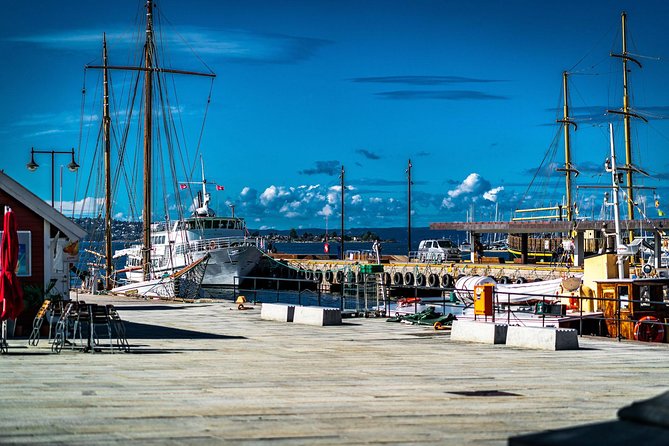
You also get something you can’t easily manufacture on your own without the right route: a view out toward the Oslo fjord. This is the stop where the city suddenly feels wider. You get a sense of why Oslo’s waterfront matters to its story, not just its scenery.
The stop length is about 15 minutes, so it’s enough for context and a view, but not enough to replace a dedicated fortress visit. If you love fortifications, you’ll probably want to return later on your own.
Bankplassen and Christian IV’s Glove in Kvadraturen
Now you shift into smaller, easy-to-miss pieces of Oslo that still add up to big understanding.
Bankplassen: The Old Bank Square Clue
Bankplassen gets its name from the fact that the Bank of Norway was once located here. It’s a short stop, but it teaches you how names in Oslo can act like breadcrumbs. When you walk past street names later, you’ll likely start asking why the city chose that label.
Christian IV’s Glove: Renaissance Planning and a Name Change
You also visit Christiania torv, tied to the earlier name for Oslo, which was Christiania. The area is known as Kvadraturen because of the rectangular street pattern from Christian IV’s Renaissance town planning. You’ll hear about Christian IV’s Glove, which connects art and local story in a way that feels very Oslo.
These stops can be brief, but they’re ideal if you want your walk to feel grounded. They show you how history survives in everyday corners, not just in major monuments.
Vigeland Park: One Sculptor, Over 200 Works, and a Chance to Choose Your Favorite
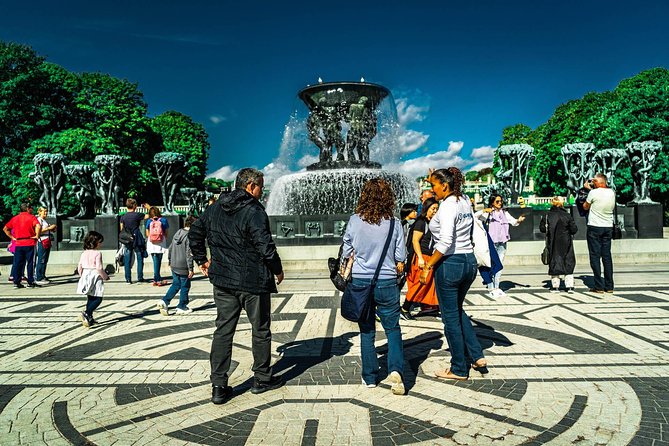
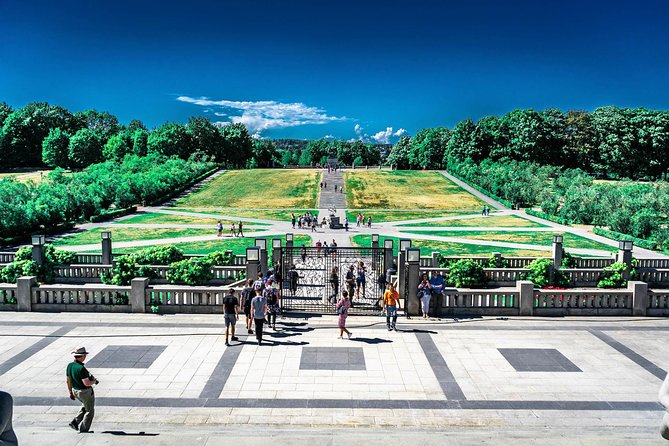
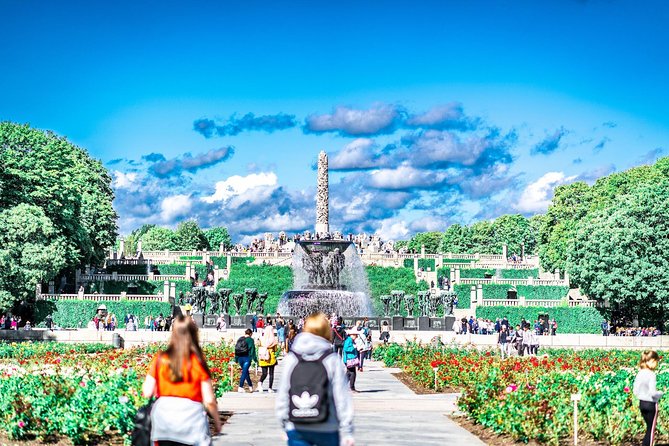
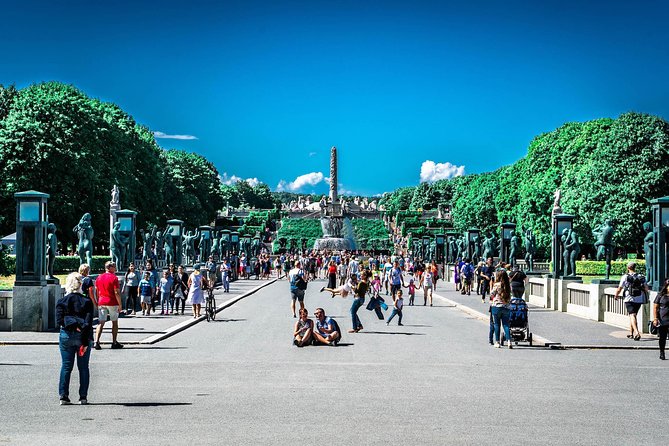
The day ends at Vigeland Park, where entry is free. You’ll spend about one hour here, which is a nice chunk if you use it well. The key detail is what makes the park special: it’s home to over 200 sculptures made by one man only, Gustav Vigeland. You’ll learn about the sculptor and you can pick your favorite piece, which is a fun way to turn a park walk into a personal scavenger hunt.
In this kind of space, pacing matters. One hour is enough to understand the overall mood and see multiple clusters, but it’s not enough for slow, detail-heavy study. If you’re the type who loves faces, hands, body language, and symbolic scenes, you’ll want to plan extra time after the tour ends.
The tour also includes a public transport ticket to reach Vigeland Park, which helps you focus on the park itself instead of logistics.
Important practical note: the tour ends in Vigeland Park at Nobels gate 32. After you finish, you’re on your own for the return trip, either by walking or using public transport.
How Much Is This Private Tour, and What Do You Really Get?
At $278.71 per person for about 3 hours, this is not a budget stroll. It’s priced for a private experience, not a big group bus-and-bounce format. That price makes sense if you value two things:
- Time-saving orientation. You’re covering major sights in a logical route instead of planning a self-guided day from scratch.
- Guided interpretation. The Nobel story, civic symbolism, and the way Christian IV’s town planning shows up in street layout are the type of details you might miss if you’re just walking and reading a few signs.
If your travel style is mostly about wandering and photos, you might feel the price more. But if you want your first Oslo day to come with context and an easier route, the value clicks fast.
Also, the tour lists group discounts, which can make it more reasonable if you’re traveling with others who want the same pace and priority list.
Who This Tour Suits Best
This one fits best if you:
- Have moderate physical fitness and you’re okay with some gravel or unpaved walkways
- Want a first-day Oslo walkthrough with history, culture, and city planning context
- Prefer a private format where you can ask questions and slow down for photos
- Plan to spend extra time at Vigeland Park on your own after the tour ends
It may feel less ideal if:
- You already know Oslo well and only want Vigeland Park in depth
- You’re very sensitive to city noise, since most of the walk happens in the city center where traffic noise is unavoidable
- You need fully smooth, step-free surfaces, since parts of the route involve gravel or unpaved areas
A Quick Reality Check on Timing and Weather
The tour runs in all weather conditions, so dress for what Oslo is doing that day. Comfortable walking shoes matter, especially with gravel and unpaved sections. The good news is that the stops are mostly close together, so a light rain does not turn your whole plan into chaos.
For timing, you should expect short “look and learn” segments at many landmarks, then a longer, more satisfying end stop at Vigeland Park. If you care most about one area, it pays to flag that early so the guide can help you focus your attention where you’ll enjoy it most.
What to Expect From the Guide
This tour’s strongest pattern is guide quality. The experience earns top marks for being comprehensive in the right way, friendly in tone, and genuinely helpful for first-time orientation. One highlight from a past group involved a guide named Diana, praised for being awesome on a first morning in Oslo, with fun facts and clear explanations. In another case, Diana reportedly went beyond the scheduled time to help with practical needs, including getting people to the metro and helping with ticket requests.
That kind of support is worth something. It means you’re not just hearing facts, you’re getting help using the city once you’re standing in it.
Should You Book This Oslo and Vigeland Park Private Walk?
Book it if you want your Oslo day to feel organized, meaningful, and easy to navigate. For first-timers, it’s one of the smarter ways to get oriented quickly while still seeing real highlights like the Nobel Peace Center, the Royal Palace area, and the Parliament district. The fact that many stops involve free entry helps the overall value.
Think twice if you already plan a long, dedicated Vigeland Park visit and want that hour doubled. In that case, you may prefer adding extra time independently after the tour or choosing a different format focused only on Vigeland Park.
My final take: for a private introduction to Oslo with a guide who actually connects the dots, it’s a strong pick. Just go in knowing Vigeland Park is the highlight, but it’s a paced highlight, not an all-day deep study.
FAQ
How long is the Oslo and Vigeland Park private walking tour?
The tour lasts about 3 hours.
Where does the tour start and end?
It starts at the Nobel Peace Center, Brynjulf Bulls plass 1, Oslo, and ends at Vigeland Park, Nobels gate 32, Oslo.
Is the tour private?
Yes. It is a private tour/activity, and only your group participates.
What sights will I see during the tour?
You’ll visit stops including the Nobel Peace Center, Oslo City Hall, Nationaltheatret, the Royal Palace, Karl Johans Gate, the Norwegian Parliament, Akershus Castle and Fortress, Bankplassen, Christian IV’s Glove, and Vigeland Park.
Are there admission fees for the stops?
The tour info lists free admission tickets for the stops, including Vigeland Park entry.
Do I get transportation included to Vigeland Park?
Yes. The tour includes a public transport ticket to Vigeland Park.
What is the physical difficulty like?
You should have a moderate physical fitness level. Part of the tour involves walking on gravel or unpaved walkways.
What is included in the price, and what is not included?
Included items are the professional guide, a public transport ticket to Vigeland Park, and Vigeland Park (free entry). Gratuities are optional and not included.
Newly marked on the map for Oslo
- Oslo: WWII History Private Walking Tour★ 5.0 · 1 review
- Oslo: All-Inclusive Self-Guided Kayaking & Camping Adventure★ 5.0 · 1 review
- Stand up paddleboard adventure in Leangbukta★ 5.0 · 1 review
- Kayak and Canoe Tour in Lake Bogstad★ 5.0 · 1 review
- Oslo All Inclusive Private Walking Tour★ 5.0 · 1 review
- Sightseeing Private Tour of Oslo and Viking Ship Museum★ 5.0 · 1 review
- 3days tour to Flåm-næroyfjord(or Preikstolen Hiking)-Bergen★ 5.0 · 1 review
- Departure Private Transfer from Oslo City to Oslo Airport OSL by Luxury Van★ 5.0 · 1 review
Guided Walks in Oslo, compared.
Guided Walking Tour of Central Oslo with Local Guide
Read our review →


Central Oslo Guided Walking Tour with Local Guide
Read our review →


Browse the lists this tour appears in