
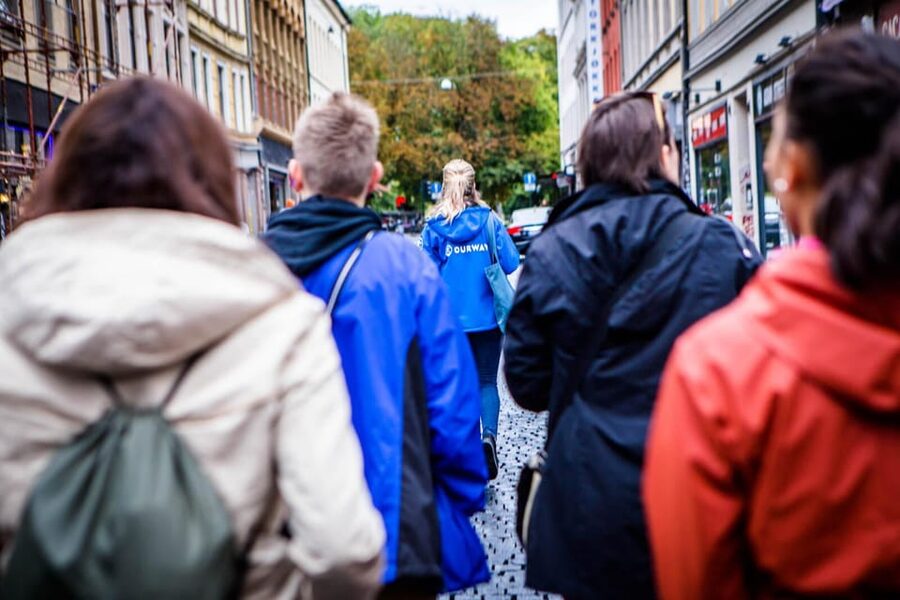
Reviewed · GUIDED WALKS IN OSLO
Oslo: 3-hour Private Walking Tour of Bohemian Grünerløkka
Grünerløkka is Oslo’s fun side, and this walk hits the highlights fast. I love how the route mixes street art, industrial riverside streets, and real neighborhood life, not just photo spots. You also get an art-and-history thread that lands at Our Saviour’s Cemetery with Norway’s big-name trio.
The biggest plus for me is the pacing: you move district to district, with time for key viewpoints like Blå and Damstredet before lunch at Mathallen. One possible drawback to plan for: it is a 3-hour walking tour, so you will want comfortable shoes and weather-appropriate layers, even if you like to stop often.
In This Review
- Key things I’d watch for on this Grünerløkka walk
- Entering Oslo’s Grünerløkka, without the tourist script
- From Youngstorget to Sentrum, get oriented in the first 30 minutes
- Torggata, bridges, and Kulturkirken Jakob, where old streets start talking
- The industrial-riverside mood of Grünerløkka, street art and photo breaks
- Blå, Telthusbakken, and the kind of street-level creativity you can feel
- Our Saviour’s Cemetery, Munch’s grave, and the artists behind the names
- Quan Thang Ancient House, Damstredet color, and the walk’s final style cues
- Mathallen in Vulkan, finish strong with lunch
- Price, timing, and who this 3-hour private walk fits best
- Should you book this Bohemian Grünerløkka walking tour?
- FAQ
- Where does the tour start?
- What is the meeting point landmark?
- How long is the private walking tour?
- What is the tour end location?
- Do I need to walk back after the tour?
- What should I bring?
- What languages does the live guide speak?
- Is the tour truly private?
- Is free cancellation available?
- Is there a reserve now, pay later option?
- Are public transport tickets included?
Key things I’d watch for on this Grünerløkka walk
- Start at Youngstorget, then ease in from Sentrum toward the creative neighborhoods
- Blå photo stop with a big music-venue vibe and colourful street art around it
- Edvard Munch at Our Saviour’s Cemetery, alongside Ibsen and Bjørnson
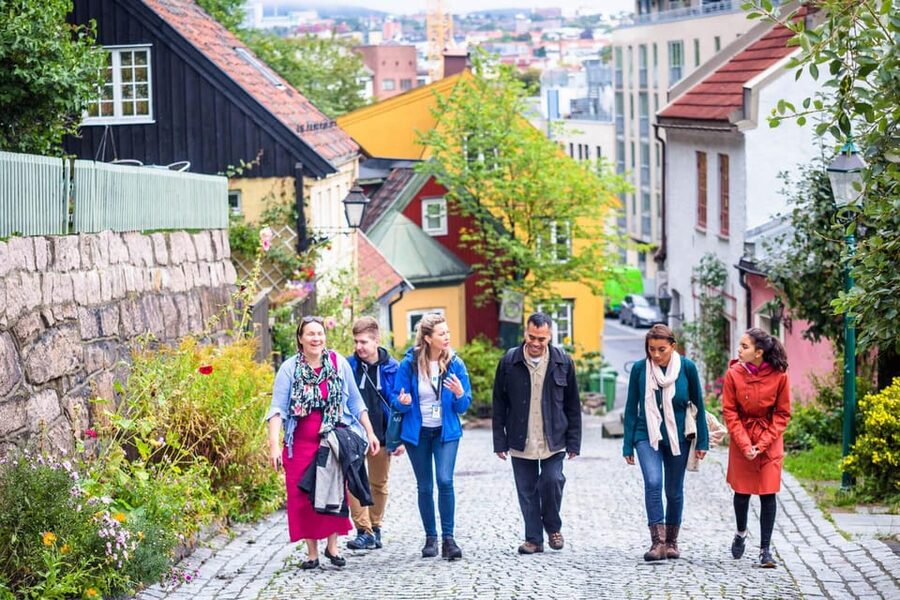
- Telthusbakken hillside houses plus gardens, made for camera breaks
- Mathallen at the finish, so lunch feels like part of the plan, not an afterthought
Entering Oslo’s Grünerløkka, without the tourist script
Grünerløkka has a reputation for being hip, but this tour keeps it practical. You’re not wandering randomly. You are walking a clear line from central Oslo into the area where artists, free thinkers, and everyday creatives have long mixed together.
I like that the tour’s tone is grounded in place. You spend time with the streets and buildings that create the mood: industrial brick, older urban textures, and the kind of colorful housing you usually only notice when you walk slowly enough. There is also a constant visual rhythm, the river side streets and the transitions into more artsy blocks, so it feels like one story instead of disconnected stops.
You also get two layers at once. The first is the contemporary street scene, graffiti, creative venues, and the vibe around places like Blå. The second is the cultural thread, the way Oslo’s artistic names connect to the same neighborhoods you are walking through today. It makes the area feel less like a trend and more like a long-running creative ecosystem.
If you are visiting Oslo for the first time, this is a smart counterbalance. Yes, there is “must see” sightseeing in the city. But you also need the neighborhood angle, the version of Oslo that shows how people actually live, make music, paint walls, and eat.
From Youngstorget to Sentrum, get oriented in the first 30 minutes
The tour starts at Youngstorget, by the fountain in the center of the square. It is a good choice. You can get your bearings fast, and it is easy to find without doing mental gymnastics with transit lines.
From there, you head into Sentrum for about half an hour. This part matters because it sets up your later jumps into Grünerløkka. You are not suddenly thrown into a new world with no context. You get a bit of the city’s structure first, then the walk gradually shifts into Torggata and toward Kulturkirken Jakob, with bridges and streets that act like connectors.
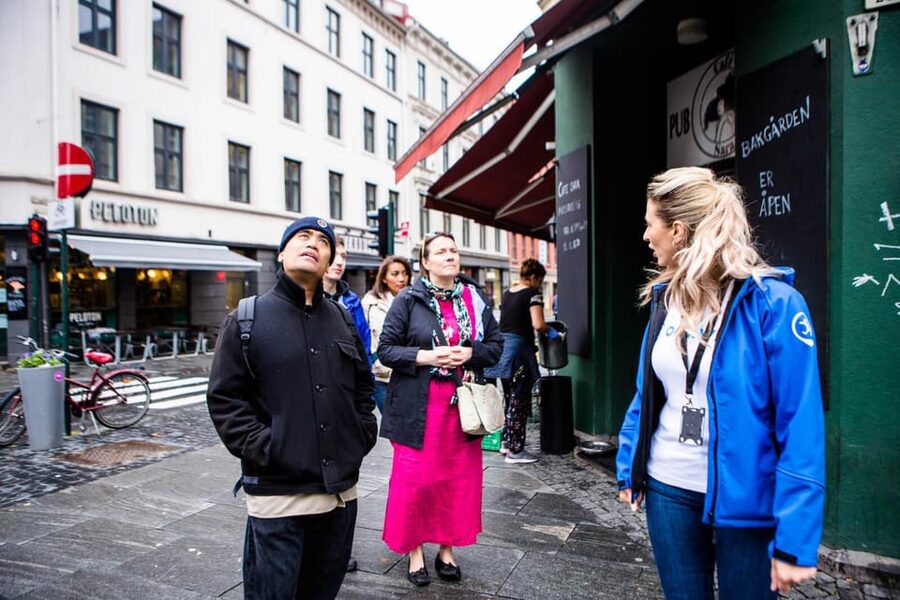
You will also get real guidance from the first steps onward. The guide is on-site about 10 minutes early, and you can spot them by a sign with the local partner name. That small detail helps, especially if you are meeting in a busy square.
If you tend to get tired easily, the first stretch is also a gentle warm-up. You are walking, but it is still a setup phase. By the time you reach the Grünerløkka segment, your legs know what to expect and your head is already in “walk and look” mode.
More Guided Walks in Oslo

Torggata, bridges, and Kulturkirken Jakob, where old streets start talking
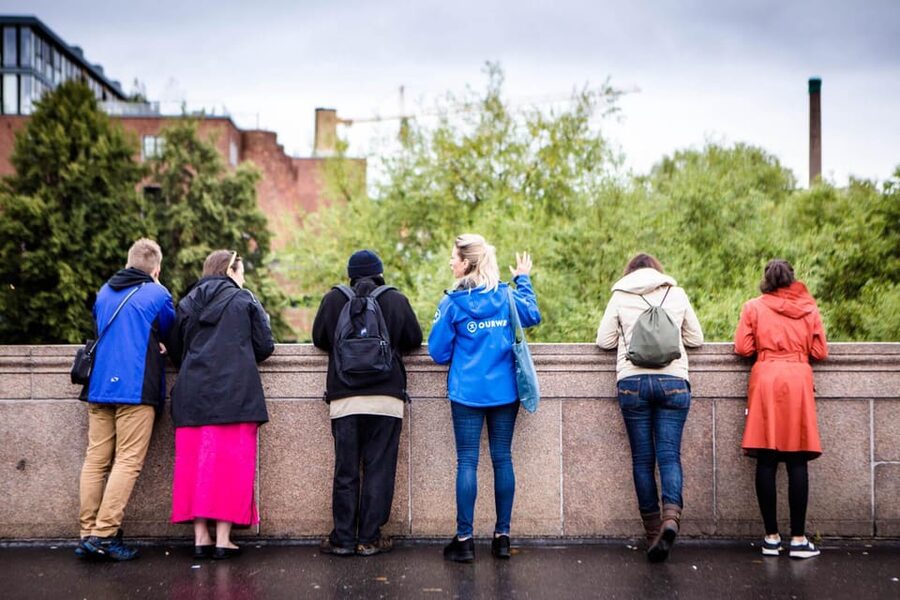
Once you leave the square, the walk turns into a chain of interesting urban moments. Torggata is one of those Oslo streets where you can feel the city moving between different identities: everyday life, older structures, and the sense that you are heading toward something more creative.
Then comes Kulturkirken Jakob. This is the kind of stop that works well in a walking tour because you get more than a quick glance. You also get a reason to notice the building and its role in the neighborhood story. It is not just architecture for architecture’s sake.
Ankerbrua and the bridge area are another key piece. Bridges are not only about views. They help you understand how Oslo is built around water and connections. During the tour, you keep walking alongside a bubbling river corridor and the surrounding built environment, which is a big part of why the neighborhood feels distinctive. It is a blend of movement and texture.
The practical takeaway for you: wear shoes that handle uneven pavement and occasional crowds. This is an area you will want to look at while walking, so you need grip and comfort. If you are carrying a camera or phone, keep it ready but not in a way that makes you trip. Oslo streets are generally manageable, but you still want to be steady.
The industrial-riverside mood of Grünerløkka, street art and photo breaks
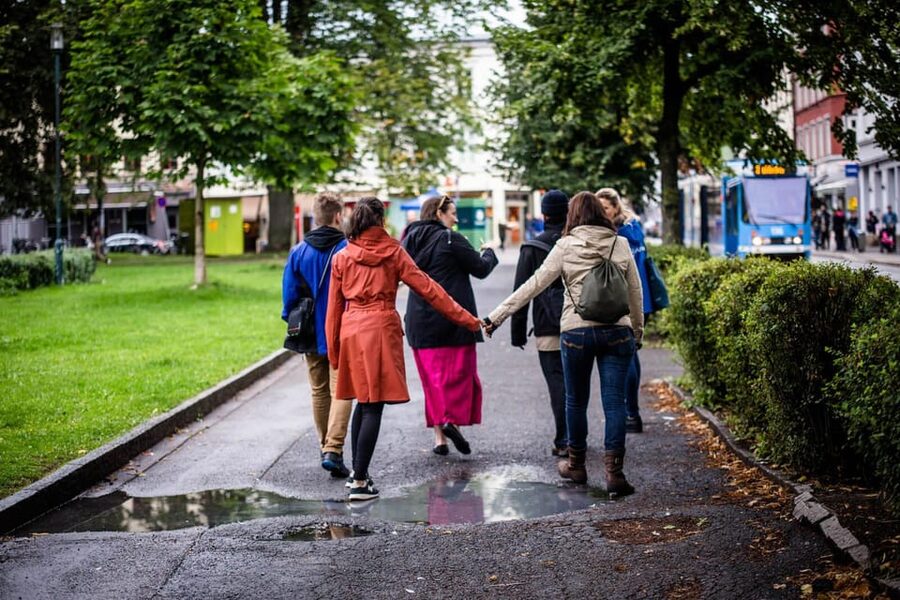
This tour’s Grünerløkka portion is where it really earns its reputation. The neighborhood has that gritty-creative mix, the industrial brick and river-adjacent atmosphere, plus the colorful houses and the sense that people have been making their own culture here for a long time.
Olaf Ryes plass fits into this mood shift. It is a moment to pause mentally. You get a view of the neighborhood fabric before the walk pushes further into the fun parts, including the street art zones you will see closer to Blå.
Then you hit the industrial side streets and the graffiti layers. This is the part where you feel the tour is about “how the area works,” not just what the area looks like. The guide ties together artists, free thinkers, and creative spaces, so you understand why certain streets feel more expressive than others.
You will also have moments where you can slow down for photos without the pressure of racing to the next landmark. Stops like Brenneriveien and Damstredet are especially good for this. Damstredet is known for colorful houses, and it is exactly the kind of place where a walking tour beats a bus ride. You can see the color from different angles and notice small details that you would miss if you only glance while standing still.
Blå, Telthusbakken, and the kind of street-level creativity you can feel
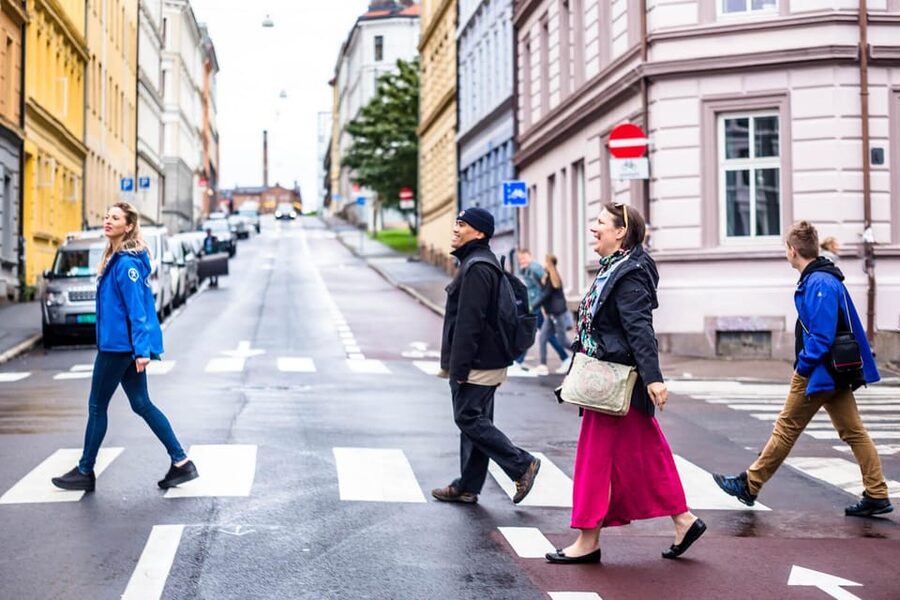
Blå is one of the most memorable stops on the route. It is a music venue, and the surrounding street art gives it extra energy. One detail you should plan around: there is a giant chandelier at Blå, and it is the kind of thing you either catch in a quick glance or you actually look at when your guide tells you what to notice.
The street art around Blå is also more than decoration. It is part of the neighborhood’s public voice. You are seeing creativity outside of museums, outside of ticketed venues. It is one more reason this tour feels authentic rather than staged.
After Blå, you get a change of scenery that makes the photos better. Telthusbakken is a quaint hillside street with charming houses and gardens. This is where you get to do the classic “walk a few steps, stop, look again” routine. The gradient of the street also gives you layered views, which makes the photos look richer even if you are using a phone.
For me, the Telthusbakken stop is a reminder of why walking tours matter. You experience the slope, you see the houses in relation to the street, and you get a real sense of the neighborhood’s personality. If you like street-level details, you will enjoy this part a lot.
Quick advice: if it has rained, take extra care on slopes. Even if Oslo streets are well maintained, hillside streets can feel slick. Your camera should be for moments, not for walking blindly.
More of Norway between waymarks, on foot:
- Taste of Oslo Walking Tour
★ 4.5 · 282 reviews - Central Oslo Guided Walking Tour with Local Guide
★ 4.5 · 278 reviews - Oslo: Private Walking Tour with a Local
★ 4.5 · 263 reviews - Oslo: Snowy Forest Torchlight Walk with Campfire
★ 4.6 · 254 reviews
Our Saviour’s Cemetery, Munch’s grave, and the artists behind the names
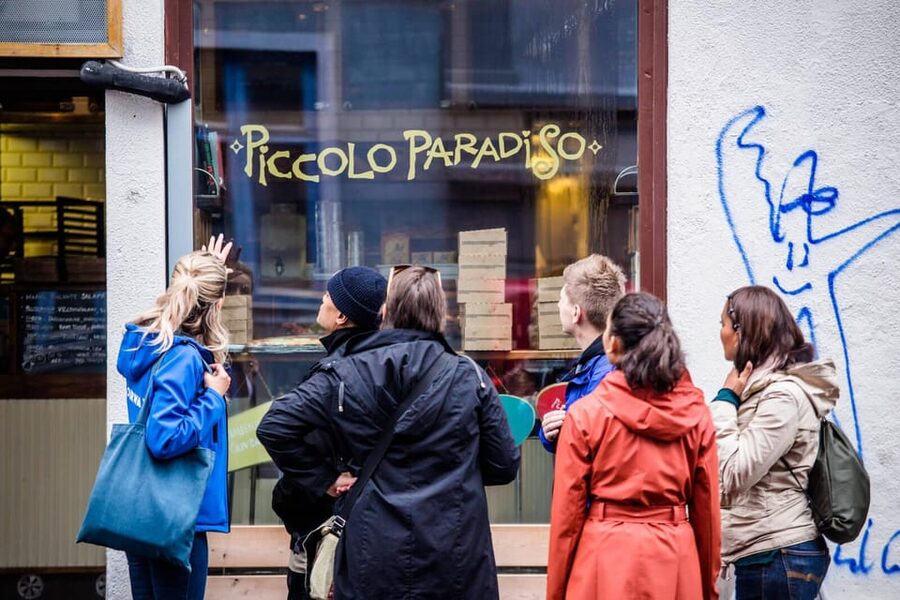
This is the emotional anchor of the tour. At Our Saviour’s Cemetery, you meet Norway’s dynamic trio: Ibsen, Bjørnson, and Edvard Munch. And yes, the Munch part matters a lot, because Edvard Munch lies buried here.
It is also the kind of stop where a guide’s storytelling changes everything. Cemetery visits can feel quiet and vague if you only know a name. Here, you get more context that turns the space from a fact into a place with meaning.
The tour also connects Munch to the area through the fact that he lived nearby at multiple addresses. That is a useful reminder for you while you walk around Grünerløkka. You are not just seeing a trendy district. You are walking through streets that sit in the same cultural orbit as one of the most famous modern artists in Norway.
You will want a moment to slow down, breathe, and let the setting settle. Even if you are not a museum person, this stop works because it is not behind glass. It is human scale, and you can feel the seriousness of the place without needing to “perform” interest.
Plan for a short pause here, and do not rush through it just because the tour continues. This is often the part that people remember later.
Quan Thang Ancient House, Damstredet color, and the walk’s final style cues
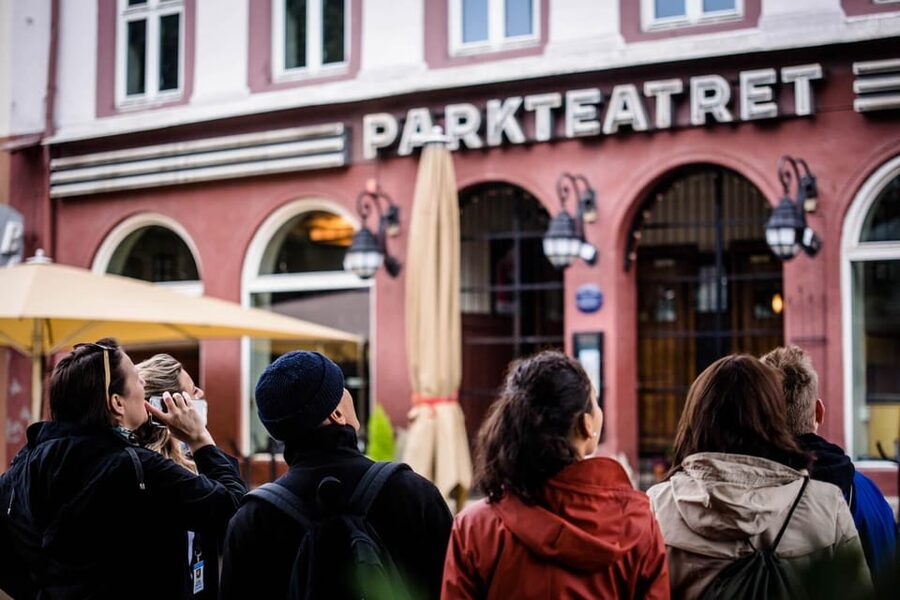
As the tour carries on, you keep moving through streets that show different sides of Grünerløkka. Brenneriveien is another visual step, and it helps you understand the neighborhood’s mix of old and new. You start noticing patterns, what looks preserved, what looks repurposed, and where the creative scene tends to cluster.
Damstredet is one of the standout streets for color. You get colorful houses plus the industrial brick atmosphere nearby, which creates a contrast that feels very Oslo. It is not just pretty. It is informative, because it shows how the neighborhood layers styles without fully flattening the edges.
Quan Thang Ancient House adds another type of interest. Instead of another street corner, you get a cultural stop that fits the tour theme of art and identity. The name alone signals something different from standard urban scenery, and it is a helpful break from pure streetscape photos.
This stretch also sets you up for the finish. You start to feel the tour’s goal in your feet. It is not only sightseeing. It is timing. You are being guided toward Mathallen, so you keep that energy up without feeling like lunch is an interruption.
If you are someone who likes to read details, jot a couple of street names in your phone. Later, when you wander on your own, you will recognize them and feel like you are moving with confidence rather than guessing.
Mathallen in Vulkan, finish strong with lunch
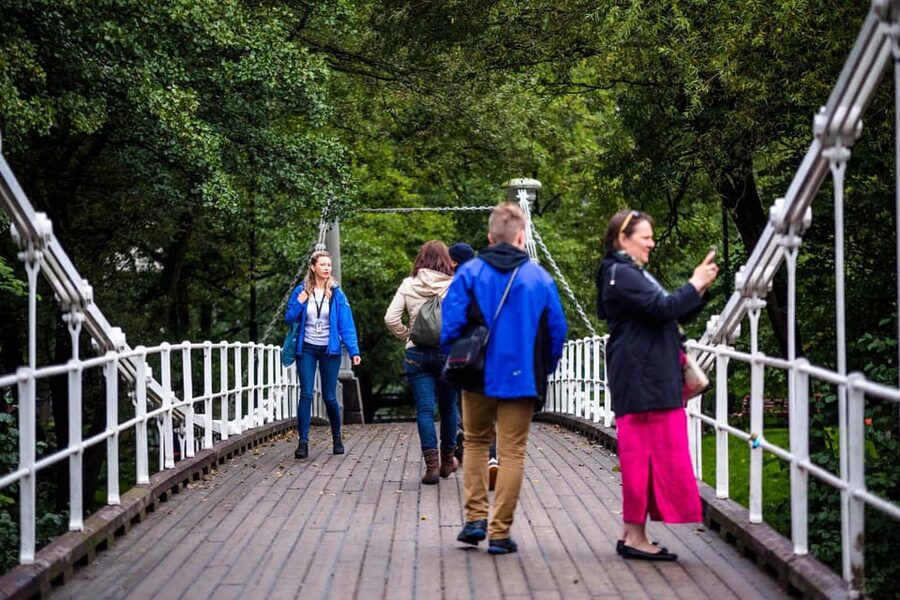
The tour ends at Vulkan 16, at the entrance area near Mathallen Oslo. The timing is intentional. You arrive ready for lunch, not starving at the end like some tours do.
Mathallen is described as Oslo’s food destination, and the neighborhood context matters here too. Vulkan is framed as a sustainable neighborhood that brings together foodies and eco-lovers. Even if you do not care about the sustainability angle, the payoff is simple: this is a place designed for eating, with options that make it easy to choose quickly and still feel like you discovered something local.
The last part of the walk also focuses on the industrial building backdrop and colourful graffiti in the area around you. That is a nice closing rhythm. You started with central Oslo orientation, moved through creative streets and artist connections, and now you finish in a place where food culture takes the same street-level energy.
One practical tip for you: bring cash-light or card-ready. You are coming out of a guided walk, so you likely want a quick decision for lunch. If you want a sit-down meal, give yourself a few minutes to scan the options before committing.
Price, timing, and who this 3-hour private walk fits best
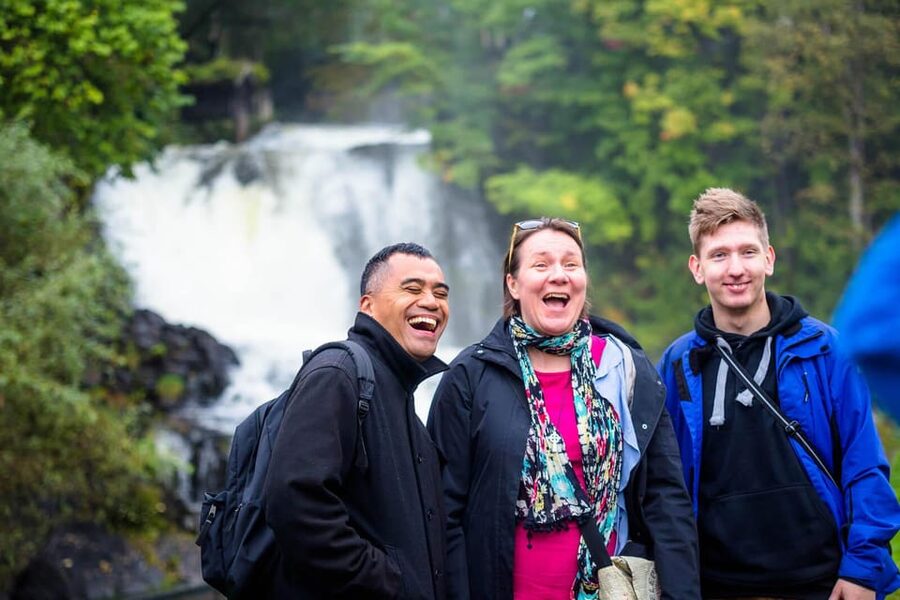
The price is listed as $461 per group, up to 1, for a total of 3 hours. For most people, that sounds like a lot until you translate it into value.
Here is the honest math. A private walking tour like this is paying for one guide, one route, and one tight schedule. If you are a couple or a small group, this can be a bargain compared with paying multiple people for separate tickets or trying to self-navigate without context. If you are booking as a solo traveler, it is pricier, and you should only book if you really want the guide-led storytelling and the district-specific route.
So who should book? This tour is best if you like:
- Street art and music-venue culture, especially around Blå
- An art connection that reaches beyond galleries, including Munch at Our Saviour’s Cemetery
- A walk that ends at a lunch spot, so your day keeps flowing
Who might skip it? If you only want broad, top-sight postcards, or if you hate walking in the city for 3 hours, you might find a shorter self-guided route more comfortable.
Also, think about timing in your Oslo itinerary. Because it ends at Mathallen, it pairs nicely with another afternoon plan. You can keep exploring Grünerløkka on your own after lunch, or take transit back wherever you are staying.
Should you book this Bohemian Grünerløkka walking tour?
I think you should book if your ideal Oslo day includes creative streets, art-linked stops, and a lunch finish you actually look forward to. This route makes Grünerløkka feel real, from the river and industrial streets to Blå’s music-venue atmosphere and the quiet weight of Our Saviour’s Cemetery.
If you are short on time, this is also efficient. In 3 hours you get a strong overview of the neighborhood’s look and feel, plus specific stops that are hard to assemble into a good route on your own.
If you do not want to pay for private guiding, or you prefer to wander without structure, then consider a cheaper approach. But if you want someone to point out what to notice, and you like walking with purpose, this one is a solid choice.
FAQ
Where does the tour start?
The tour starts at Youngstorget 2A, by the fountain in the middle of the square in the City Center.
What is the meeting point landmark?
Meet by the fountain in the center of Youngstorget. The guide is on-site about 10 minutes before departure and holds a sign with the local partner’s name.
How long is the private walking tour?
It lasts 3 hours.
What is the tour end location?
It finishes at Vulkan 16, 0178 Oslo, Norway, near Mathallen Oslo.
Do I need to walk back after the tour?
Yes. The provided guidance is about a 15 minute walk, around 1 km, back to the starting point, or you can use public transport.
What should I bring?
Bring comfortable shoes and weather-appropriate clothing.
What languages does the live guide speak?
The guide is available in Spanish, English, French, German, Italian, and Norwegian.
Is the tour truly private?
Yes, it is described as a private group.
Is free cancellation available?
Yes. Free cancellation is available up to 24 hours in advance for a full refund.
Is there a reserve now, pay later option?
Yes. You can reserve now and pay later to keep your travel plans flexible.
Are public transport tickets included?
No. If you use public transport for the return, the ticket is not included.
Newly marked on the map for Oslo
- Oslo Scavenger Hunt and Highlights Self Guided Audio Tour★ 4.5 · 6 reviews
- Oslo easy walk★ 5.0 · 7 reviews
- Oslo: Oslofjord Electric Boat Cookie Cruise★ 3.8 · 7 reviews
- Oslo City Walks: The City of Contrasts★ 3.4 · 7 reviews
- The Oslo Beer Adventure★ 1.9 · 7 reviews
- 7-Day Scenic Scandinavian Tour from Oslo exploring Denmark, Sweden and fjords in Norway★ 4.5 · 7 reviews
- Private Oslofjord Island Hopping Tour★ 4.5 · 8 reviews
- Free Oslo Photo Tour: Iconic & Instagrammable Spots★ 5.0 · 8 reviews
Guided Walks in Oslo, compared.
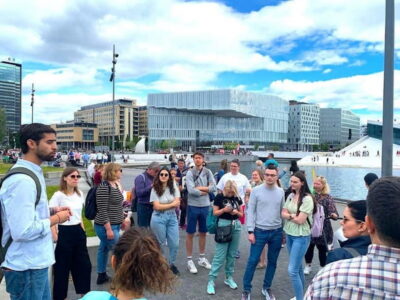
Guided Walking Tour of Central Oslo with Local Guide
Read our review →
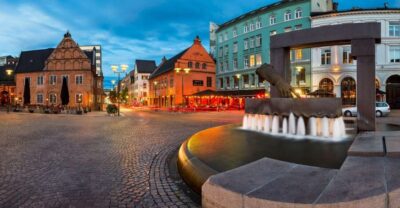


Central Oslo Guided Walking Tour with Local Guide
Read our review →


Browse the lists this tour appears in