
Reviewed · WALKING TOURS
Digging up the Past in Røros: A Self-Guided Walking Tour
Røros copper past is walking distance. This self-guided smartphone audio walk in UNESCO-listed Røros uses GPS to guide you street by street, with history focused on the town’s copper-mining era and landmarks you can actually see in a short loop.
I especially like the offline audio and maps once you download, so the walk stays smooth even if the signal is poor. I also like the lifetime access, meaning you can replay the same route later. The one drawback to plan for is practical, you need your own smartphone and headphones, and cold weather can make tapping the screen more annoying.
In This Review
- Key Highlights You’ll Care About
- Getting Your Bearings in UNESCO Røros, Without Wasting Time
- Price and Value: Paying $8.99 for a Repeatable Walking Lesson
- Before You Start: Download Like You Mean It, Pack Like It’s Cold
- Your Walk Route, Stop by Stop (Nilsenhjørnet to Kjerkgata)
- Stop 1: Nilsenhjørnet park, where the town story starts
- Stop 2: Bergmannsgata, one of the town’s famous streets
- Stop 3: A brief pause outside the municipality
- Stop 4: Slegghaugan, the mining waste mound
- Stop 5: Røros Church, an anchor you can’t miss
- Stop 6: Passing Røros Museum Smelthytta
- Stop 7: Kjerkgata, where the walk closes
- What the Audio Adds: Copper Mining Makes the Town Make Sense
- Offline, Lifetime Access, and Why Re-listening Can Beat Bad Weather
- Who This Self-Guided Røros Walk Works Best For
- When It Might Not Be Perfect
- Should You Book This Røros Audio Tour?
- FAQ
- How long is the Digging up the Past in Røros self-guided walking tour?
- Where does the tour start and end?
- Is the tour available offline?
- What language is the audio in?
- What do I need to bring with me?
- Are museum tickets included for places like Røros Museum Smelthytta?
- Is this a private activity?
- Is the tour refundable if I cancel?
- What if I travel with a service animal?
Key Highlights You’ll Care About
- GPS directions keep you on the right streets without needing to study a map constantly
- Offline audio and maps make the walk usable with low or no data
- Lifetime access means you can repeat it whenever you want, not just once
- Copper-mining focus connects streets, buildings, and the Slegghaugan waste mound into one story
- Sound effects and clear narration help the town feel less like facts on a page
Getting Your Bearings in UNESCO Røros, Without Wasting Time
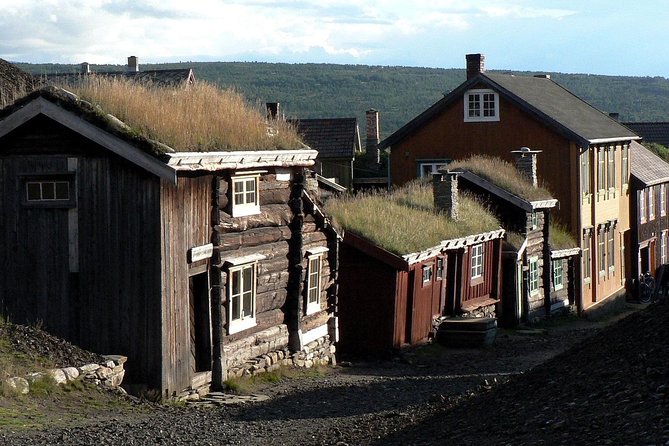
Røros is one of those Norwegian towns that feels built for wandering. The streets have character, the historic buildings give you visual anchors, and the copper-mining story is everywhere once you start looking for it. This audio tour is designed for exactly that moment when you want to explore, but you also want a guide to tell you what you are seeing and why it matters.
The biggest help is the GPS guidance. You do not need to stop and re-check your position every few minutes. You follow the route at your pace, and the phone tells you when to turn, when to pause, and when a specific landmark is coming up. That matters in a small city like Røros, because the best parts of the experience come from slowing down enough to notice details in the streetscape.
One more smart feature is that you can use everything offline. Once you download the tour, you are not stuck searching for a connection. That makes the walk feel lower-stress, especially in seasons when weather can be unfriendly and you want to keep your time outside efficient.
Price and Value: Paying $8.99 for a Repeatable Walking Lesson
At $8.99 per person, this is priced like an add-on to your trip, not a big-ticket excursion. Where the value really comes in is what you get for that money. You are not paying for someone to stand beside you for a few hours. You are paying for lifetime access to an audio walk you can repeat as many times as you like.
The included bundle is also practical:
- Lifetime access to the English audio tour
- The VoiceMap app on Android or iOS
- Offline access to audio, maps, and geodata
You still need a smartphone and headphones, and the tour does not include transportation, food, or museum entrance tickets. But if you are the type of traveler who enjoys self-guided history and short walks, those “not included” items are easy to work around.
Also, this kind of tour fits well with real trip planning. The tour is typically booked about 19 days in advance on average, which usually means it stays popular. If you are visiting during a busy time or want to guarantee your preferred day, booking ahead is a good habit.
More of Norway between waymarks, on foot:



Before You Start: Download Like You Mean It, Pack Like It’s Cold
This is a smartphone audio walk, so your prep matters more than usual. You download the tour after booking, then you set off whenever you want. The commentary is designed for a walk that takes about 40 minutes to 1 hour.
Here’s how to make it feel effortless:
- Download the tour before you leave wherever you are staying, ideally on Wi-Fi.
- Bring comfortable headphones (you will be listening for most of the walk).
- Check your battery level. Offline still uses your phone for GPS and playback.
Cold weather is the real “gotcha,” and the experience is honest about that. One person noted it was minus 24 degrees, and the problem was not the walk itself, it was tapping the phone screen while wearing gloves. If you are going to Røros in winter, plan for screen-tapping friction. Consider gloves that allow touch, keep your phone somewhere reachable, and be ready to do quick taps rather than long, careful ones.
If you want the best sound, use regular earbuds or over-ear headphones. Wind can be a factor on open streets, so secure headphones tend to work better than loose ones.
Your Walk Route, Stop by Stop (Nilsenhjørnet to Kjerkgata)
The route starts at Nilsenhjørnet park and ends at Kjerkgata, a short distance from where you begin. That loop design is ideal for an audio tour, because it reduces the chance you get lost and it keeps you within a tight time window.
You also get a nice mix of town elements. You will move through streets that define Røros, pass key landmarks, and even see the mining-waste feature called Slegghaugan.
Stop 1: Nilsenhjørnet park, where the town story starts
You begin at Nilsenhjørnet park. This start point is useful because it gives you a calm “launch pad” before you head into the streets. The audio begins by setting context so you are not just walking and guessing.
Look around at the town environment before you move. Think of this as your warm-up, not a formal museum visit. You are training your eyes for what comes next: street scale, historic building character, and how the mining story appears in the geography.
Stop 2: Bergmannsgata, one of the town’s famous streets
Next, you head down Bergmannsgata, one of two famous streets in Røros. Streets like this matter because they show how the town was organized for daily life. When the audio ties the street to the copper-mining past, it helps the town stop feeling like a pretty place and start feeling like a working place.
Keep your pace relaxed here. If you rush, you miss the small cues the audio is built around. If you slow down, you get more from the commentary without feeling dragged along by a group schedule.
Stop 3: A brief pause outside the municipality
You get a short stop outside the municipality. This is the kind of informational moment that works well in an audio format, because you can take a few minutes to absorb the point without needing to enter anything.
The main value here is orientation. You are connecting the history story to the way the town functions now. Even if you do not plan to go inside any building, the pause helps you understand the layout you are walking through.
Stop 4: Slegghaugan, the mining waste mound
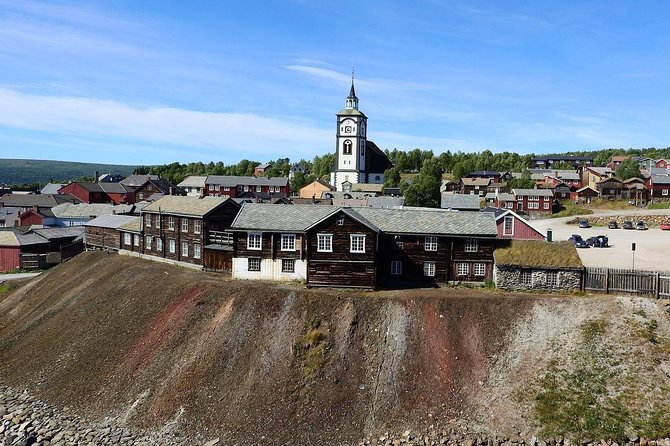
Then you pass Slegghaugan, described as a small mountain made up of waste from mining. This is one of the most memorable parts of the route because it is not a “pretty postcard” stop. It is industrial history in physical form.
Here’s what I suggest: stand still long enough to take in scale. Audio tours can move you forward quickly, but this is a place where a pause pays off. The mound is a visual reminder of how extraction shaped the town, and the story behind it gives meaning to what you are seeing.
A drawback at this point is simple, terrain. You may be walking near uneven ground. Wear proper footwear and keep your footing careful, especially if the weather is icy.
Stop 5: Røros Church, an anchor you can’t miss
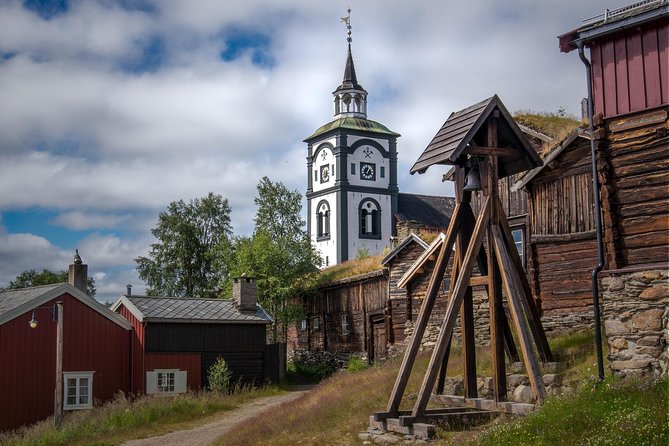
You then pass Røros Church. Churches often function as town anchors, and in an audio walk they help stitch together daily life with the broader historical narrative.
This stop is useful even if you are not planning to enter. The audio helps you read the setting, not just admire the building. If you like architecture but do not want the pressure of museum opening hours, this kind of exterior landmark stop is perfect.
Stop 6: Passing Røros Museum Smelthytta
The route takes you past Røros Museum Smelthytta. The tour passes it rather than sending you inside, and that is important to know. The audio can still add context, but you should treat this as a “look from the outside, decide if you want more later” kind of moment.
If you are curious, you might want to plan a separate visit based on your interests and the museum’s hours. Since tickets or entrance fees are not included in this audio tour, you would be responsible for any museum visit on your own.
Stop 7: Kjerkgata, where the walk closes
The tour ends on Kjerkgata, a street in Røros. Ending on a street rather than at a random point is a smart choice, because it keeps the experience feeling complete. You finish near the start, so it is easy to head back to wherever you are staying or continue exploring.
Take a few minutes here if you still feel curious. This is a good time to notice how the story you heard connects to the streets you are walking on in real time.
What the Audio Adds: Copper Mining Makes the Town Make Sense
The audio commentary is built around the idea that Røros is more than buildings. It is a town shaped by copper mining, and the route helps you connect that theme to specific places.
The narration is clear, and the tour includes sound effects, which helps without turning the walk into a video game. When sound effects are done well, they help you picture what you might not see today. When narration is done well, you actually remember details because you understand the “why” behind the scene.
You are also getting a mix of topics that work together:
- Streets that define how the town moves
- A brief civic stop outside the municipality
- Slegghaugan as mining waste turned into a landmark
- Røros Church as a daily-life anchor
- Røros Museum Smelthytta as an on-the-side pointer to deeper museum content
The practical benefit for you is that you will likely finish the walk with a mental map of Røros that lasts. You are not just hearing facts. You are learning a way to look.
Offline, Lifetime Access, and Why Re-listening Can Beat Bad Weather
This tour has two features that matter more than people realize until they are cold and tired: offline access and lifetime access.
Offline access means the audio, maps, and geodata are available even without an internet connection. In real life, that gives you freedom. You can start the walk when it fits your day instead of waiting for a signal.
Lifetime access is the “future you” payoff. One person noted they listened again later at home after finishing outside in minus 24 weather. That is a smart way to turn a short walk into a longer learning experience. Even if you have only 60 minutes outside, you can still keep the story going later, when you are warm.
The app, VoiceMap, is available for both Android and iOS. That keeps the experience consistent across phones, and it is also a relief if your travel partner has a different device than you.
And since it is a private tour/activity, you are not sharing the experience with strangers in a way that forces timing. You are still walking in the public streets, but the experience itself stays your group’s pace.
Who This Self-Guided Røros Walk Works Best For
I think this tour is strongest for people who want structure without losing control. If you like the idea of a guided route, but you dislike waiting on others, GPS audio is a great fit. You can stop when you want, move on when you want, and spend your energy where your eyes actually land.
It also works well for:
- First-time visitors who want an easy introduction to Røros
- Anyone who enjoys history tied to what they can see outside
- People who want a short, walkable plan that fits into a day
- Visitors who like the idea of repeating the same experience later
The tour is in English and is described as usable by most travelers. Service animals are allowed too, which is useful to know if you travel with a companion animal.
The biggest constraint is that you must be comfortable using a smartphone as your guide. If you would rather have someone physically point and explain, you might find a traditional guided tour more satisfying.
When It Might Not Be Perfect
No tour is perfect for every style of trip. Here are the honest points to consider.
First, museums are not included. Since the tour passes Røros Museum Smelthytta without tickets, you might want to budget time for a separate museum visit if that part of the story really hooks you.
Second, you are on your own for navigation details beyond the GPS. If your phone battery dies or you forget to download the tour, the experience can fall apart. Fix this by downloading early and keeping your battery topped up.
Third, you are listening while walking. If you prefer to read signage or take lots of photos without any audio running, you may not get full value. This walk is made for audio pacing.
Should You Book This Røros Audio Tour?
I would book it if you want a low-cost, low-stress way to understand Røros beyond the surface. For $8.99, you get a guided route with GPS, offline audio and maps, and lifetime access that lets you replay later when you have the energy. The route also gives you a clear arc from streets to mining waste to religious and museum-linked landmarks.
Skip it if you already know you want a museum-heavy day and you plan to pay for timed entries. Since tickets are not included here, you would still need to plan those separately.
My practical final advice: download the tour before you start walking, wear gloves you can tap with, and treat the 40 minutes to 1 hour as enough time to learn how to see Røros. If you do, you’ll leave with a mental map and a much richer sense of what made this town matter.
FAQ
How long is the Digging up the Past in Røros self-guided walking tour?
It takes about 40 minutes to 1 hour.
Where does the tour start and end?
The tour starts at Nilsenhjørnet park in Røros and ends on Kjerkgata, close to the start area.
Is the tour available offline?
Yes. After downloading, the audio, maps, and geodata are available for offline use.
What language is the audio in?
The audio tour is in English.
What do I need to bring with me?
You need your own smartphone and headphones.
Are museum tickets included for places like Røros Museum Smelthytta?
No. Tickets or entrance fees to museums or attractions along the route are not included.
Is this a private activity?
Yes. It is a private tour or activity, so only your group participates.
Is the tour refundable if I cancel?
No. It is non-refundable and cannot be changed for any reason.
What if I travel with a service animal?
Service animals are allowed.
Cairn to Cairn
- Oslo: Scenic Fjord Cruise with Audio Guide Commentary★ 4.5 · 5,375 reviews
- Molde: Atlantic Ocean Road & Varden Audio Guide Bus Tour★ 4.1 · 473 reviews
- Geiranger: Bus Tour with Multilingual Audio Guide★ 4.0 · 317 reviews
- Bergen: Self-Guided Round-Trip Full-Day Excursion★ 4.5 · 158 reviews
Newly marked on the map for Central Norway
- Trondheim Private Transfer from Trondheim (TRD) Airport to City centre★ 5.0 · 1 review
- White Water Rafting in Sjoa, Day Trip★ 5.0 · 24 reviews
- Musk ox Safari in Dovrefjell National Park, Oppdal Safari★ 5.0 · 524 reviews
Walking Tours, compared.

Past & Present Small Group Guided Walking Tour
Read our review →
Walking Tour in Bergen of the Past and Present
Read our review →
Guided Walking Tour of Central Oslo with Local Guide
Read our review →



Browse the lists this tour appears in