
Reviewed · GUIDED WALKS IN OSLO
Best of Oslo: Walking Tour with a local guide
Oslo clicks faster on foot. This walk strings together the city’s biggest sights with real context from an English-speaking local guide, so you understand what you are seeing as you go. I like that it is built around Oslo highlights plus the kind of Norway insights that make the streets feel personal.
Two things I especially like: the guide explains Norwegian style of life and food traditions, and you get an opinionated sense of what is special about Oslo, not just a checklist of stops. One thing to consider: food and transport are not included, so plan to grab a snack or drink on your own before or after, and come ready for a solid 3 to 4 hour walk.
In This Review
- Key things to know before you go
- Starting at Nobel Prize Centre and getting your bearings fast
- City Hall, Royal Palace, and National Theater, in the order that makes sense
- Akershus Castle and Fortress, plus Oslo Cathedral
- The National Museum, a new Library, and the Nobel Peace Centre
- Opera House, Munch Museum, and the shift toward the waterfront
- Aker Brygge to Bjørvika, plus the main avenue and fjord views
- Hidden gems and favorite spots you might miss on your own
- Where to try traditional Norwegian food and drinks
- Price and logistics, and whether it is good value
- Who this Oslo walking tour fits best
- Should you book Best of Oslo with a local guide?
- FAQ
- Where does the tour meet?
- How long is the Best of Oslo walking tour?
- Is the tour guide available in English?
- What is included in the price?
- Are food and drinks included?
- Is the tour wheelchair accessible?
- How big is the group?
- What are the cancellation and payment options?
Key things to know before you go
- Meet at Nobel Peace Centre area: you start at the reception sign at your central hotel pickup point
- A focused 3 to 4 hour route: enough time for major landmarks without turning it into a full day
- Norway culture, not just landmarks: the guide ties streets to local life and food traditions
- Fjord highlights are part of the plan: Aker Brygge and Bjørvika are worked into the route
- English local guide: easy to ask questions and get explanations on the spot
- Food and drinks not included: the tour will point you toward places, but you pay for meals yourself
Starting at Nobel Prize Centre and getting your bearings fast
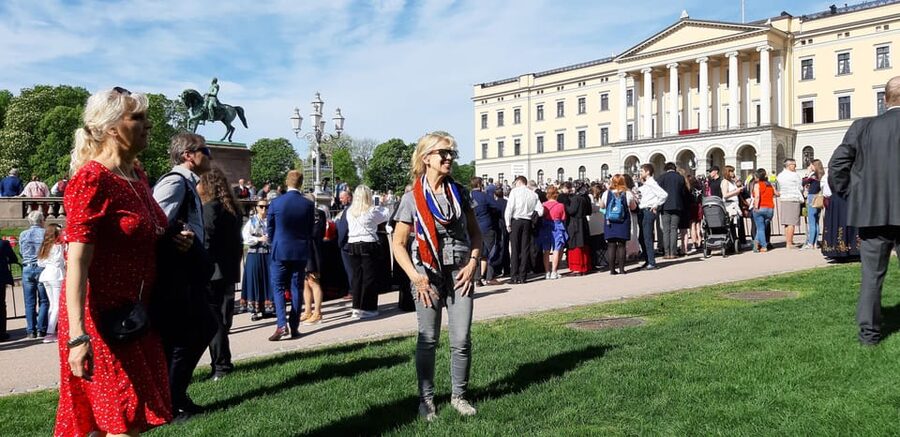
This tour begins in central Oslo, with a meeting point at the Nobel Prize Centre reception (sign). That is a smart start. You are already in the middle of the city action, and it makes the walk feel like a guided orientation, not a slog to reach the interesting parts.
From there, the rhythm is simple: you move between major landmarks and the guide explains what they mean in the bigger Oslo story. It is one of those formats that works especially well early in your trip, when you want to understand the layout and the personality of the city.
Also, the tour is designed for conversation. The guide plans to share knowledge about Norway, how people live, and what is worth tasting. If you like learning by asking questions in real time, this setup is exactly your speed.
City Hall, Royal Palace, and National Theater, in the order that makes sense
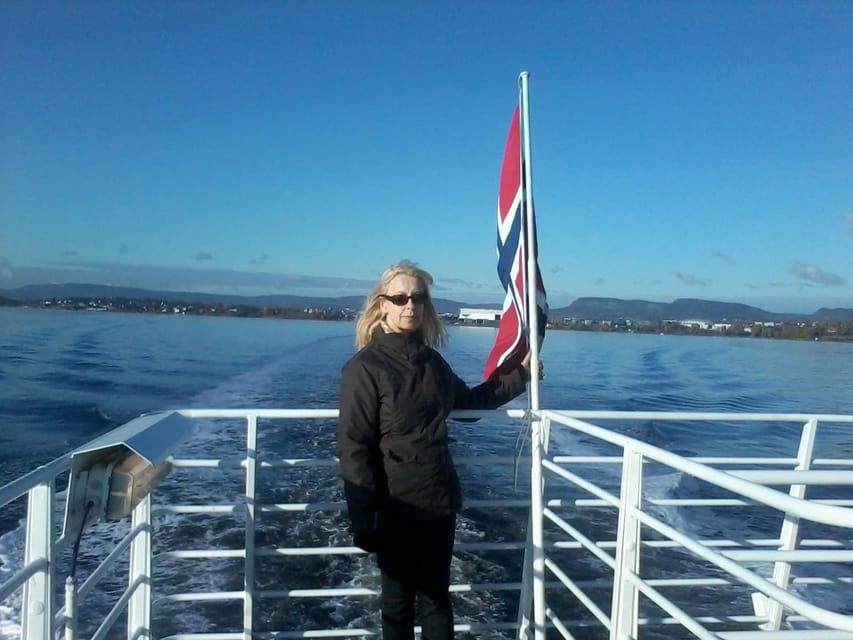
The walk takes you past some of Oslo’s most recognized civic and cultural anchors. You will see the City Hall and the Royal Palace, then continue on to the National Theater.
Why this cluster matters: it helps you read the city’s structure. You start with official, public-facing spaces, then move toward cultural institutions. Even without going in, the way these buildings relate to the streets helps you understand Oslo’s balance of governance, ceremony, and performance.
What I found useful here is the guide’s framing. Instead of treating each stop like a photo-op, you get the “so what” behind it. That is the value of having a local, authorized guide: you get explanations that match how locals think about the places you pass.
A small consideration, though. This part of Oslo can feel busy depending on timing. You will be walking through the most visible zones, so keep your pace steady and do your best to plan around crowds if you are sensitive to that.
More Guided Walks in Oslo


Akershus Castle and Fortress, plus Oslo Cathedral
Next up is Akershus Castle and Fortress, followed by Oslo Cathedral.
This is a good mid-tour shift, because the mood changes from civic and cultural to historical and grounded. A fortress setting, even from street level, tends to make you think about Oslo’s earlier priorities: protection, position, and the advantage of controlling an important area. From there, Oslo Cathedral adds a different kind of historical thread, something more tied to long-standing community life.
What makes this section work on foot is that the guide can connect past and present. Oslo can look modern from many angles, but these stops help you see continuity. You are not just collecting monuments, you are getting a sense of why the city grew the way it did.
If you have limited time, I would not rush through this part. This is where the tour’s “history with context” approach earns its keep.
The National Museum, a new Library, and the Nobel Peace Centre
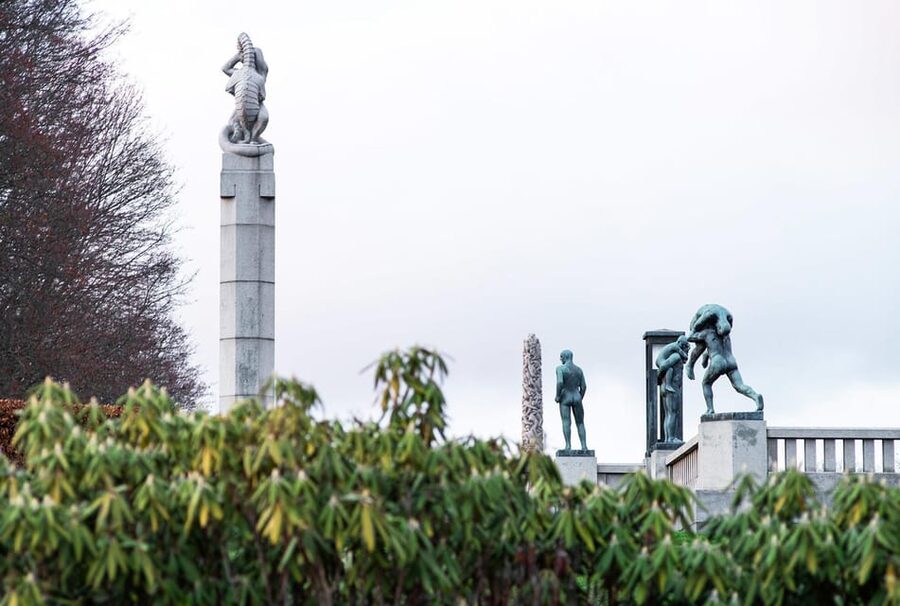
After the fortress and cathedral, the route hits major institutions: the National Museum, the new Library, and the Nobel Peace Centre.
This stretch is where Oslo’s brain shows. Museums and libraries signal curiosity and education. A peace-focused center signals a global outlook. Put together, these stops give you a view of Oslo that feels thoughtful and outward-facing.
I also like that this is not only about big names. The guide can tell you what is special about Oslo in everyday terms. That might be how people talk about public culture, how they value learning, or how they treat shared spaces. When a local folds that into the walk, these institutions stop feeling like faceless buildings.
Practical note: these places can be good points to stop and regroup. If you need a bathroom break or you are using the walk as a first day orientation, this is a reasonable time window to do that.
Opera House, Munch Museum, and the shift toward the waterfront
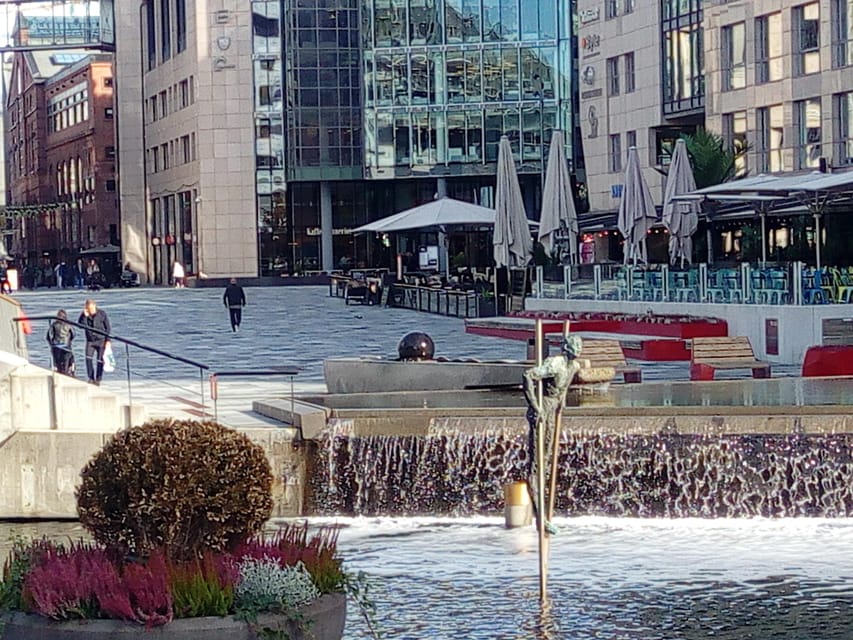
Then you move toward the creative, modern Oslo side: the Opera House and the Munch Museum.
After the earlier landmarks, these stops help the city feel current. The Opera House is a cultural headline, and Munch Museum fits the theme of art and identity. Even if you do not go inside, you get a sense that Oslo puts real weight on culture and creative expression.
Soon after, the tour transitions toward Oslo’s water edges. That matters. Oslo’s identity is tied to its fjord, and the guide includes specific waterfront areas: Aker Brygge and Bjørvika.
This is one of the best parts of the overall experience because it gives contrast. You go from institutional buildings to open views. The fjord sections let you reset your eyes and your mood. You also learn how to see the city as more than streets and buildings.
More of Norway between waymarks, on foot:
- Taste of Oslo Walking Tour
★ 4.5 · 282 reviews - Central Oslo Guided Walking Tour with Local Guide
★ 4.5 · 278 reviews - Oslo: Private Walking Tour with a Local
★ 4.5 · 263 reviews - Oslo: Snowy Forest Torchlight Walk with Campfire
★ 4.6 · 254 reviews
Aker Brygge to Bjørvika, plus the main avenue and fjord views
The walk includes Aker Brygge and Bjørvika, and it also covers the main avenue as part of the flow between neighborhoods and landmarks. You are basically tracing the city’s spine, then letting the waterfront pull your attention outward.
If you like travel photography, this is where you will naturally slow down. If you like architecture, it is where you can look at how Oslo’s built areas face the water. If you just want a good walk that feels scenic without being a long hike, this section hits that sweet spot.
One more reason I enjoy this part: it is not only scenic. A local guide can explain why these areas feel important. That could mean how people gather, how the city uses its shoreline, or what makes the Oslo fjord area part of local life. You are not just watching views happen, you are learning how to interpret them.
Hidden gems and favorite spots you might miss on your own
Near the major landmarks, the guide includes hidden gems and favorite places. This is where tours can either add value or feel vague. Here, it is tied to the guide’s personal picks, plus the theme of what is special about Oslo.
I like it because it gives you options for the rest of your trip. Once you have a local’s “this is worth your time” list, you can decide what to revisit later when you are on your own schedule. It also helps you avoid the common mistake of seeing Oslo as only its postcard sites.
This is especially useful for first-time visitors. You get a broader sense of neighborhoods and streets, without needing to do hours of research before you arrive.
Where to try traditional Norwegian food and drinks
A major piece of the tour’s value is that you are not left on your own after you learn the city. The guide plans to show you where you can try traditional Norwegian food and drinks.
Food details can make or break a short trip. A walking tour that only covers buildings can leave you hungry and clueless. This one tries to close that gap by pointing you toward places to eat in a way that matches what the guide considers local tradition.
You should still plan on paying for your own food and drinks, since they are not included. But the practical benefit is that you will spend less time guessing and more time eating.
If you have dietary needs, ask your guide. The route is compact and the timing is limited, so good advice right on the street can save you frustration later.
Also note the tour does not allow alcohol and drugs. So if you were imagining a pub-walk vibe, this is more of a culture and city orientation walk.
Price and logistics, and whether it is good value
The price is $409 per group up to 10, for a 3 to 4 hour guided walk. That group-based pricing can be good value if you have a small group traveling together or you want private or small-group attention.
To judge value fairly, think about what you are buying:
- You get an English local, authorized guide
- You get structured coverage of key Oslo landmarks and fjord areas
- You get cultural context about Norwegian life and food traditions
If you are traveling solo, you might feel the price is high compared to per-person public options. If you are traveling in a group, it often becomes more reasonable because the cost is shared and the guide time is still focused.
As for logistics, the tour includes guiding only. Transport and food/drinks are not included, so build a small buffer in your plan. You will likely want water too, since you are walking for a half day.
Who this Oslo walking tour fits best
This tour is a strong match if you want:
- A high-quality overview of Oslo with a local guide
- A mix of landmarks and waterfront areas, including Aker Brygge and Bjørvika
- Cultural context about Norway, daily life, and food traditions
- A walk that feels like orientation, not a museum-only day
It is also a good choice for people who prefer asking questions as they go. Because the guide is sharing what makes Oslo special, you can tailor your follow-up plans with real leads.
If you hate walking, or you want free time to browse inside museums for long stretches, this might feel a bit structured. It is designed to cover a lot of ground in 3 to 4 hours, with the guide keeping the pace and story moving.
Should you book Best of Oslo with a local guide?
I would book it if you want a confident first pass at Oslo, with fjord views and enough cultural context to make the city stick in your head. The biggest strengths are the local authorized guide approach and the way the tour connects landmarks to Norwegian life and food traditions, not just sites.
I would skip it if you already know Oslo well and you mostly want unstructured wandering, or if you are planning to drink and eat during the tour, since food and drinks are not included and alcohol is not allowed. It is a focused walking experience, and that focus is exactly what makes it useful.
FAQ
Where does the tour meet?
You meet at the reception (sign) at your central Oslo location at the Nobel Prize Centre area.
How long is the Best of Oslo walking tour?
The tour runs about 3 to 4 hours.
Is the tour guide available in English?
Yes, the live tour guide speaks English.
What is included in the price?
The price includes guiding of Oslo by a local authorised guide.
Are food and drinks included?
No. Food and drinks are not included, though the guide will show you where you can try traditional Norwegian food and drinks.
Is the tour wheelchair accessible?
Yes, it is listed as wheelchair accessible.
How big is the group?
It is priced per group up to 10, and it is available as private or small groups.
What are the cancellation and payment options?
You can cancel up to 24 hours in advance for a full refund. You can also reserve now and pay later.
Newly marked on the map for Oslo
- Oslo: WWII History Private Walking Tour★ 5.0 · 1 review
- Oslo: All-Inclusive Self-Guided Kayaking & Camping Adventure★ 5.0 · 1 review
- Kayak and Canoe Tour in Lake Bogstad★ 5.0 · 1 review
- Stand up paddleboard adventure in Leangbukta★ 5.0 · 1 review
- Oslo All Inclusive Private Walking Tour★ 5.0 · 1 review
- Sightseeing Private Tour of Oslo and Viking Ship Museum★ 5.0 · 1 review
- 3days tour to Flåm-næroyfjord(or Preikstolen Hiking)-Bergen★ 5.0 · 1 review
- Departure Private Transfer from Oslo City to Oslo Airport OSL by Luxury Van★ 5.0 · 1 review
Guided Walks in Oslo, compared.
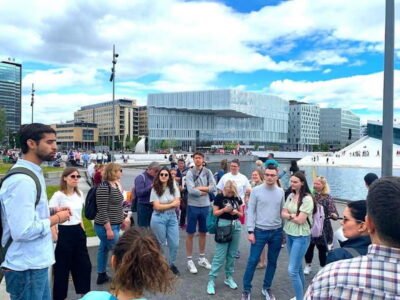
Guided Walking Tour of Central Oslo with Local Guide
Read our review →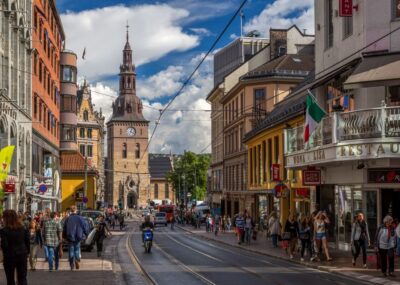

Central Oslo Guided Walking Tour with Local Guide
Read our review →


Browse the lists this tour appears in