
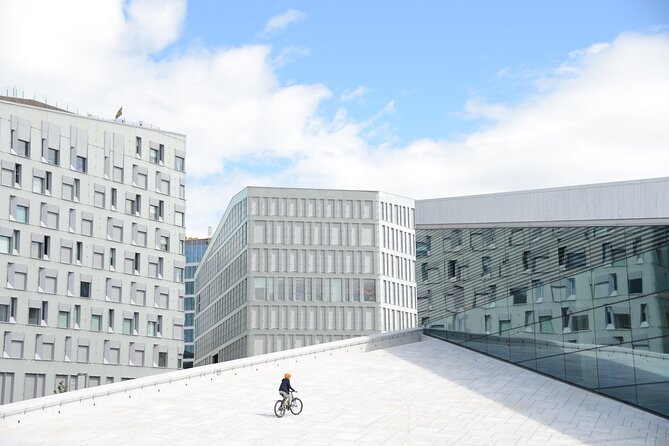
Reviewed · CITY TOURS IN OSLO
Oslo City Walks: The City of Contrasts
Modern Oslo shows up fast on your feet. This 2-hour city walk turns Østbanehallen into a quick lesson on how Oslo grew into a modern European hub. I like that the story is built for seeing, not just hearing.
I also love the architecture focus, especially the walk over the Acrobat pedestrian bridge and the waterfront side of Bjørvika. You get guided context for what you’re actually looking at, including the area by the new Munch Museum. One possible drawback: the tour can feel tight and light on headline sights, and group size can be an issue if you prefer a smaller, quieter walk.
In This Review
- Key highlights worth your attention
- Entering Oslo’s modern engine room at Østbanehallen
- The Acrobat Bridge, where Central Oslo meets the waterfront
- Bjørvika and Bispevika, seeing modernization in real scale
- The city’s industrial story, told on a human pace
- Old fort details and the Opera House area finish
- Modern architecture lessons you can actually use
- Price and what $52 buys in a 2-hour walk
- What to expect in walking pace and group dynamics
- How to prepare: shoes, cameras, and what you cannot bring
- Who this Oslo City Walk fits best
- Should you book Oslo City Walks: The City of Contrasts?
- FAQ
- Where do I meet the guide?
- How long is the tour?
- How much does it cost?
- What languages are offered?
- Where does the tour start and where does it end?
- What should I wear, and what is not allowed?
- Is free cancellation available?
Key highlights worth your attention
- Authorized guide from Oslo Guidebureau AS with English or Norwegian interpretation
- A Monday evening, 2-hour stroll designed for orientation, not a full day of museums
- Crossing the Acrobat pedestrian bridge for an instant scale view of Central Station to Bjørvika
- Bjørvika and Bispevika waterfront areas, plus viewpoints around the new Munch Museum
- Ending at Deichman Library near the Opera House, a handy place to continue your evening
- More “old meets new” than “one landmark per minute”, great if you like city texture and photos
Entering Oslo’s modern engine room at Østbanehallen
You start at the Oslo Visitor Centre, inside Østbanehallen, at Jernbanetorget 1 (0154 Oslo). That matters because Østbanehallen is not a decorative square, it is the kind of place where people move through the city every day. Beginning there gives you a grounded start before the guide shifts into the modernization story.
This tour runs for about 2 hours, and it’s typically scheduled for a Monday evening. That timing works well if you want a city walkthrough after daytime sightseeing, when you can still see the skyline and waterfront in the open air.
One more practical note I appreciate: this is described as a very walkable experience. Reviews also point out how flat it feels, which is a relief if you are tired of steep Old Town climbs. Bring good walking shoes and dress for the weather, because you will be outside for the whole stretch.
The Acrobat Bridge, where Central Oslo meets the waterfront
The first big “you get it instantly” moment is the pedestrian bridge walk at Oslo Central Station, called the Acrobat. Crossing it is more than a photo stop. It is your bridge from the working-heart of the city to the newer districts that Oslo has been building out over time.
As you step across, the guide helps connect the dots between infrastructure, industry, and the way Oslo has expanded. That’s the heart of the tour, you’re learning how the city grew, not just ticking off places. You’ll also get a sense of direction quickly, which is valuable if you want to explore on your own afterward.
If you care about modern architecture, this stretch is a good preview. You’ll be in view of rail-connected city planning and then gradually in the atmosphere of the newer harbor-side neighborhoods. It’s an efficient transition, and it sets the tone for the rest of the walk.
More City Tours in Oslo



Bjørvika and Bispevika, seeing modernization in real scale
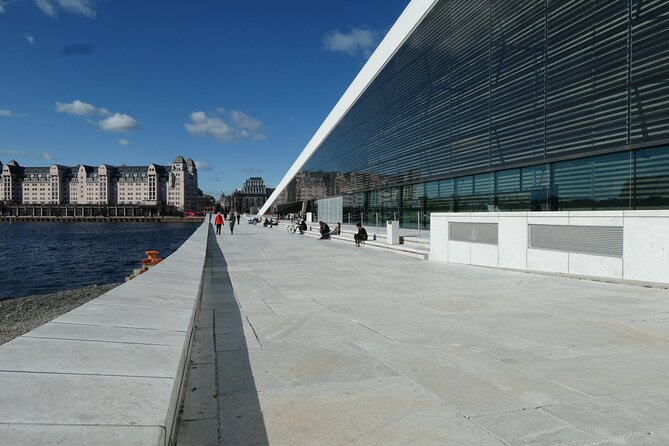
After the bridge, the tour heads into Bjørvika, with stops or passages through Bispevika and viewpoints near the new Munch Museum area. This is where the concept of contrasts becomes practical. Oslo isn’t only old timber streets and classic facades. It also has forward-facing districts designed around transportation, business, and cultural landmarks.
The guide’s job here is to point out what you might otherwise miss. For example, it’s not just that there are new buildings. It’s that they are arranged as part of a city system: walkways, connections to transit, and a waterfront that has become part of everyday life rather than a distant edge.
This section is also where you’ll likely enjoy the photo opportunities most. You’ll get angles that show the relationship between the station-side city feel and the newer waterfront language. If you like photographing buildings that look like they were designed as part of a master plan, this is your time.
The city’s industrial story, told on a human pace
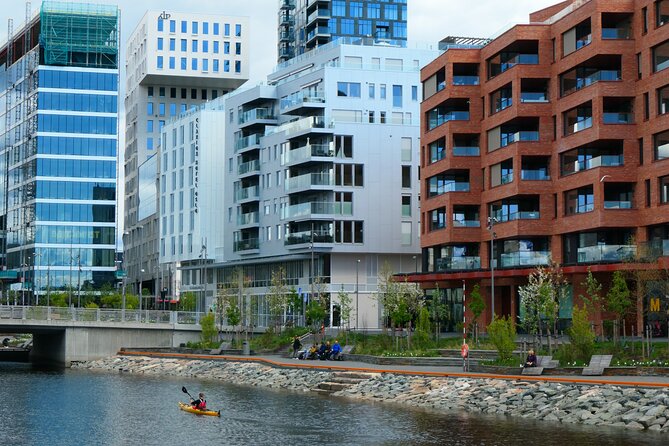
Between the central rail area and the waterfront, you’ll explore Oslo’s suburbs and industrial zones as part of the modernization story. That’s an important ingredient, because it explains why Bjørvika and the newer districts look the way they do.
Oslo’s transformation is tied to industrialization and city expansion, and the tour uses walking to make that feel concrete. In other words, you do not just hear about growth as a slogan. You see how different districts function, and how planning decisions shape daily movement.
This is also why the tour works for first-timers. Even if you do not memorize every detail, you walk away with a mental map. You can look at the city afterward and think, oh, that’s why this part feels new or why those connections matter.
Old fort details and the Opera House area finish
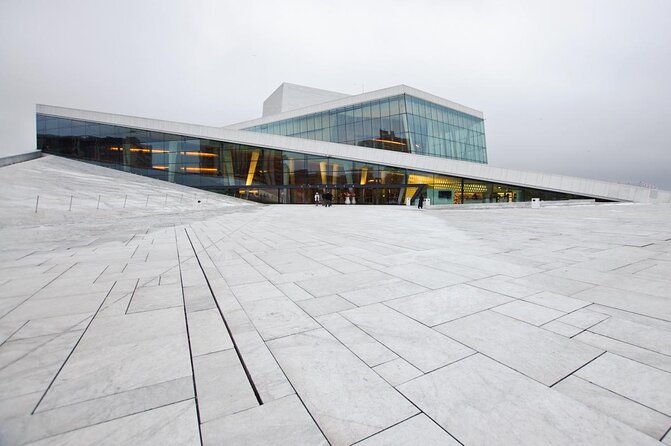
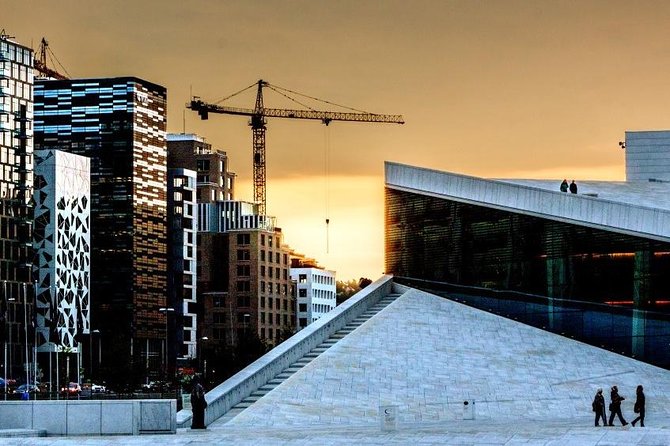
The walk ends at Deichman Library, next to the Opera House. That finish is smart because it places you right at one of Oslo’s most recognizable modern landmarks and a place people associate with culture and public space.
Also, based on guide feedback, the tour may include an older defense-related stop along the way, often mentioned as an old fort element. Even if your main memories are the Opera House and the waterfront, that historical thread helps the contrast land. New architecture makes more sense when you understand what used to matter in the same general city zone.
Deichman Library by the Opera House is a good landing spot for practical reasons. You can easily branch out after the tour, either for a longer walk around the harbor or to find your next transit connection. If you are planning a full evening, ending here gives you options instead of ending in an awkward edge location.
Where the path branches next in Oslo
- Oslo: Oslo Fjord Sightseeing Cruise by Sailing Ship
★ 4.5 · 5,790 reviews - Oslo: Scenic Fjord Cruise with Audio Guide Commentary
★ 4.5 · 5,375 reviews - Oslo Nature Walks: Island Hopping Tour
★ 4.8 · 2,713 reviews - Oslo: 24 or 48-Hour Hop-On Hop-Off Sightseeing Bus GrayLine
★ 4.0 · 2,088 reviews
Modern architecture lessons you can actually use
One of the most praised parts of this tour is how it interprets modern architecture through what you can see in the street. You will get commentary meant to turn buildings into clues about the city’s priorities.
In Oslo, that means you can often connect new forms to needs like transportation, industry, and cultural growth. The guide helps you notice relationships: how pedestrian routes link districts, how the city’s shape affects movement, and how newer landmarks sit within the broader urban picture.
It’s also a good style for people who hate being lectured. In the stronger guide experiences, you get a calm pace and space for questions. One review specifically highlighted that you can ask questions and that the pace feels pleasant rather than rushed. Another review described the guide as fast or energetic, which can be handy if you like momentum.
Still, balance matters. Some feedback says the route covers fewer signature sites than you might expect, and that the guide delivery can feel personality-light. If you want a storyteller performance, rather than a clear, factual city explanation, you might need to mentally prepare for a more straightforward tone.
Price and what $52 buys in a 2-hour walk
Let’s talk value, because $52 per person is not a random number. For two hours, you are paying for an authorized guide and a guided route that does more than point at landmarks. You are getting an explanation of why Oslo’s new waterfront districts exist and how they connect to the industrial and infrastructure story.
You’re not paying for museum admission in the tour description you provided. That means the value is in interpretation and orientation, not in ticketed indoor time. If you already know you like architecture and city planning, this pricing starts to make sense fast.
Where value can feel different is in expectations. If you came hoping for a long list of famous Oslo sights, you may feel the tour is too short for the amount of sightseeing you want. If you came wanting a focused, readable introduction to modern Oslo and its contrast with older elements, this price looks more reasonable.
Also pay attention to group experience. One review flagged a group size issue. Bigger groups can reduce how personal it feels, even with a good guide. If you’re picky about atmosphere, it’s smart to consider how comfortable you are in busier settings.
What to expect in walking pace and group dynamics
Most of the tour is on foot, and it’s described as flat. That lines up with feedback calling it the flattest tour some people have taken in Europe. So you can plan for a steady walking pace without expecting major climbs.
The flip side is that flat does not mean short attention spans. You will spend time looking at buildings and city connections. If you only want quick postcard stops, this tour may feel more like a guided neighborhood scan than a sprint through monuments.
Group dynamics also vary. Some people enjoyed a great tempo and a guide who answered questions freely. Others said the group was too large and that the tour felt like it covered only a small handful of sites. In practice, group size affects how much back-and-forth you can have, so your experience might depend on the day’s turnout.
If you know you prefer smaller groups, you can adjust your mindset: treat the tour as a structured orientation walk and not as a private conversation.
How to prepare: shoes, cameras, and what you cannot bring
A few rules can save you stress on arrival. High-heeled shoes are not allowed, so wear walking-friendly footwear. Drones are also not allowed, so skip any plans to fly a rig over the waterfront.
You should arrive about 10 minutes early at the meeting point so the group can start on time. Dress according to the weather, since it’s an outdoor walk and Oslo evenings can vary by season.
Bring whatever makes you comfortable for photos, since there are multiple viewpoints along the route. If you like taking photos of architecture, plan to slow down briefly when the guide points out contrasts. The best building photos usually come from pausing at the right angle, not from walking while holding your camera.
Who this Oslo City Walk fits best
This tour fits you if you want modern Oslo to make sense fast. I’d especially recommend it if you:
- enjoy architecture and how city design affects movement
- want a guided orientation from the transit hub to the waterfront
- prefer a mostly flat walk rather than steep historic routes
- like asking questions and getting clear explanations during a short outing
It might not fit you as well if you:
- want a long sightseeing list with many headline monuments
- dislike larger group settings
- expect a highly theatrical, personality-heavy guide performance
The best way to think about it: it’s a focused “city of contrasts” lesson, built around a walkable route and a modern-to-old framework.
Should you book Oslo City Walks: The City of Contrasts?
Book it if your goal is understanding Oslo’s growth, not just checking boxes. The route from Østbanehallen to Bjørvika, with the Acrobat Bridge and the Munch Museum area viewpoints, is a strong way to see how a capital evolves. Ending at Deichman Library near the Opera House also gives you an easy finish point for onward plans.
Skip it or set expectations low if you need lots of famous stops, or if you strongly prefer small groups and highly personal guide styles. With mixed feedback on group size and how much of Oslo feels covered, it is smart to treat this as a compact orientation walk with architecture context.
If you want modern Oslo to click in your first day or two, this one does the job in 2 hours.
FAQ
Where do I meet the guide?
Meet your guide in front of the Oslo Visitor Center, located inside Østbanehallen at Jernbanetorget 1, 0154 Oslo.
How long is the tour?
The tour lasts approximately 2 hours.
How much does it cost?
The price is $52 per person.
What languages are offered?
The live tour guide is available in English and Norwegian.
Where does the tour start and where does it end?
It starts at the Oslo Visitor Centre in Østbanehallen and ends at Deichman Library next to the Opera House, after walking through areas including Bjørvika and near the new Munch Museum.
What should I wear, and what is not allowed?
Wear good walking shoes and dress for the weather. High-heeled shoes are not allowed, and drones are not allowed.
Is free cancellation available?
Yes. You can cancel up to 24 hours in advance for a full refund.
Newly marked on the map for Oslo
- Oslo Scavenger Hunt and Highlights Self Guided Audio Tour★ 4.5 · 6 reviews
- Oslo easy walk★ 5.0 · 7 reviews
- Oslo: Oslofjord Electric Boat Cookie Cruise★ 3.8 · 7 reviews
- The Oslo Beer Adventure★ 1.9 · 7 reviews
- 7-Day Scenic Scandinavian Tour from Oslo exploring Denmark, Sweden and fjords in Norway★ 4.5 · 7 reviews
- Private Oslofjord Island Hopping Tour★ 4.5 · 8 reviews
- Free Oslo Photo Tour: Iconic & Instagrammable Spots★ 5.0 · 8 reviews
- BIKING OSLO PRIVATE EXPERIENCE Upto 8 Participants Max★ 4.5 · 8 reviews
City Tours in Oslo, compared.
Grand City Sightseeing Tour by Bus with Fjord Cruise
Read our review →
Oslo Combo Tour: Grand City Tour and Oslo Fjord Cruise
Read our review →
Oslo Shore Excursion: City Sightseeing Oslo Hop-On Hop-Off Bus Tour
Read our review →Browse the lists this tour appears in