
Oslo has a habit of teaching you its story while you walk. This guided Oslo city tour links the Royal Palace, the Nobel family, dynamite history, and Oslo’s art to the big political places where decisions get made. I especially liked the way the tour explains architecture and symbols in plain language, and how the lunch feels like part of the day, not an afterthought.
One thing to plan for: several stops list admission as not included, so you may face small add-on ticket costs depending on what you go inside. Also, it is a solid walking route, so bring comfortable shoes and a moderate pace expectation.
In This Review
- Key highlights I’d prioritize
- A 4-hour walk that ties Oslo’s power to everyday streets
- Royal Palace and the first 1300 years of monarchy
- National Theatre: Ibsen, Bjørnson, Holberg, and women’s rights
- Oslo City Hall: where art meets workers and civic pride
- Norwegian Parliament and Christian the 4th Square: democracy and the 1624 fire
- Akershus Castle and Fortress: 800 years you can stand inside
- Bankplassen to Oslo Cathedral: from the Danish king to Christianization
- University of Oslo Faculty of Law: fear of revolution and fundraising
- The Nobel family and dynamite history, told in context
- The traditional Norwegian lunch: what you get and why it feels worth it
- Price and value: what you’re really paying for
- Who this tour suits best, and who should think twice
- Practical tips so you enjoy it more
- Should you book this Oslo City Tour?
- FAQ
- How long is the Oslo City Tour and Traditional Norwegian Lunch?
- What is the group size limit?
- Where does the tour start?
- Where does the tour end?
- What meals and drinks are included?
- Are alcoholic beverages included?
- Do I need tickets for all the sights?
- Is the tour near public transportation?
- How fit do I need to be?
- When can I cancel for a full refund?
Key highlights I’d prioritize
- Anders as a guide: personable, knowledgeable, and able to connect details to what you see on the street.
- Well-structured walking route: stops are timed so you get context without feeling rushed.
- Architecture explained simply: you’ll learn what the buildings are doing, not just what they look like.
- Political and royal power, on foot: monarchy, democracy, and city governance in a single loop.
- A Norwegian lunch in a historic setting: tasty, served in a building with beautiful ceilings.
- A small group size: capped at 15 travelers, which makes questions easier.
A 4-hour walk that ties Oslo’s power to everyday streets
This is a half-day, guided walking tour designed to move you through Oslo’s most visible institutions: the royal sites, the national culture stage, and the democracy machinery. You spend about four hours on foot, with short stops at major landmarks so you can take photos, listen, and still keep moving.
What makes this one practical is that it does not treat Oslo as a single big museum. It connects buildings to the people and ideas behind them. You’ll hear about the Nobel family and the history of dynamite, then shift to how government works and how Oslo’s civic life developed.
The small group size, up to 15, also matters. In a city where many tours get crowded fast, a smaller group helps you keep your attention on the guide’s explanations.
Royal Palace and the first 1300 years of monarchy
You start at the Royal Palace at Slottsplassen 1. The tour kicks off by zooming out, giving you roughly 1,300 years of Royal family history as the backdrop for everything you’ll see later.
Expect a short introduction and then a look at how the monarchy shows up in public space. Even if you are not a royal-history fanatic, it helps to understand how symbolism, tradition, and ceremony built credibility over centuries. This is the kind of context that makes the later political buildings make more sense.
One planning note: the Royal Palace stop is listed with admission not included. That can mean you might need to pay separately if the route includes time inside, so it is smart to budget a little extra.
More City Tours in Oslo



National Theatre: Ibsen, Bjørnson, Holberg, and women’s rights
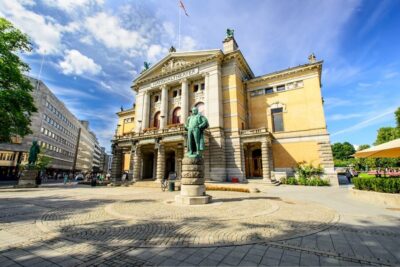
Next comes the National Theatre. Here the focus turns from crowns and castles to culture and ideas. You’ll hear about key literary figures tied to Norway’s story, including Ibsen, Bjørnson, and Holberg.
This stop is more than an art detour. The tour uses literature as a way to talk about social change, including stories connected to the fight for female rights. If you’ve ever wondered why certain countries seem more progressive on paper and in reality, this is the kind of place where you learn the groundwork came from writers and public debate long before modern politics.
The National Theatre stop lists admission not included. If you want to go inside, assume there could be an extra ticket cost, and decide based on your time and budget.
Oslo City Hall: where art meets workers and civic pride
At the Oslo City Hall, you get a chance to go inside, with admission marked as free for this stop. You’ll talk about the art inside and also those worker statues that reflect how labor and civic life are valued.
This is one of the most rewarding stops for travelers who love meaningful details. Buildings like City Hall are not just for ceremonies. They are designed to communicate what a city cares about, and the art is part of the messaging.
City Hall is also a good break from purely royal and national themes. It shifts you from the top level of institutions down to the daily identity of Oslo as a working, organized city.
Norwegian Parliament and Christian the 4th Square: democracy and the 1624 fire
The tour moves into the Norwegian Parliament area, where you’ll learn about how democracy works in Norway. You also get historical comparison context, including how Norway’s political story connects with Denmark before and after.
This stop is short, but it gives you a framework. Once you understand the basic idea of how power is organized, the rest of Oslo’s institutions start to look less random and more like a coherent system.
Then you’ll be guided past Christian the 4th Square, with local historical themes that include the fire of 1624 and the idea of the new Christiania. These are the kinds of city stories that help you understand why streets and neighborhoods developed the way they did, rather than viewing Oslo as a clean, modern map.
The Norwegian Parliament stop lists admission as not included. You may still get plenty from exterior viewpoints and guided context, but if you plan to go inside you should be ready for potential ticket costs.
Where the path branches next in Oslo
- Oslo: Norwegian Lunch Cruise On The Fjord
★ 4.5 · 61 reviews - Oslo: The Grand Experience Walking Tour with Lunch or Dinner
★ 4.6 · 59 reviews - Oslo: City Tour & Traditional Norwegian Lunch or Dinner
★ 4.6 · 34 reviews - Oslo: Wilderness Skiing Tour with Lunch by the Fire
★ 5.0 · 21 reviews
Akershus Castle and Fortress: 800 years you can stand inside
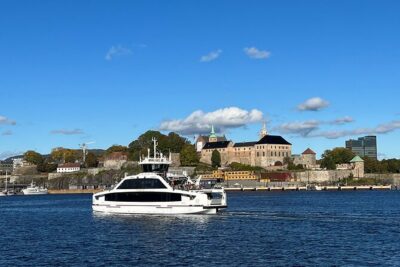
One of the best stops on the route is Akershus Castle and Fortress. Admission is marked as free, and you’ll have about 20 minutes to explore with the guide and learn about roughly 800 years of fortress past.
Fortresses can easily turn into a lecture about battles you cannot picture. This stop works better because it treats the fortress as an anchor for Oslo’s long timeline. You’re learning how defense, power, and governance were physically built into the city’s landscape.
Akershus is also a great spot for photos and for letting your feet breathe a bit. Even with the walking route, the setting gives you space to reset.
Bankplassen to Oslo Cathedral: from the Danish king to Christianization
At Bankplassen, you’ll get a quick but interesting thread: stories that connect from the Danish king to modern references like the oil fund. It is a compact stop, about 15 minutes, but it highlights how money and governance talk to each other in Oslo.
Then the tour heads to Oslo Cathedral, where the guide covers what life was like in Norway before and after Christianization. This kind of before-and-after explanation is useful because it frames the city’s religious shift as cultural change, not only a change of buildings.
Oslo Cathedral lists admission not included. If you care about going inside, consider your priorities. If you prefer more time outside for photos and atmosphere, you might still get the main story from the guided context.
University of Oslo Faculty of Law: fear of revolution and fundraising
The last major academic stop is at the University of Oslo, Faculty of Law, with about 15 minutes here. The talking points focus on fundraising and fear of revolution, then a modern status note that this faculty is ranked around the 60th best in the world.
Even if you do not care about law school, this stop helps explain how institutions get built and funded, and why governments and societies often manage change carefully. In Oslo, where the city’s identity is tied to institutions, it makes sense to end on an institution that shapes policy and legal thinking.
Admission here is marked as not included. If you plan to go inside, plan for possible ticket costs.
The Nobel family and dynamite history, told in context
One of the tour’s standout themes is the Nobel family and the history of dynamite. That matters because it turns a name you might recognize into a story with place. You are not just hearing trivia. You are seeing how industrial-era influence can ripple through education, politics, and cultural identity.
If you like tours that connect science, money, and civic life, this theme pulls its weight. You’ll get references rather than a full chemistry lesson, which keeps the walking pace realistic.
The traditional Norwegian lunch: what you get and why it feels worth it
At the end, the tour finishes at a family-owned restaurant on Bogstadveien 27, near The Broker. This is where the experience switches from landmark viewing to eating like the locals, with a traditional Scandinavian lunch plus bottled water and coffee and/or tea included.
What I like about this format is that you are not racing off to find food. You already spent the afternoon learning the city’s story. Then the meal becomes part of your rest, not a chore.
One review detail worth keeping in mind: the restaurant is in a historically significant building, and people mention the ceilings are beautiful. That kind of setting can turn a simple meal into a memorable, atmospheric finish without turning lunch into a high-priced performance.
Also note: dinner is listed as included. The specifics are not spelled out here, so you should treat it as part of the package and ask the operator how dinner is handled on your date.
Alcoholic beverages are not included, so if you want wine or beer, plan to pay separately.
Price and value: what you’re really paying for
At $155.30 per person for about four hours, this is not a budget tour. But it does line up with what you get: a guided walk through major Oslo institutions, a structured route, included drinks for the meal, and an included lunch that is positioned as part of the experience.
Value usually comes from three places on tours like this. First, you get a guide who can connect architecture and civic meaning, not just point at buildings. Second, the route includes multiple iconic sites in a tight timeframe. Third, lunch is included in a way that feels thoughtfully placed at the end.
Your biggest cost risk is admissions. Several key stops are listed as admission ticket not included, while others like City Hall and Akershus are free. If you expect to go inside every available location, budget for add-ons. If you are happy with guided exterior viewing when tickets apply, you will likely feel the value more strongly.
The fact that it is small group capped at 15 also adds value. In Oslo, where highlights are spread out, a crowded tour can feel like a line. Here, it is easier to keep the conversation going.
Who this tour suits best, and who should think twice
This tour fits best if you want an efficient, story-driven way to understand Oslo beyond the postcard shots. It is a strong pick for couples, solo travelers, and small groups who enjoy explanations, architecture details, and civic context.
It is also a good match if you care about culture and ideas, not only monuments. The mix of monarchy, Parliament, architecture, literature figures, and the Nobel family theme makes it more than a checklist tour.
Think twice if you hate walking, or if you prefer tours that rely heavily on long interior visits. This is paced for a half-day, and some stops may require separate admissions. If you want a full museum day, you might find this shorter than you hoped.
Practical tips so you enjoy it more
I’d come prepared to walk and listen. Comfortable shoes matter more than you’d think in Oslo’s central areas. Dress for cool or rainy weather, since you are outside between stops.
If you want the inside options, plan to have a few extra kroner or a card ready for admissions marked not included. The tour is structured, but ticket rules differ by stop.
Finally, if you encounter any snag with your booking record, keep your confirmation and any mobile ticket access ready for the check-in. I’ve seen how quickly a small paperwork mismatch can slow things down, even when the guide is ready to go.
Should you book this Oslo City Tour?
If you want a guided, story-based walk through Oslo’s most important landmarks, including a traditional Norwegian lunch that ends the day on a satisfying note, this is a strong choice. The tour’s greatest strength is how it connects buildings to meaning, with a guide named Anders noted for being personable and knowledgeable, plus clear explanations of architecture.
Book it if you like learning while you walk and you’re okay with possible extra admissions at some stops. Pass or compare if you are strictly trying to keep costs low or you dislike tours where certain attractions may require separate tickets.
FAQ
How long is the Oslo City Tour and Traditional Norwegian Lunch?
The tour lasts about 4 hours.
What is the group size limit?
The tour has a maximum of 15 travelers.
Where does the tour start?
It starts at the Royal Palace, Slottsplassen 1, 0010 Oslo, Norway.
Where does the tour end?
It ends at a family-owned restaurant to enjoy lunch, at The Broker, Bogstadveien 27, 0355 Oslo, Norway.
What meals and drinks are included?
The package includes lunch, bottled water, coffee and/or tea, and dinner.
Are alcoholic beverages included?
No. Alcoholic beverages are not included.
Do I need tickets for all the sights?
Not all admissions are included. Some stops are listed as admission ticket not included, while City Hall and Akershus Castle and Fortress are marked as free.
Is the tour near public transportation?
Yes, it is near public transportation.
How fit do I need to be?
You should have a moderate physical fitness level.
When can I cancel for a full refund?
You can cancel up to 24 hours in advance of the experience for a full refund.
Newly marked on the map for Oslo
- Oslo: WWII History Private Walking Tour★ 5.0 · 1 review
- Oslo: All-Inclusive Self-Guided Kayaking & Camping Adventure★ 5.0 · 1 review
- Stand up paddleboard adventure in Leangbukta★ 5.0 · 1 review
- Kayak and Canoe Tour in Lake Bogstad★ 5.0 · 1 review
- Oslo All Inclusive Private Walking Tour★ 5.0 · 1 review
- Sightseeing Private Tour of Oslo and Viking Ship Museum★ 5.0 · 1 review
- 3days tour to Flåm-næroyfjord(or Preikstolen Hiking)-Bergen★ 5.0 · 1 review
- Departure Private Transfer from Oslo City to Oslo Airport OSL by Luxury Van★ 5.0 · 1 review
City Tours in Oslo, compared.
Grand City Sightseeing Tour by Bus with Fjord Cruise
Read our review →
Oslo Combo Tour: Grand City Tour and Oslo Fjord Cruise
Read our review →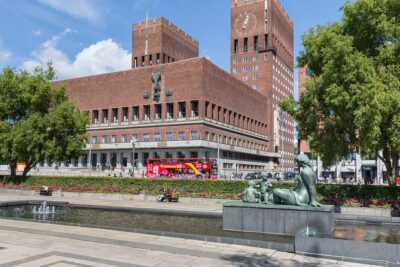

Oslo Shore Excursion: City Sightseeing Oslo Hop-On Hop-Off Bus Tour
Read our review →Browse the lists this tour appears in