
Reviewed · HISTORICAL TOURS
Historic Oslo: Exclusive Private Tour with a Local
Oslo has a way of layering eras on top of each other. This exclusive private walking tour is a clean, efficient way to understand the city fast, with a local guide who connects big sights to how people lived, governed, and celebrated over time.
I especially like the small size (up to eight), because you get real conversation instead of a lecture. I also love how the guide work is practical, not just scenic, with tips for what to see next, plus food and art suggestions, and lots of room for questions, like Simon and Mireia proved when they answered and then adjusted the route to your interests.
One possible drawback: this is still a walking tour. If mobility is an issue, you may want to skip it, and even if you are fine on your feet, weather can shift which spots you hit.
In This Review
- Key highlights worth circling
- A 2-hour historic Oslo walk that gives you bearings fast
- Starting at the Oslo Opera House, modern Oslo in one photo
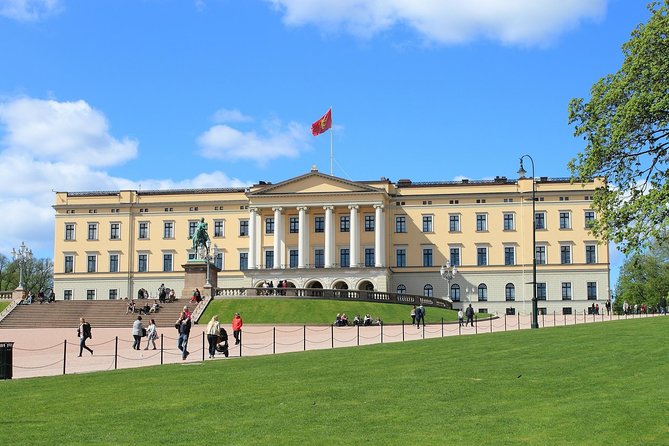
- Royal Palace area, where ceremonies and power meet stone
- The heart of Norwegian democracy, and why it feels different
- 19th-century wooden houses, old domestic Oslo up close
- Stopping at Oslo’s oldest remaining building from the 12th century
- Monarchy symbol and ceremonies you can actually picture
- A cultural institution for drama and architecture
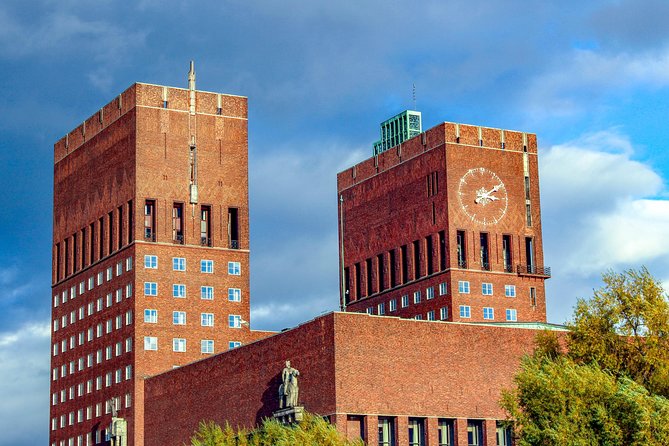
- City hall energy in 20th-century design and public art
- Ending at Akershus Fortress, medieval military history turned cultural monument
- What your guide will do beyond the stops
- Price and value: $205.67 per person for an exclusive local
- Practical tips so you enjoy the walk
- Who this private historic Oslo tour is best for
- Should you book it?
- FAQ
- How long is the Historic Oslo private tour?
- What is the price per person?
- Is the tour offered in English?
- How many people are in the group?
- Where does the tour start and end?
- What is included in the tour price?
- What is not included?
- Do I get a mobile ticket?
- Are service animals allowed?
- What is the cancellation policy?
Key highlights worth circling
- Opera House start at Promenade Operaen, a modern anchor for understanding Oslo’s cultural turn
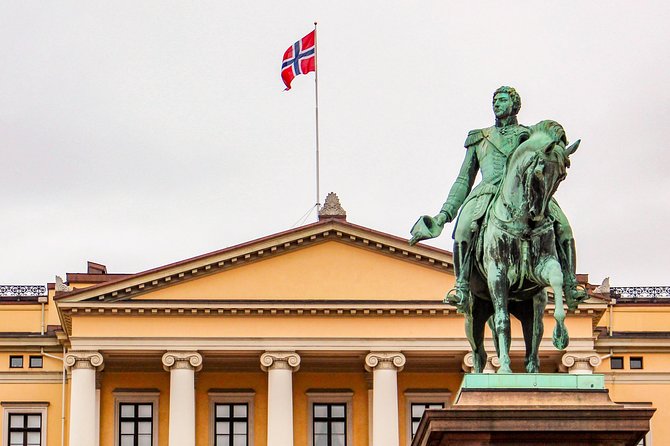
- Royal Palace and Oslo Cathedral context with stories tied to ceremonies and changing eras
- Politics you can see through the neoclassical “heart of Norwegian democracy” stop
- 19th-century wooden houses for a quick feel of old neighborhood life and domestic architecture
- A 12th-century surviving site that gives Oslo history a real time anchor
- Ending at Akershus Fortress to wrap the walk with medieval military history turned public monument
A 2-hour historic Oslo walk that gives you bearings fast
If you only have a short window in Oslo, this kind of guided circuit is gold. The format is simple: you walk between major landmarks, the guide explains what you are looking at, and the pace stays flexible so you can actually take it in.
This is also built for conversation. The tour is exclusive private, meaning it is just your group, and it stays small, so you can ask questions without feeling rushed. That matters in Oslo, where architecture and national institutions can look impressive but confusing if you do not get the story behind them.
Finally, it is tailored. The route can adapt to your walking pace and interests, and stops may vary with weather. That is a real advantage in a city where rain can change everything.
Starting at the Oslo Opera House, modern Oslo in one photo
You begin at Promenade Operaen Opera w, right by the Oslo Opera House, which is described as a modern architectural marvel and a symbol of Oslo’s cultural renaissance and commitment to the arts. Even if you think you are just here for history, starting here makes sense.
Why? Because Oslo is not stuck in the past. The Opera House signals that the city invested in culture, design, and public life in more recent times. Your guide will help you connect that to older landmarks you will see later, so the walk feels like one story, not a list.
What to do at this stop: take a minute to look beyond the obvious “wow” angles. Think about how the building sits in the waterfront city scene, and how a modern cultural venue can communicate civic pride.
Small practical note: since it is a walking tour, wear shoes you can trust on whatever pavement you meet. This part is generally outside, so wind and rain can change your comfort level fast.
Where the path branches next in Oslo



Royal Palace area, where ceremonies and power meet stone
From the Opera House, the walk moves toward the kind of landmarks where national identity becomes physical. One of the early historic stops focuses on a key religious site dating back to the 17th century, the kind of place that has hosted royal ceremonies. Another stop is the Royal Palace, described as a key symbol of the Norwegian monarchy with an elegant design and a central role in national ceremonial occasions.
Even without getting too technical, the big value here is how your guide frames the buildings. You do not just get dates. You get what these spaces were used for and why that mattered to public life. That turns “pretty architecture” into a sense of how the state projected itself.
What to watch for: pay attention to how the guide points out details and contrasts. Religious and royal sites in a capital tend to share a language of authority. Seeing that pattern makes the next stops easier to understand.
Possible drawback at this stage: depending on the day and conditions, you may have less time standing still than you want. If you are the kind of person who likes long museum pauses, you will need to balance that with the rest of the route.
The heart of Norwegian democracy, and why it feels different

Next, you reach the stop described as the heart of Norwegian democracy. It is known for neoclassical architecture and for showing the nation’s political evolution.
This is one of those stops where guidance makes the difference. Neoclassical design can look “formal” from the outside, but the meaning comes through when someone ties it to the idea of governance and public authority. You learn how architecture signals stability and legitimacy, especially in a country shaped by its institutions.
This is also a great point in the tour to ask questions. If you are curious about how Norway’s political system and public life changed over time, this stop is a natural anchor for that conversation. In the best versions of this tour, the guide will connect what you see in stone to what happened in society.
19th-century wooden houses, old domestic Oslo up close
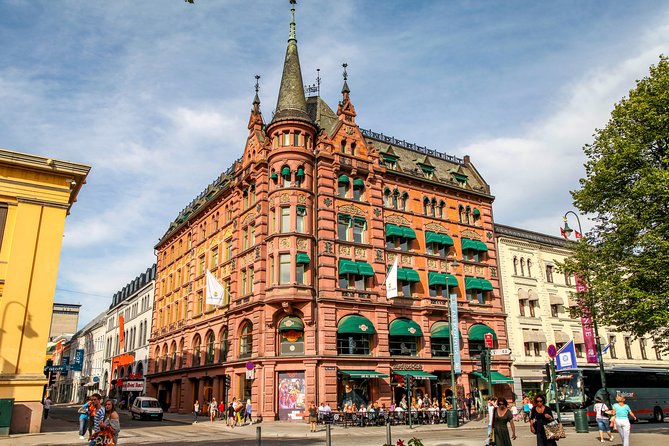
After the grand institutions, you get a quieter look at everyday life through the charm of well-preserved wooden houses. This stop is described as offering a glimpse into 19th-century Oslo and reflecting historical domestic architecture.
This is where the tour shifts from “national story” to “how people actually lived.” Wooden architecture can be harder to appreciate if you only look for major monuments. With a local guide, you start noticing textures, shapes, and the way neighborhoods hold their character.
How to use this stop: take photos, yes, but also slow down enough to spot how these houses relate to the streets around them. You will likely finish this part feeling like you understand why Oslo has such a strong sense of neighborhood identity.
Trade-off: it is an outside segment. If the weather is rough, your guide may shorten time at each exterior view or adjust which streets you pass through.
Still ahead on the route through Oslo:
- Oslo: Oslo Fjord Sightseeing Cruise by Sailing Ship
★ 4.5 · 5,790 reviews - Oslo: Scenic Fjord Cruise with Audio Guide Commentary
★ 4.5 · 5,375 reviews - Oslo Nature Walks: Island Hopping Tour
★ 4.8 · 2,713 reviews - Oslo: 24 or 48-Hour Hop-On Hop-Off Sightseeing Bus GrayLine
★ 4.0 · 2,088 reviews
Stopping at Oslo’s oldest remaining building from the 12th century
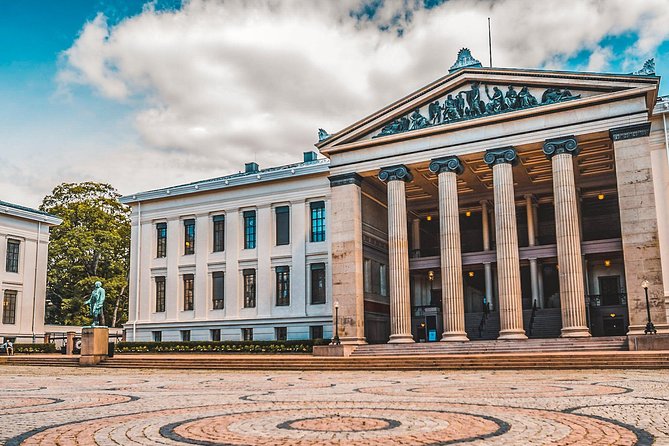
One of the itinerary highlights is described as Oslo’s oldest remaining building, dating back to the 12th century. It is also framed as a significant religious and historical site.
This is a “time anchor” stop. When you see something that has lasted this long, everything else you have heard starts clicking. The tour stops feeling like a set of landmarks and starts feeling like a continuous timeline.
The big value is context. A 12th-century site is easy to underestimate because it is not always huge or flashy from every angle. Your guide’s job is to translate age into meaning. You learn why survival across centuries matters and what role the site played as Oslo changed.
Practical note: older sites often have uneven ground near viewpoints. Wear sturdy shoes and move carefully if you are on wet pavement.
Monarchy symbol and ceremonies you can actually picture
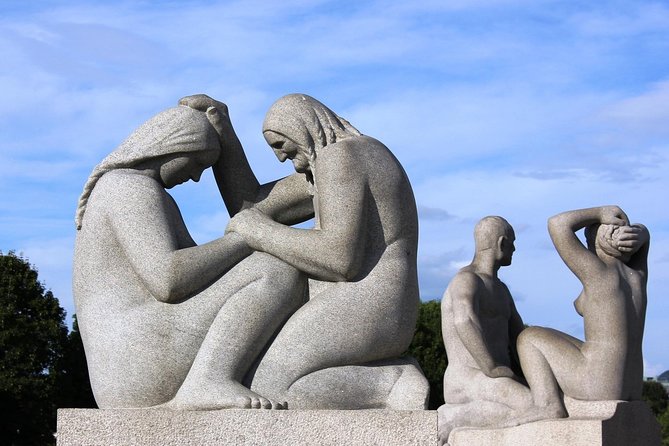
Another major stop is again tied to the monarchy, specifically described as a key symbol of the Norwegian monarchy with elegant design and a central role in national ceremonial occasions.
If you have ever found royal sites a bit abstract, this is where a good guide helps. The point is not just to admire the building. It is to connect ceremonies and state rituals to the country’s identity, and to help you imagine what it looks and feels like when a public ceremony takes place.
What I like here is that the tour keeps returning to the same theme from different angles: power, public identity, and how it shows up in both religious and royal landmarks. That repetition is helpful. It builds understanding faster than random trivia.
A cultural institution for drama and architecture
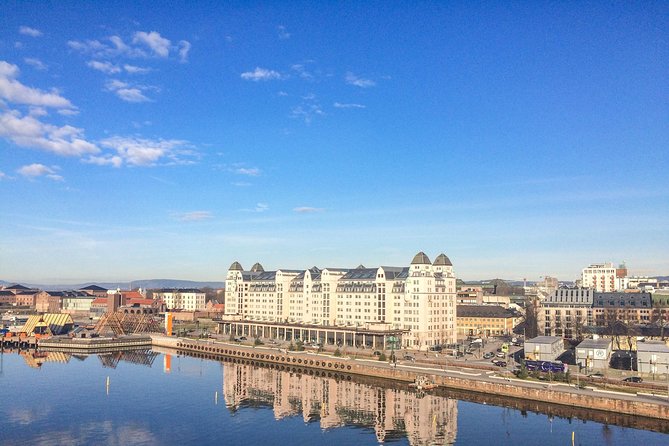
The itinerary also includes an important cultural institution described as showcasing Norway’s dramatic arts and the architectural beauty of the venue.
This stop is valuable because it broadens “history” beyond politics and religion. In many capitals, culture is a parallel form of national storytelling. When you have a guide tying the building to dramatic arts, you start seeing how civic identity expresses itself through performance spaces and public culture.
Even if you do not attend a show on your trip, this is still a meaningful stop. It helps you know where culture lives in Oslo and what to prioritize later if you want tickets.
Time and weather matter here too, since the tour keeps moving. If you are a theatre lover, ask your guide what else in the arts scene is worth adding to your free time.
City hall energy in 20th-century design and public art
Another highlight is described as unique 20th-century architecture and as a place where you can see how the city’s civic spirit is expressed through art.
This is the modern counterpart to the older religious and medieval pieces. The tour shows you Oslo’s range: from medieval defense and early religious sites, to national institutions, to civic buildings that reflect mid-century design choices and public artwork.
Why it works: you get to compare eras without needing to hop across the entire city on your own. And because this stop is tied to artworks and civic meaning, it feels more personal than a simple “here is a cool building.”
Ending at Akershus Fortress, medieval military history turned cultural monument
You finish at Akershus Fortress. It is described as a medieval castle that has been central to Oslo’s military history and is now a popular cultural monument.
Ending here is smart. Fortress architecture naturally makes you rethink everything you saw earlier. Early religious sites tell you about spiritual and royal power. The democracy stop tells you about governance. The fortress tells you about defense and strategic importance. Put together, the walk reads like the city’s survival and authority story.
If you want to keep the momentum after the tour, this is a strong base. You finish at a place that is easy to explore further on foot, and it gives you something dramatic to photograph right as your guide’s explanations wrap up.
What your guide will do beyond the stops
The best part of this experience is the guide’s role as a translator between buildings and life. In the reviews, Simon stood out for connecting Oslo’s history to economy, global politics, and social mores across periods, plus sharing thoughtful suggestions for food and art. Mireia impressed with lots of answers, a friendly way of handling questions, and a willingness to extend the tour slightly when people asked for more of what they were into.
You should expect that kind of responsiveness. This is not a rigid script where you get rushed through photos. It is a real walk with a local host who can adjust based on what you care about.
Also, take advantage of the “what to do next” advice. You will be in a good position to act on it while your impressions are still fresh. If you want specific meal ideas, food courts, or where markets are, this tour style is built for that.
Price and value: $205.67 per person for an exclusive local
At $205.67 per person, this is not the cheapest way to see Oslo. But for a short, guided experience, the value comes from what you are buying: an exclusive private tour, a small group cap, and a guide who adapts to your pace and interests.
Here is how I think about value for a tour like this:
- You are getting a focused 2-hour route rather than spending time figuring out which landmarks actually connect.
- The guide interaction matters. Being able to ask questions and have the itinerary adjust is hard to replicate with self-guided walking.
- The start and end points are practical, starting at the Opera House area and ending at Akershus Fortress, which makes it easy to continue exploring afterward.
If you are traveling solo or as a couple, the “per person” cost can feel steep, but you often get your money back in efficiency and clarity. If you are in a small group, ask whether group discounts apply to your situation, since the tour description notes group discounts.
Practical tips so you enjoy the walk
This is a 2-hour walking tour, offered in English, with a mobile ticket. It also says it is near public transportation, which helps if you want to arrive early or if you plan to continue onward.
A few practical things to plan for:
- Entry tickets for transportation, museums, and monuments are not included, so if any stop has paid access, you will need to cover that yourself.
- Personal expenses are not included, so budget for snacks or coffee if you need it.
- Stops may vary depending on weather. In rainy Oslo weather, you should expect a different balance of outdoor vs. indoor viewing.
- Service animals are allowed.
- It is not recommended for guests with impaired mobility.
What to bring: comfortable shoes, a rain layer, and a question or two you genuinely care about. This tour gets better when you treat it like a conversation.
Who this private historic Oslo tour is best for
I think this tour fits best if you:
- Want to understand major landmarks without reading a guidebook for hours
- Like history that connects to modern life, not just old dates
- Care about art and food suggestions alongside architecture
- Prefer small groups and personalized attention
- Have limited time and want a smart route through key areas
If you are traveling with someone who likes both politics and design, you are likely to have a great time. If you are only after a quick photo tour, you might not use the guide’s strengths fully.
Should you book it?
Yes, if you want a short, guided route that turns Oslo’s big landmarks into a coherent story. This experience is strongest when you value conversation, want guidance on what to do next, and appreciate the way a good local can connect architecture, ceremonies, politics, and daily life.
Skip it if you need a fully low-walking experience, or if you dislike the idea that stops can shift with weather. Also, be realistic about the cost. It is paying for an exclusive private guide experience in a time-boxed format, so it makes sense when you want clarity fast, not when you want to wander freely with no structure.
If that sounds like you, this is a very solid way to get your bearings in Oslo, and end with Akershus Fortress as a dramatic final note.
FAQ
How long is the Historic Oslo private tour?
It is approximately 2 hours.
What is the price per person?
The price is $205.67 per person.
Is the tour offered in English?
Yes, the tour is offered in English.
How many people are in the group?
The tour is small-group sized, with a maximum of eight. It is also exclusive private, meaning only your group participates.
Where does the tour start and end?
It starts at Promenade OperaenOpera w, Oslo, Norway, and ends at Akershus Fortress, 0150 Oslo, Norway.
What is included in the tour price?
Included items are the local host, exclusive private tour, and a tailored itinerary.
What is not included?
Personal expenses are not included. Entry tickets for transportation, museums, and monuments are excluded.
Do I get a mobile ticket?
Yes, the tour includes a mobile ticket.
Are service animals allowed?
Yes, service animals are allowed.
What is the cancellation policy?
Free cancellation is available. You can cancel up to 24 hours in advance of the experience for a full refund.
Newly marked on the map for Oslo
- Oslo: WWII History Private Walking Tour★ 5.0 · 1 review
- Oslo: All-Inclusive Self-Guided Kayaking & Camping Adventure★ 5.0 · 1 review
- Kayak and Canoe Tour in Lake Bogstad★ 5.0 · 1 review
- Stand up paddleboard adventure in Leangbukta★ 5.0 · 1 review
- Sightseeing Private Tour of Oslo and Viking Ship Museum★ 5.0 · 1 review
- Oslo All Inclusive Private Walking Tour★ 5.0 · 1 review
- 3days tour to Flåm-næroyfjord(or Preikstolen Hiking)-Bergen★ 5.0 · 1 review
- Departure Private Transfer from Oslo City to Oslo Airport OSL by Luxury Van★ 5.0 · 1 review
Historical Tours, compared.

Reindeer Camp and Sami Cultural Tour with Lunch
Read our review →
Sámi Reindeer Sledding and Sami Cultural Tour
Read our review →



Browse the lists this tour appears in