
Reviewed · TRONDHEIM TOURS & ACTIVITIES
Trondheim’s Inner Circle: A Self-Guided Audio Tour
Trondheim’s story is best on foot. This self-guided audio tour strings together Viking origins, royal buildings, and cathedral landmarks into one easy walking loop. I like that the once-downloaded tour never expires and that you get offline audio, maps, and geodata so you are not stuck hunting for signal. One thing to consider is that you are relying on your phone for GPS, so festival fences or occasional route drift can make “where am I?” moments more annoying than on a live guide.
For the price of a decent coffee, you get a lot of context while you walk: Olav Tryggvason’s founding-era story, the big wooden royal palace at Stiftsgården, and the sobering arc from the 1681 fire to Kristiansten Fortress in wartime. If you like to travel independently, pace yourself, and keep your hands free for photos, this is an efficient way to see the core of Trondheim.
In This Review
- Key Points You’ll Feel Immediately
- Why the Inner Circle Walking Route Feels Effortless
- Price and Value: $7.99 for a Whole Lot of Walking Time
- Offline VoiceMap Audio, Maps, and Geodata: The Real Upgrade
- Getting Started at Kongsgårdsgata 2 and Finishing at Nidaros Cathedral
- Stop One: Trondheim’s Inner Circle, Viking Roots, and Royal Threads
- Olav Tryggvason: From King to Founder Story (997, 995 to 1000)
- Munkegata and Stiftsgården: The Largest Wooden Palace in Northern Europe
- The 1681 Fire, Baroque Reconstruction, and the Old Town Bridge
- Kristiansten Fortress: Hill Views, Wartime Tragedy, and a Museum Dungeon
- The Archbishop’s Palace Grounds: Where Power and Faith Overlap
- Nidaros Cathedral Finale: Northernmost Gothic Anchor of the Route
- Staying on Track: When GPS Gets Weird, Here’s How to Cope
- Who This Tour Suits Best, and Who Might Want a Different Option
- Should You Book Trondheim’s Inner Circle Audio Tour?
- FAQ
- How much does the Trondheim Inner Circle audio tour cost?
- How long is the tour?
- Is the tour available in English?
- Does the audio work offline?
- Does the tour expire after purchase?
- What is the meeting point?
- Where does the tour end?
- What do I need to bring?
- Are food and drink included?
- Are admissions and museum tickets included?
- Is cancellation free if my plans change?
Key Points You’ll Feel Immediately
- Lifetime access after download means you can replay sections later without re-buying
- Offline audio and maps help you keep moving even with spotty reception
- A tight 1 to 1.5 hour route works well when you want one main walking experience
- Clear point-to-point narration keeps the why behind the buildings from getting lost
- Ending at Nidaros Cathedral gives you a natural finish line for tickets and a slow wander
- GPS is doing the heavy lifting, so plan for a bit of troubleshooting if a route looks blocked
Why the Inner Circle Walking Route Feels Effortless
This tour is built for the center of Trondheim, where major sights sit close enough that you can connect them on foot. The audio does the guiding, so instead of stopping every few minutes to read signs, you can keep walking and absorb the story in motion.
What I like most is that it gives you a mental map fast. You start with Trondheim’s Viking-to-royal overlap, then the narration keeps tightening toward the cathedral finale. It feels like a “best of the inner core” walk, not a random collection of stops.
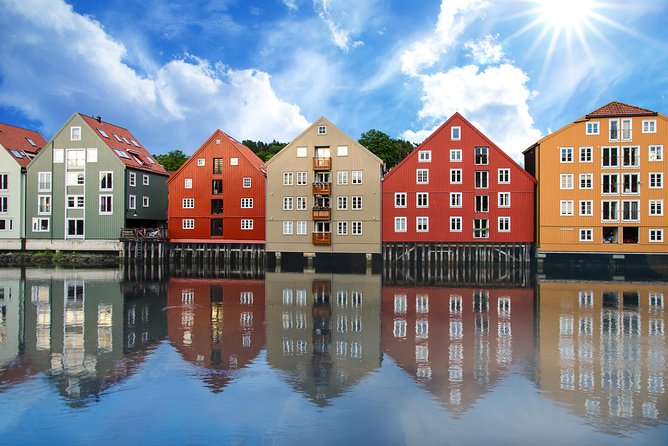
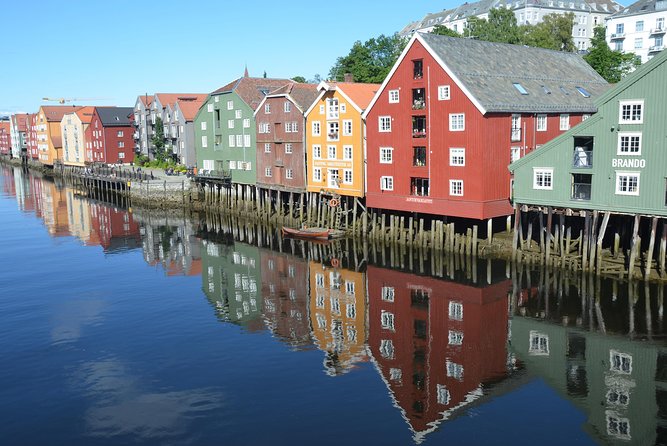
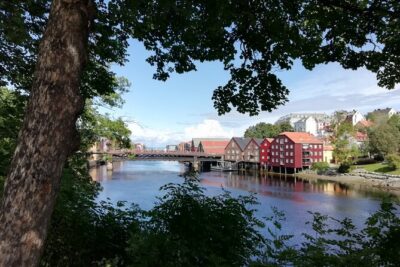
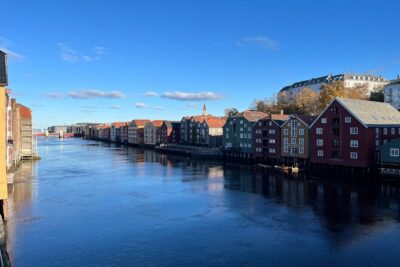
The route is also very flexible. You are free to pause for photos, look down at the riverfront wharves, or linger by the church and palace facades without worrying about slowing anyone else down. That matters in Trondheim, where the streets are narrow and you will naturally want to look at the buildings twice.
Price and Value: $7.99 for a Whole Lot of Walking Time
At $7.99 per person for an approximately 1 to 1.5 hour experience, the value is mostly about repetition and independence. You are not paying for a one-time guided service with limited hours. You are paying for an audio tool you can download once and keep.
That lifetime access is a big deal when you travel. You might do the full route today, then later decide you want a second pass at Stiftsgården or the cathedral area with fresh eyes. If you have ever finished a city and thought, I wish I knew that last detail, this style helps prevent that.
The only “cost” is your phone. A smartphone is not included, and you do need the VoiceMap app for the offline content to work. If you already travel with a charged phone and headphones or speaker, the math stays simple.
Where the path branches next in Trondheim


Offline VoiceMap Audio, Maps, and Geodata: The Real Upgrade
The tour includes VoiceMap Application plus offline access to audio, maps, and geodata. In plain terms, that means your phone does not need constant internet to play the narration or show your position.
You also get that once-downloaded advantage. The tour is described as good value because it never expires after download. That is one of those quiet travel wins that makes self-guided content feel less fragile than it sometimes does.
Practical tip: before you leave your hotel, download the audio and maps while you have reliable Wi-Fi. Then you are not fighting download speed while standing outside in cool Trondheim weather. A self-guided tour only works well if the “setup” happens before you start walking.
Getting Started at Kongsgårdsgata 2 and Finishing at Nidaros Cathedral
The tour starts in Trondheim, Norway, with the meeting point listed at Kongsgårdsgata 2, 7013 Trondheim, Norway, and ends at Nidaros Cathedral. The location is open essentially all day on the published schedule, so you can choose a time that fits your day.
Why the start point matters: audio tours are sensitive to where you begin. When you are too far from the correct starting position, the app may hesitate or say you are off route. The fix is usually not dramatic, but it can take a moment.
The finish line is smart. Ending at Nidaros Cathedral (with the cathedral’s address and general area as your end point) gives you a clear next step. If you want to go inside, you can buy tickets when you arrive, because admission is not included in the tour.
Stop One: Trondheim’s Inner Circle, Viking Roots, and Royal Threads
The opening narration frames Trondheim as a place where Viking heritage and royal history cross at street level. You follow the inner center of Norway’s third-largest city by moving through historic wooden buildings, riverfront wharves, and sacred sites.
This is a strong first segment because it sets expectations without overwhelming you. Instead of dumping dates right away, it gives you the big storyline: kings and merchants, old buildings that still shape what you see today, and the long arc from early foundations to later reconstructions.
If you are short on time, this beginning helps you decide what to revisit. You will likely start thinking, Okay, I want a closer look at that wooden structure, or I want to stand longer at that waterfront angle.
More routes to read cairn to cairn:
- Trondheim’s Regalia Self-Guided Tour of Norway’s Historic Centre
★ 5.0 · 9 reviews - Bergen: Self-Guided Round-Trip Full-Day Excursion
★ 4.5 · 158 reviews - Ålesund: Ålesund and Surrounding Islands Audio Guide Tour
★ 4.1 · 116 reviews - Bergen: Troll Museum Entry Ticket + audio guide
★ 4.3 · 88 reviews
Olav Tryggvason: From King to Founder Story (997, 995 to 1000)
Next, the audio focuses on Olav Tryggvason, king of Norway from 995 to 1000 AD, credited with founding Trondheim in 997. He is also described as famous for building the first Christian church in Norway, and his name shows up often in older Icelandic sagas.
This stop is valuable even if you are not a Vikings-nerd. It explains why Trondheim has such a strong Christian landmark identity even though it also carries Viking-era origins. That contrast is one of the themes of the whole route.
If you like connections, you will also appreciate the way the narration links literary history to real places. It makes the stories feel less abstract, because you are hearing the name tied to a specific city.
Munkegata and Stiftsgården: The Largest Wooden Palace in Northern Europe
As you walk down Munkegata, the big architectural magnet is Stiftsgården. The narration calls it the largest wooden palace in Northern Europe and the official royal residence since 1906.
Stiftsgården is also described as a Baroque-style building built between 1774 and 1778 for Lady Cecilie Christine Schøller. The story includes who she was: widow of chamberlain Stie Tønsberg Schøller, a wealthy wholesaler and trader, and a prominent figure of the city’s social elite.
This stop works because it teaches you how to look. Wooden buildings can be easy to dismiss as charming, but the audio gives you the civic and social weight behind them. You start to notice details like scale, symmetry, and how the surrounding streets frame the palace.
The tour also sets you up for later contrasts. A wooden royal palace, then later fortress defenses, then war stories, then the cathedral finale. It is a sequence that naturally escalates.
The 1681 Fire, Baroque Reconstruction, and the Old Town Bridge
As you continue, the audio adds the city’s harder chapter: Trondheim’s devastating 1681 fire and the Baroque reconstruction that followed. It also mentions the Old Town Bridge, known as the gate of happiness.
This portion gives you context for why certain areas look the way they do. Fires change city layouts, and reconstruction changes architectural language. When you hear about the fire while you are walking the streets, it stops feeling like a random date in a museum.
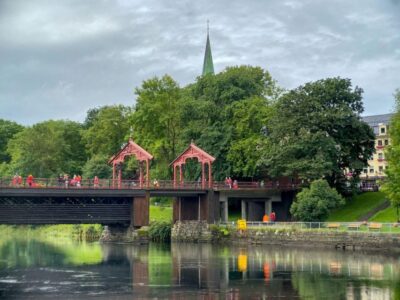
If you want photos, aim for the bridge moments. The Old Town Bridge area is a natural pause because the name itself invites you to slow down and take in the view. Even if you do not cross every bridge in town, this one is part of the story you are hearing.
Kristiansten Fortress: Hill Views, Wartime Tragedy, and a Museum Dungeon
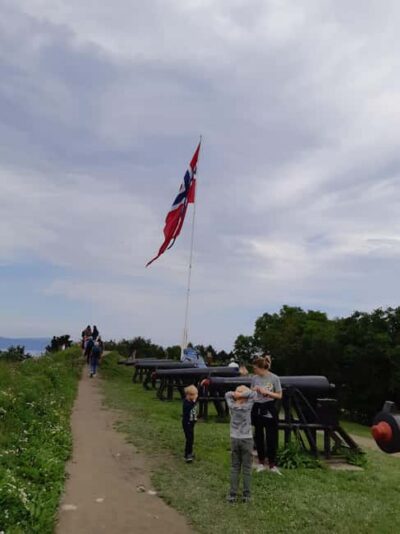
Then the narration shifts uphill to Kristiansten Fortress, perched on a hillside above the city. The fortress was built after the 1681 fire and is described as giving the city an eye-level strategic advantage, including helping save Trondheim from a Swedish conquest attempt in 1718.
The wartime segment is the sobering centerpiece. During the Second World War the fortress was taken over by Nazis, and 23 Norwegian patriots were executed inside it. Today the building is a museum, and the description notes that a dungeon is open to view.
This is a tough stop in the best way. It reminds you that “historic” is not just aesthetic. The audio keeps you oriented geographically too, so even if you are not spending hours inside the museum, you understand why the fortress matters.
One practical detail: if you see a flag waving over the fortress, it means the fortress is open to the public. That helps you decide in real time whether to step closer, because museum hours are not included in your audio guiding.
The Archbishop’s Palace Grounds: Where Power and Faith Overlap
After the fortress, you walk past the grounds of the Archbishop’s Palace. The audio shares the palace’s rich history while you move through the area.
Even without stepping inside a building, this segment helps you read the city properly. Trondheim’s center is full of religious and civic authority in close quarters. The Archbishop’s Palace grounds sit right in that pattern.
If you like walking tours that teach you how to interpret architecture, this is one of the more useful moments. You stop thinking only about what the building looks like, and start asking what role it played.
Nidaros Cathedral Finale: Northernmost Gothic Anchor of the Route
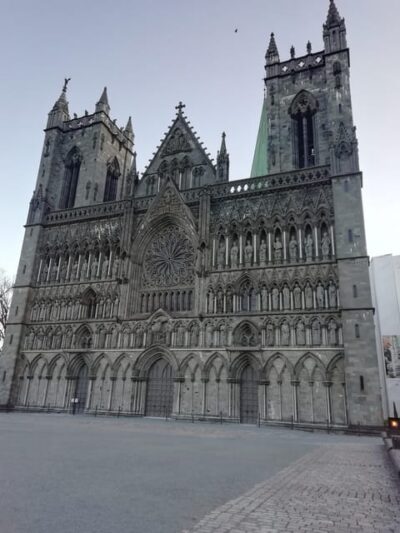
The tour ends at Nidaros Cathedral, described as the northernmost Gothic cathedral in the world, built over the tomb of St. Olav. That makes it a strong finish because the audio has been guiding you toward the cathedral’s spiritual origin story.
This ending also gives you a smooth next step. The tour itself does not include food, drink, or admissions not included during the tour. So if you want to go inside, you can buy tickets when you arrive and then linger as long as you want.
Cathedrals are also where you naturally slow down. Expect time for a walkaround, looking at details, and a quiet moment to let the scale sink in.
Staying on Track: When GPS Gets Weird, Here’s How to Cope
Self-guided audio tours are mostly great, but GPS can be stubborn. In real-world use, the app may report that you are near the route, even if you feel you are physically blocked by fences or festival setups. In those cases, you may need a workaround like using a force start prompt if it appears on your screen.
GPS can also drift, which can trigger an automated voice telling you you are wandering and to return to the route. If you know you are on the path, it is still worth checking your map inside the app, because sometimes the signal is simply offset.
My practical advice is boring but effective: give yourself a buffer of a few extra minutes at the start, especially if you are aiming to begin at a busy hour. Then you are not rushing through the first stops.
Who This Tour Suits Best, and Who Might Want a Different Option
This works best for independent travelers who like structure but want freedom. If you are the type who prefers to set your own pace, stop for photos, and absorb explanations as you walk, you will like the format.
It is also a good fit if you travel light, because it does not require extra gear beyond your phone. The narration is in English, and the app includes offline content, so you can keep moving without hunting for data.
If you strongly dislike troubleshooting apps, or if you rely on a guaranteed live guide, then the self-guided nature might feel like a gamble. But if you are comfortable downloading audio ahead of time and you enjoy learning while you walk, it is a strong choice.
Should You Book Trondheim’s Inner Circle Audio Tour?
I’d book it if you want a one main walking loop that covers Trondheim’s biggest anchors in about 1 to 1.5 hours. At $7.99, the value comes from lifetime access, offline audio, and a route that ends at Nidaros Cathedral so your day naturally finishes with a landmark.
I would think twice if you know your phone GPS can be unreliable, or if you plan to walk during a time when streets might be fenced for events. Still, even then, the app includes tools to help you get going once you find the start, and the route itself is straightforward once you are properly lined up.
If you want a practical, low-cost way to understand Trondheim while you see it, this is the kind of tour that turns a simple stroll into a story you can remember.
FAQ
How much does the Trondheim Inner Circle audio tour cost?
The price is $7.99 per person.
How long is the tour?
The duration is approximately 1 hour to 1 hour 30 minutes.
Is the tour available in English?
Yes, the audio tour is offered in English.
Does the audio work offline?
Yes. Offline access is included for audio, maps, and geodata.
Does the tour expire after purchase?
No. Once downloaded, the tour never expires and includes lifetime access.
What is the meeting point?
The start point is at Kongsgårdsgata 2, 7013 Trondheim, Norway (listed for the meeting).
Where does the tour end?
The tour ends at Nidaros Cathedral.
What do I need to bring?
You need a smartphone. The tour includes the VoiceMap app, but a smartphone is not included.
Are food and drink included?
No. Food and drink are not included.
Are admissions and museum tickets included?
No. Personal expenses for admission fees are not included during the tour.
Is cancellation free if my plans change?
Yes, free cancellation is offered, with a full refund if you cancel up to 24 hours in advance.
Newly marked on the map for Trondheim
- 2 Hour City Walk through Trondheim★ 4.5 · 8 reviews
- Trondheim’s Regalia Self-Guided Tour of Norway’s Historic Centre★ 5.0 · 9 reviews
- City Bus Tour in Trondheim, Norway★ 3.5 · 13 reviews
- Trondheim: 1-Day Hop-On Hop-Off Sightseeing Bus Tour★ 3.3 · 27 reviews
- Trondheim: City Bus Tour★ 4.1 · 31 reviews
- Half-Day Highlights of Trondheim by Bus and City Walk★ 4.0 · 33 reviews
- Trondheim Private Walking Tour with a Local★ 4.5 · 38 reviews
- Trondheim: Discover the city of kings with a local guide★ 5.0 · 41 reviews
Trondheim Tours & Activities, compared.
Half-Day Highlights of Trondheim by Bus and City Walk
Read our review →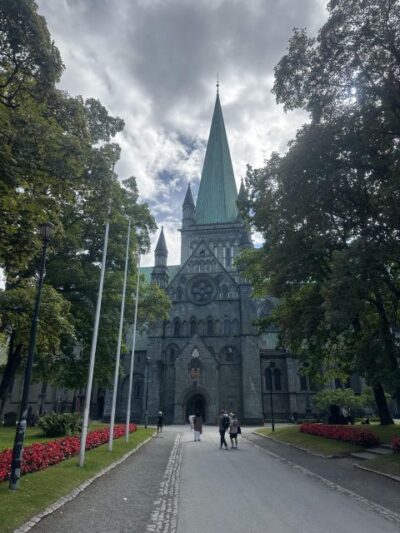
Browse the lists this tour appears in