
Reviewed · SKIING
Tromsø: Learn to Ski – Developed With Local Olympic Champion
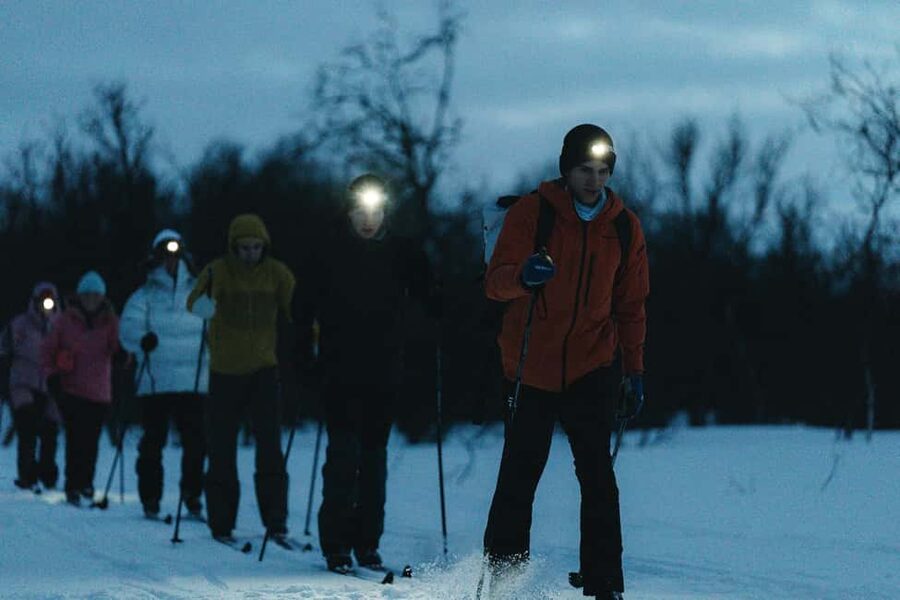
Skiing in the Arctic feels instantly achievable. In Tromsø, you get a beginner lesson on skis designed with Olympic champion Erik Valnes, then glide along Tromsøya for relaxed fun and big winter views.
What I like most is how fast you start moving without feeling rushed, and how clearly the guides translate ski technique into simple steps. The warm snacks and stories also turn this into more than a workout.
One consideration: you are outside for about 2.5 hours, and winter clothes are not included, so pack real layers and expect some cold time before you fully heat up.
In This Review
- Key highlights at a glance
- From Tromsø Skistadion to your first glide
- How beginner technique clicks with Erik Valnes training
- Tromsøya and the winter scenery that keeps you moving
- Mid-ski warm drink and Norwegian snacks that actually help
- Why skiing matters in Norway, not just how to do it
- Price and what you really get for $85
- What to pack, and how to avoid beginner frustration
- Who should book, and who should skip
- Should you book this Tromsø cross-country ski lesson?
- FAQ
- What level of experience do I need?
- How long is the tour?
- What is included in the price?
- What should I bring with me?
- Where do I meet the guide?
- Is winter clothing provided?
- Is it suitable for children and everyone?
Key highlights at a glance
- Erik Valnes-designed beginner exercises so you progress quickly and safely
- Tromsøya scenery with photo stops, not just a training grind
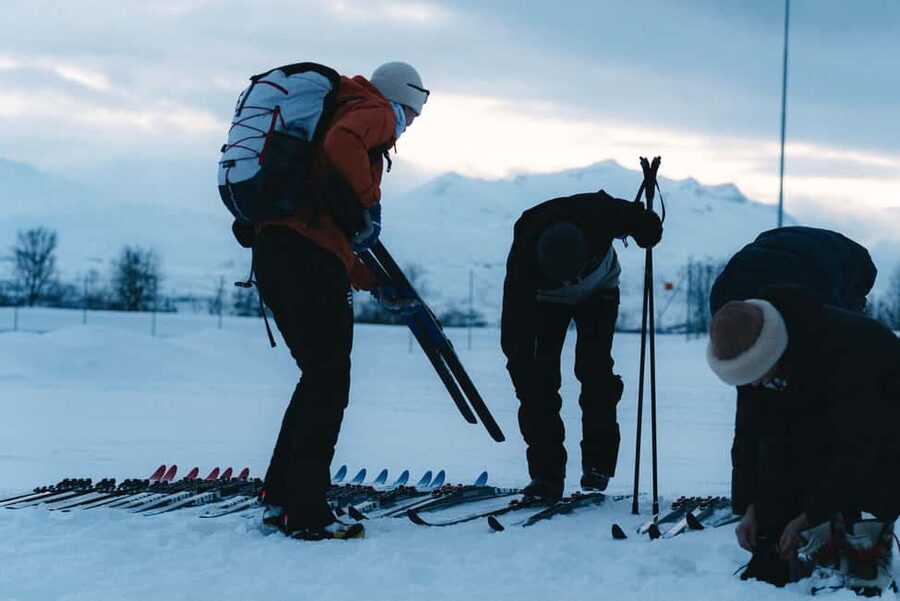
- All ski gear included (skis, poles, boots), plus a warm drink break mid-session
- Local guides who explain technique in plain language, with lots of patience
- Skiing as culture, with Viking and Sami travel stories that fit Norway
- Beginner-friendly pace with guidance for different comfort levels
From Tromsø Skistadion to your first glide
Your outing starts at SkiTromsø – Arctic Ski Experience, by the white van with the SkiTromsø logo in the parking lot between the small dark-red house and the big red sports hall (Tromsøhallen). It is an easy meet-up, and once your guide waves you over, the vibe is calm. Nobody is trying to be tough here. They are trying to get you skiing.
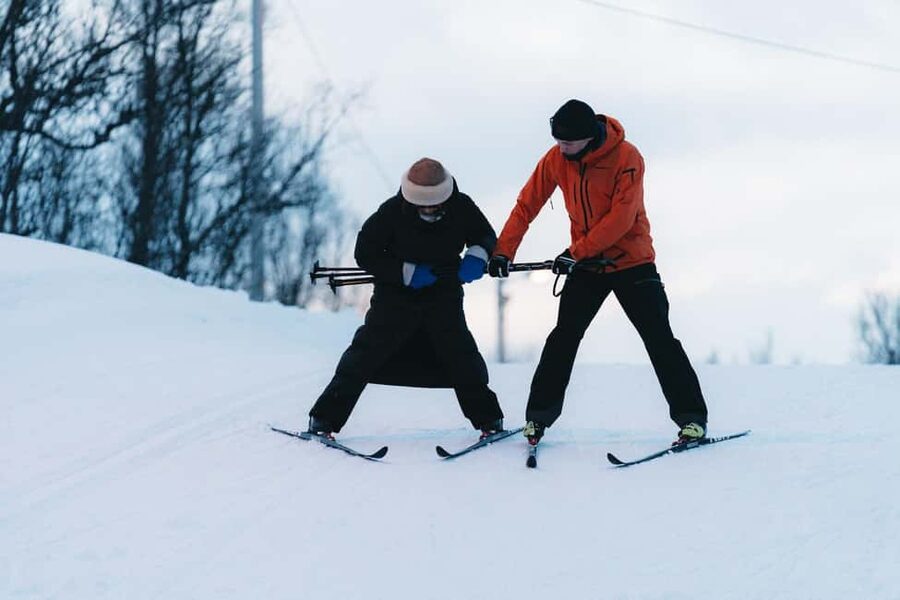
Next comes the equipment part, and it matters more than people think. You get fitted with skis, poles, and boots, and a guide helps you get set up correctly before you try to move. Cross-country ski boots can feel awkward at first, especially if you have never strapped into something like this. The good news is that the guides focus on basics first, so your brain is not doing calculus while your legs are learning balance.
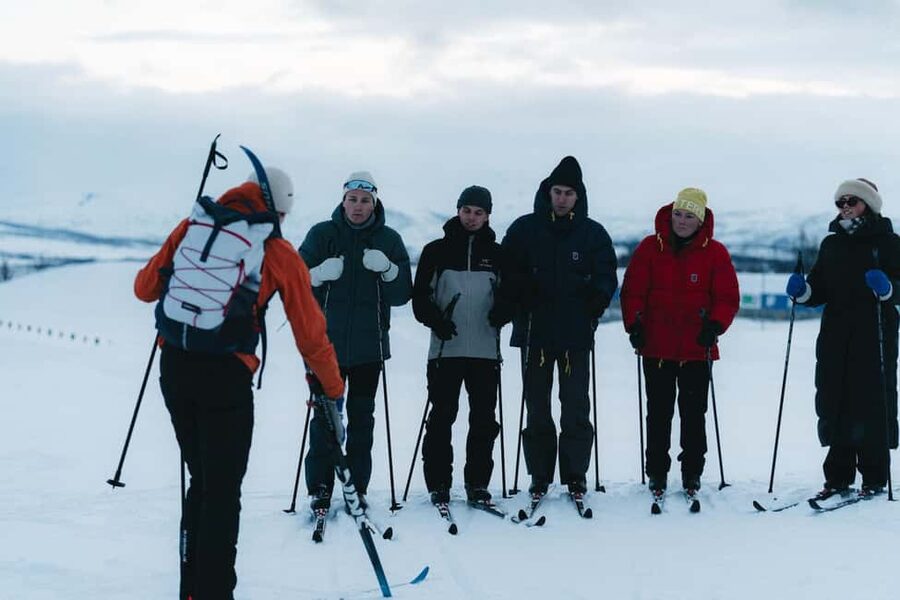
You then get a safety briefing (about 15 minutes). This is not a scary speech. It is the practical stuff: how to move on snow with poles, how to stop and recover if you wobble, and what to pay attention to when you are out on the route. After that, you step onto the snow and begin the lesson in earnest.
If you are nervous about looking silly, relax. This is designed for beginners. And in the sessions I read about, guides kept things supportive and patient, with people learning from zero to confident movement in the same day.
How beginner technique clicks with Erik Valnes training
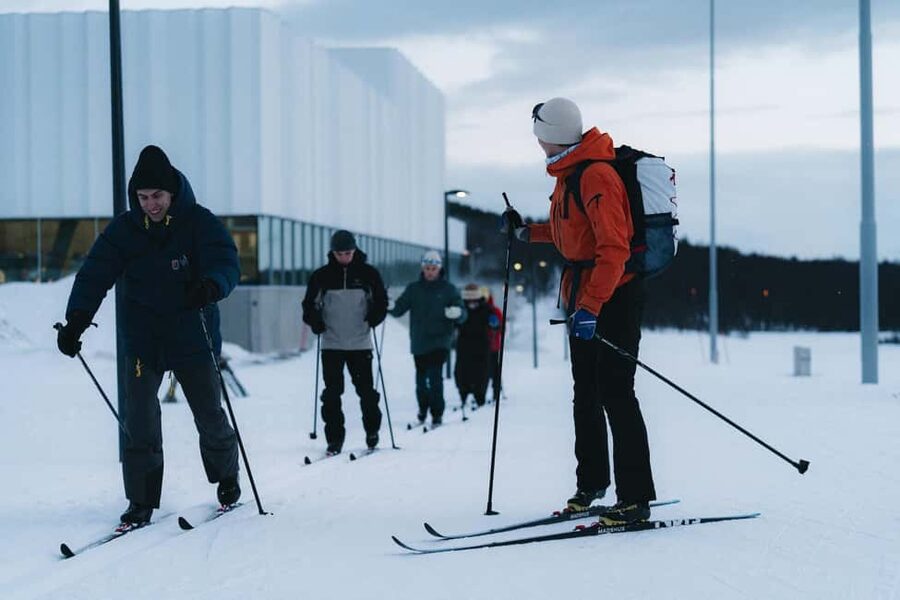
The star detail here is that the lesson structure was developed with local Olympic champion and co-owner Erik Valnes. He does not normally guide in person, since experienced local guides run the daily tours, but his influence shows up in the way the drills are organized.
You start with the basic mechanics of cross-country skiing: how your weight should travel, how poles help with rhythm, and how to steer and turn without panicking. Importantly, the approach stays relaxed and social, even though it is still structured. The goal is not to test your willpower. It is to help you get your bearings fast.
A pattern you will likely feel: you begin with slow practice where technique is the focus, then you gradually connect that technique into real gliding on the trail. Several people noted that once the basics clicked, they were able to enjoy gentle slopes and even go off the track briefly without feeling overwhelmed. One review even described the feeling of moving into beginner-friendly skicrossing, after the warm-up skills were covered.
Guides also adjust teaching based on your group. In one case, a group of 14 got split into two parts to help individuals more. That is a real advantage when you have a mix of “I have not skied since childhood” and “I have never tried this before.” You get attention instead of drifting along.
The biggest benefit for you as a first-timer is that the drills are designed to feel natural, not like a military boot camp. You are building muscle memory for balance and turning, so by the time you are out enjoying Tromsøya, you are not constantly thinking about every movement.
More turns above the fjord:
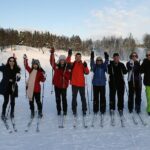
Tromsøya and the winter scenery that keeps you moving
After you get comfortable, you head out toward Tromsøya and the surrounding area. This part is both fun and practical. Fun because the views are exactly what you want in Tromsø: winter scenery, open snow, and the feeling of being close to the water and mountains. Practical because guided routes give you a safe, beginner-friendly environment where your new skills can actually work.
Your session includes two guided stretches around Tromsøya, with a break in between. Along the way, you get scenic stops and photo opportunities. Guides also tend to help people with falls and resets, and that confidence boost is underrated. If you are afraid of falling, you might hesitate and move stiffly. When you know the guide will help you back on track, you ski more naturally.
I also like that the route is not just one long grind. You get time to pause, look around, and feel the weather instead of rushing past it. Even if snow conditions are changing, the guide has room to guide the pace. One person mentioned snowstorm conditions without cancelation, and another noted soft snow and no ice for their day, which makes learning easier. In other words, you might get excellent beginner snow, or you might get a more stubborn day. Either way, the guide’s job is to keep you safe and moving forward.
And yes, you may spot locals out there too. One review mentioned cute dogs nearby. That small detail matters. It reinforces that this is a normal part of local winter life, not a staged tourist production.
Mid-ski warm drink and Norwegian snacks that actually help
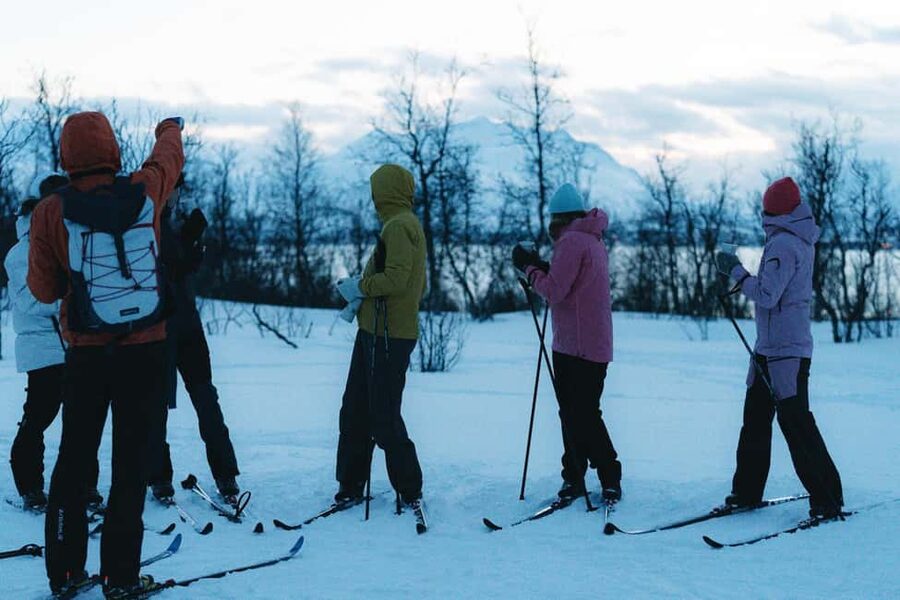
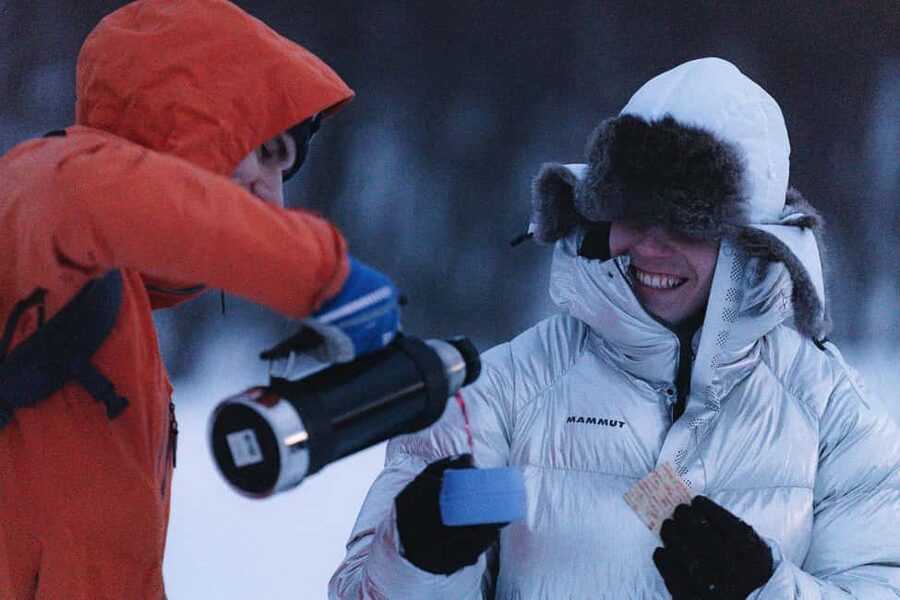
About halfway through, you stop for warmth: a drink break plus local snacks. This is the kind of break that makes a difference in the learning curve. When your hands and core warm up, your technique improves. Your balance gets steadier. You stop fighting the cold and start skiing again.
The tour includes warm drinks and local snacks, and you also get a reusable traditional cup. It is a small thing, but it supports that Norway winter rhythm: you go out, work your body, then reset with something hot and comforting.
From reviews, I saw a couple snack details that sounded especially Norwegian: a bread cake with some kind of creamy filling and hot blackcurrant drink. If you try those, you get a bonus cultural taste that pairs nicely with being out on skis.
What you should plan for: this break is not an hour-long meal. It is a strategic pause. You chat a bit, take photos, then head back out with renewed energy.
If you have been keeping your movement stiff from the cold, this is where you loosen up. Several people described how the time flew by and how they felt surprised by how much skiing they were able to do in just 2.5 hours.
Why skiing matters in Norway, not just how to do it
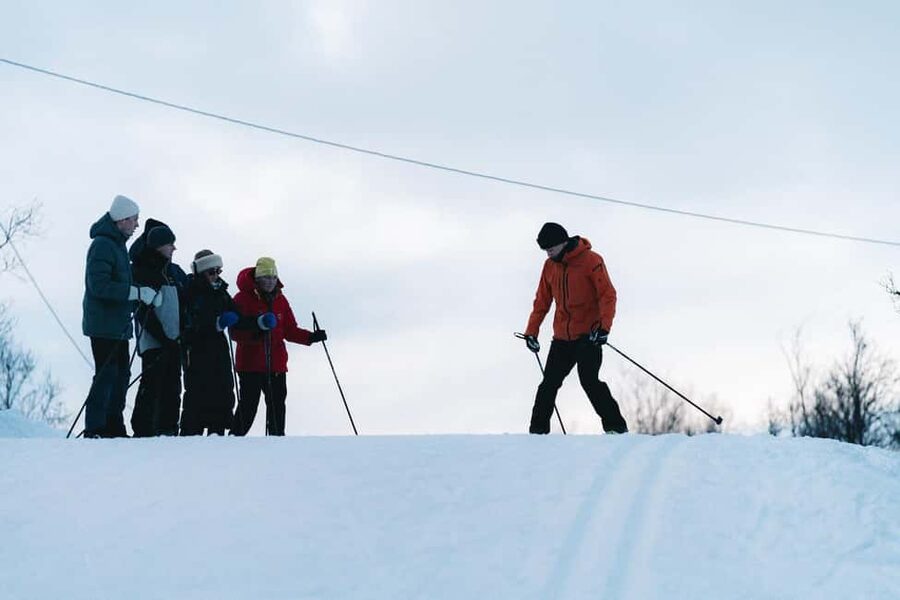
The best guides do two jobs at once: teaching technique and telling you why the place matters. Here, the cultural part is woven into the walk and stories along the way.
You learn why skiing was once vital for survival. People used skis for hunting, for travel across long distances, and for daily life in harsh winters. You also hear about the Sami connection to travel, and how farmers and soldiers relied on skis to move when conditions were brutal.
Even better, the guide ties it into modern identity. You will likely hear phrases like Norwegians being born with skis on their feet, and you will get a sense of how skiing builds community and resilience.
This matters for you because it changes your attitude while you learn. Instead of seeing ski practice as a novelty, you understand it as something Norwegians grew up with. That makes the whole experience feel more authentic, and it can turn a “check it off” activity into a “now I get it” memory.
And if you are chasing the Arctic atmosphere, it helps too. When you understand the purpose behind the culture, the snow stops feeling like a prop and starts feeling like a working environment.
Where the path branches next in Tromso
- Tromsø: Northern Lights Safari with Expert Guides and Photos
★ 4.6 · 6,654 reviews - Tromsø: Reindeer Sledding & Feeding with a Sami Guide
★ 4.8 · 6,417 reviews - Tromsø: Northern Lights Pioneer Tour with Photos Included
★ 4.8 · 6,048 reviews - Tromsø: Arctic Fjord Cruise & Fishing Experience
★ 4.7 · 4,588 reviews
Price and what you really get for $85
At $85 per person for a 2.5-hour experience, this is priced like an activity that includes real instruction plus real outdoors time. What helps the value is that you get ski equipment included: skis, poles, and boots. You also get warm drinks and local snacks, plus a local guide.
If you have ever tried to piece together a beginner ski experience yourself, you know the cost adds up fast: rentals, lessons, and then the “small” extras like warm drinks and a guide to keep you from wandering off into trouble. Here, the activity bundles the key pieces.
Where value really shows is in the outcomes people reported. Many described learning quickly enough to feel comfortable renting equipment afterward. More than one person talked about falling early and then improving. One review singled out technique tips that helped the skier feel competent by the end.
That is also why the Erik Valnes lesson design matters for value. A well-structured beginner program is time you do not waste. You are not spending the first half struggling through the same confusion. You are progressing.
One more value point: the tour is beginner-friendly, so you are not paying for experienced athletes. You are paying for guided learning that matches your level.
What to pack, and how to avoid beginner frustration
The tour does not include winter clothing, so plan to bring a warm jacket and pants, plus hat and gloves. Your guides will fit you with ski boots and equipment, but you still need to control your warmth. The cold can make you tense, and tension is enemy number one for learning balance.
Bring:
- warm clothing
- a camera
- water
- a charged smartphone
Also, keep in mind a practical tip from a review: you might not need an overly warm coat for the full session because you tend to warm up quickly once you are moving. That is a smart approach if the day is not brutally freezing. Still, you should be conservative until you know how your body reacts.
A few other “don’t make it harder” reminders:
- you are outdoors, so dress for snow, not for comfort indoors
- keep your water with you, since a phone plus snow plus exertion can leave you feeling drier than you expect
- do not bring alcohol, and note that drones are not allowed
If you are worried about where you can ski next, this lesson is set up to give you a base. Several people said it helped them feel confident renting on their own afterward, which is exactly what you want from a first lesson.
Who should book, and who should skip
This experience is built for beginners, but it is still a winter sport with physical effort. If you are unsure about your comfort level, treat it like a real outdoor activity, not just a photo walk.
It is not suitable for:
- children under 6
- pregnant women
- people with mobility impairments
- wheelchair users
- people with vertigo
- people with pre-existing medical conditions
So if you fall into any of those categories, you should look for another type of Tromsø outing. If you are generally healthy and you can handle cold weather plus movement, you should be in the right place.
Also, know the experience includes instruction and time out on the snow. It is not a gentle stroll.
Should you book this Tromsø cross-country ski lesson?
If you want an Arctic activity that feels learnable, book it. This is one of those Tromsø experiences that gives you both a new skill and a local perspective, without making you pay the beginner tax of “figure it out alone.”
You should strongly consider it if:
- you have never cross-country skied (or you barely remember it)
- you like guided outdoor fun with frequent support
- you care about culture and want stories tied to why skiing mattered in Norway
- you want value that includes equipment, snacks, and a warm drink break
Skip it if you are not comfortable being outdoors in winter conditions, or if your health situation matches the tour’s not-suitable list.
If you do book, I would aim to arrive with warm layers ready to go and a camera charged. Then trust the process. The whole point of this lesson is that the guide helps you progress step by step, so by the end you are not just watching snow, you are moving through it.
FAQ
What level of experience do I need?
No experience is needed. The lesson starts with a short, easy introduction to the basics of cross-country skiing, and the guides help you feel comfortable before you head out.
How long is the tour?
The duration is about 2.5 hours.
What is included in the price?
Ski equipment (skis, poles, boots), local snacks, warm drinks, and a local guide are included.
What should I bring with me?
Bring warm clothing, a camera, water, and a charged smartphone.
Where do I meet the guide?
Meet at the white van with the SkiTromsø logo, parked in the lot between the small dark-red house and the large red sports hall (Tromsøhallen).
Is winter clothing provided?
No. Winter clothing such as jacket, pants, hat, and gloves is not included, so you’ll need to bring it yourself.
Is it suitable for children and everyone?
It is not suitable for children under 6, pregnant women, people with mobility impairments or wheelchair users, people with vertigo, or people with pre-existing medical conditions.
Newly marked on the map for Tromso
- Tromsø: Big Bus Fjord Tour with free photos and wildlife★ 4.5 · 7 reviews
- Tromsø: Northern Lights Chase — Small Group Experience★ 4.6 · 7 reviews
- Tromsø City Walking Tour with Sámi History & Mythology★ 5.0 · 7 reviews
- Tromsø: Fjords & Sommarøy Tour with Warm Local Lunch Option★ 5.0 · 7 reviews
- Tromsø: Whale Safari by RIB Boat with Transfer★ 5.0 · 7 reviews
- Tromsø: Midnight Sun Fjord Adventure with Seaside Lunch★ 5.0 · 7 reviews
- Tromsø: Tromsø Snow Dome Entry Ticket★ 2.7 · 7 reviews
- The Aurora Tour – VIP trip for northern lights, aurora borealis★ 3.5 · 7 reviews
Skiing, compared.
Sightseeing with Holmenkollen Ski Jump & Vigeland Park
Read our review →
Breivikeidet: Cross-Country Skiing & Husky Visit
Read our review →
Cross-Country Ski Lesson for Beginners in Tromso
Read our review →
Oslo Panorama Tour with Holmenkollen Ski Jump and Vigeland Park
Read our review →Cross-Country Skiing Beginner Course + Transfer
Read our review →
Sledding, Toboggan, Mini Skiing, Lasso & Arctic Fun
Read our review →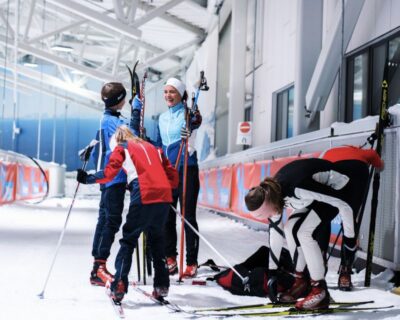
Browse the lists this tour appears in