
Reviewed · MUSEUMS
Oslo: Highlights, Vigeland Park & Fram Museum Private Tour
Oslo tells its story in walking distance. This private, 5-hour route threads together Nobel Peace Center and the Fram Museum, with expert guidance through the kind of sites you would otherwise piece together on your own. I really like how the day feels organized, not rushed, and you still get time to look closely at big landmarks.
Two parts I especially enjoyed are the sculpture park at Frogner Park and the polar-adventure focus inside Fram Museum. You get the kind of context that makes the places click, from the symbolism behind the memorial scale to the human stakes of Arctic exploration before modern navigation.
One thing to plan around: some sections include gravel or unpaved walkways, so you will want solid, comfortable shoes and patience when the path gets uneven. Also, the City Hall may be partially or fully closed during events, so photo stops might shift slightly.
In This Review
- Key things to know before you go
- A Private 5-Hour Oslo Highlights Route Built Around Real Highlights
- Nobel Peace Center, City Hall, Karl Johans Street, and Parliament on Foot
- Akershus Fortress, Medieval Walls, and Oslo Fjord Views
- Frogner Park and Vigeland Sculpture Park with Iddefjord Granite
- Fram Museum: Polar Exploration Stories Before Satellites
- Oslo Opera House Finish, a Glacier Floating in Modern Form
- Price and Value for a $730 Private Group
- Who This Tour Fits Best, and What to Bring
- Should You Book This Private Oslo Highlights Tour?
- FAQ
- Where does the tour start?
- How long is the Oslo highlights tour?
- Is the tour private, and what languages are offered?
- What’s included in the price?
- What should I wear or bring?
- Can I cancel if my plans change?
Key things to know before you go
- Meet at the Nobel Peace Center, and start with the Nobel Peace Prize story right away.
- A City Center walking run, with major stops clustered around Karl Johans Street, Parliament, and the Royal Palace area.
- Akershus Fortress views over the Oslo Fjord, with medieval walls framing the city.
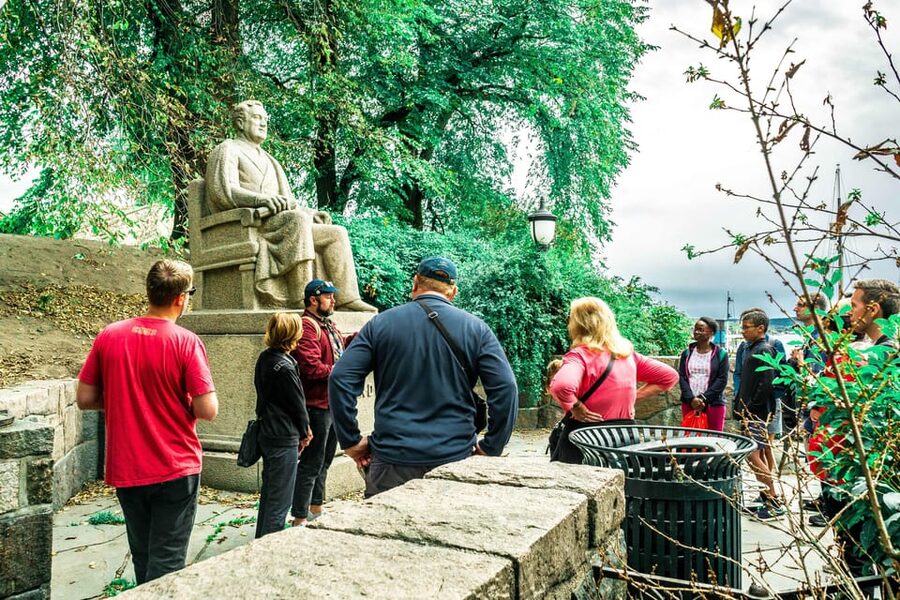
- Iddefjord granite sculptures at Vigeland Park, created by one man and explained in plain language.
- Guided entry to Fram Museum, with the stories of three Norwegian polar explorers and what life was like before satellites and modern aircraft.
- End at the Oslo Opera House, whose architecture is described as a glacier floating on the water.
A Private 5-Hour Oslo Highlights Route Built Around Real Highlights
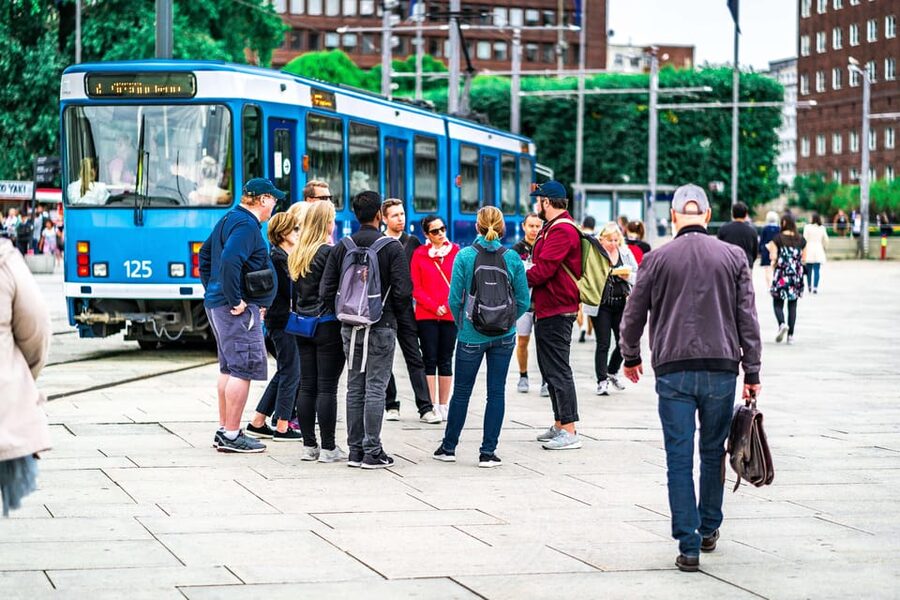
This tour is built for people who want Oslo’s “main chapters,” but still prefer a human guide to connect the dots. You are not just walking from sign to sign. You get a storyline through politics, national identity, and exploration, with time at each site for orientation and questions.
Because it is private, the pacing can feel steadier. Even if you are solo in the group setup, you still get a professional guide who can slow down when you want photos or explanations. The route is also practical: it starts in the heart of the city, then uses public transport to reach the two big outside anchors, Vigeland Park and Fram Museum, so you are not doing all the distance on foot.
It is also structured for weather and daylight realities. You are out for about 5 hours, which is long enough to feel like a real day in Oslo, but short enough to keep your afternoon free for museums, food, or the waterfront. Just plan around one practical note: part of the walking includes gravel or unpaved walkways, so you will feel happier in shoes you can trust.
Nobel Peace Center, City Hall, Karl Johans Street, and Parliament on Foot
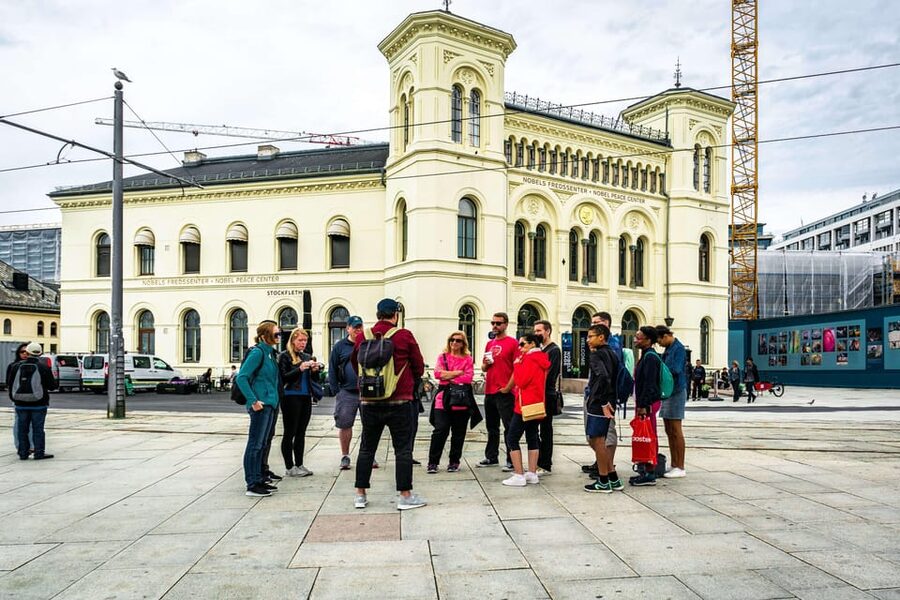
The day begins at the Nobel Peace Center, outside the entrance at Brynjulf Bulls plass 1. You will see the guide on-site about 10 minutes before departure, holding a sign with the local partner’s name. That early arrival matters. It saves you time sorting yourself out, especially when you are looking for the exact meeting spot.
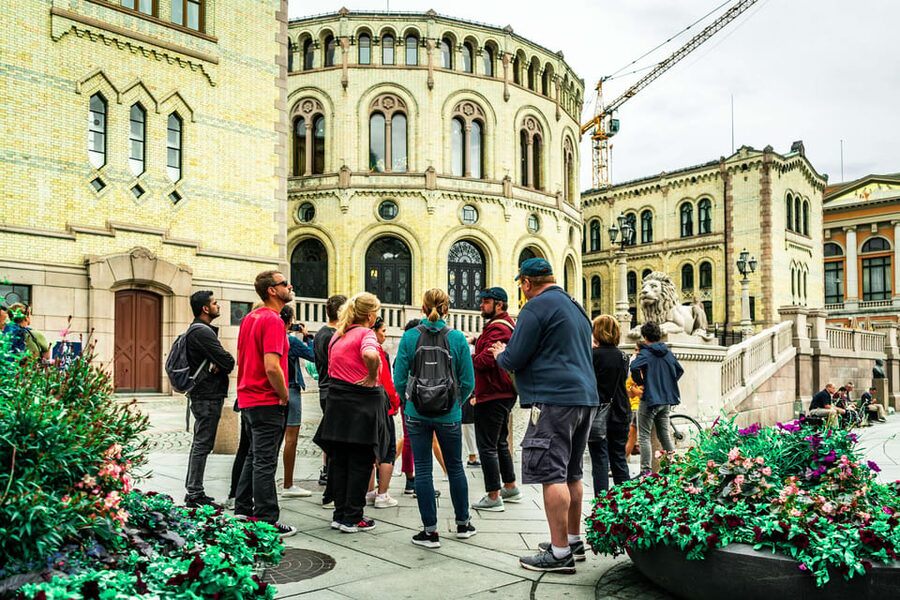
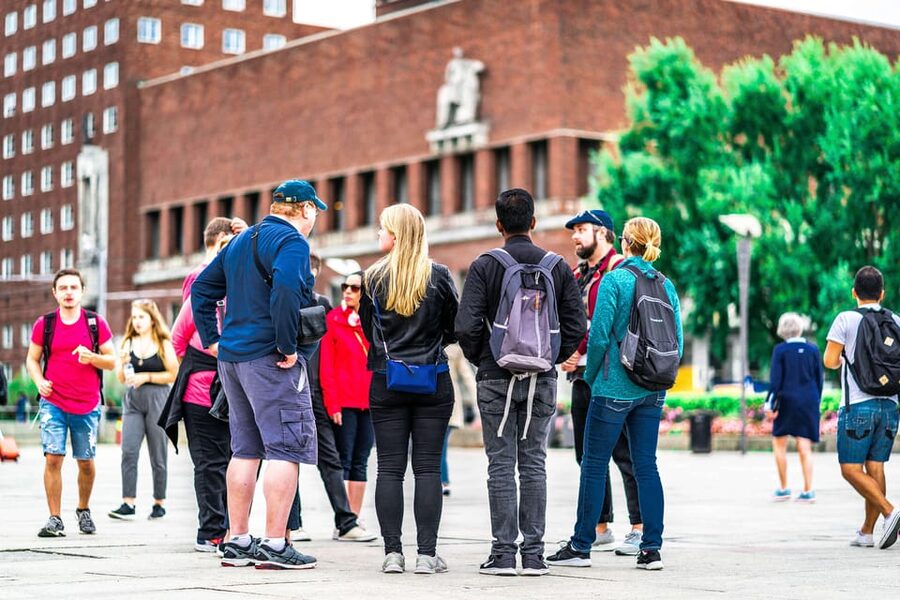
From there, the core of the tour runs through central Oslo. You will pass or stop at the Oslo City Hall, the Norwegian National Theatre, the Royal Palace area, and the Parliament area. The guide helps you connect why these buildings sit where they do and what role they play in modern city life.
One of my favorite things about central Oslo is how compact it is. With a guide, you can focus on architecture and symbolism instead of trying to map it all in your head. Stops along Karl Johans Street give you a clear “spine” for understanding the city. You also get brief looks at Christiania Torv and the Bank Square area, which help the day feel more like a real stroll through downtown rather than a checklist.
There is also a built-in wildcard: the Oslo City Hall can have partial or full closures due to events. The tour still covers the surrounding highlights, but your exact viewing access might be adjusted. If you care most about close photos of the City Hall itself, you will want to keep that flexibility in mind.
More Norwegian halls and collections:

Akershus Fortress, Medieval Walls, and Oslo Fjord Views
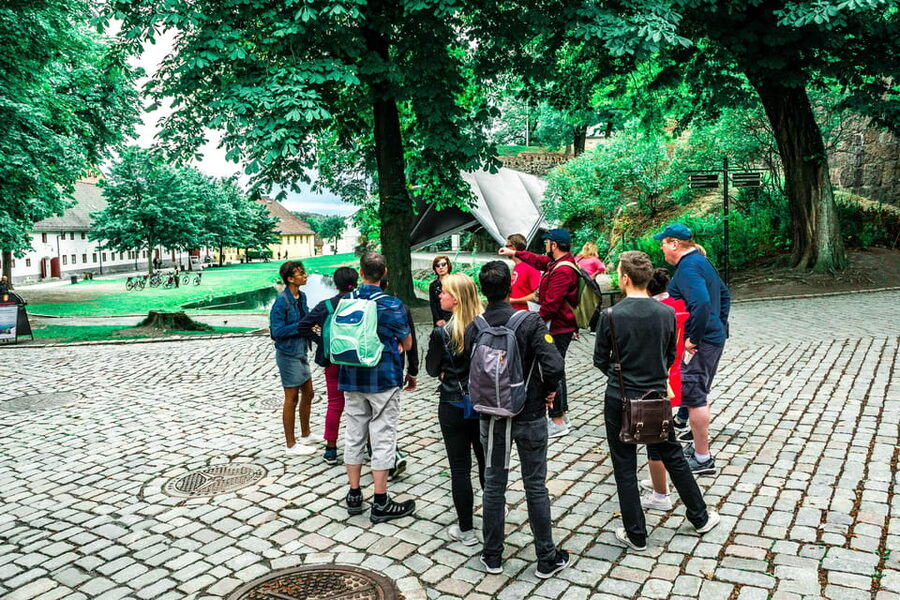
After the central city section, the route turns toward Akershus Fortress. This is one of those places where the view does half the work for you. The fortress overlooks the Oslo Fjord, so you get a nice contrast between old stone and modern water and skyline.
What I like about this stop is that it offers perspective. In a single morning you go from institutions of today to something that feels older, tougher, and built for defense. The guide frames it so you are not just looking at walls. You are understanding why fortifications like this location matter in city history, especially when the water routes shaped travel and trade.
You will also enjoy the way Akershus changes your sense of space. Central Oslo feels like streets and facades. Here, you feel height, open air, and the broader geography of the fjord. Even if you are not the kind of person who loves forts, the view makes it worth slowing down.
Because this part is still within the overall 5-hour structure, you usually do not get stranded in one place too long. You get enough time to look around and take photos, then the tour moves on before you lose momentum for the next two big anchors.
Frogner Park and Vigeland Sculpture Park with Iddefjord Granite
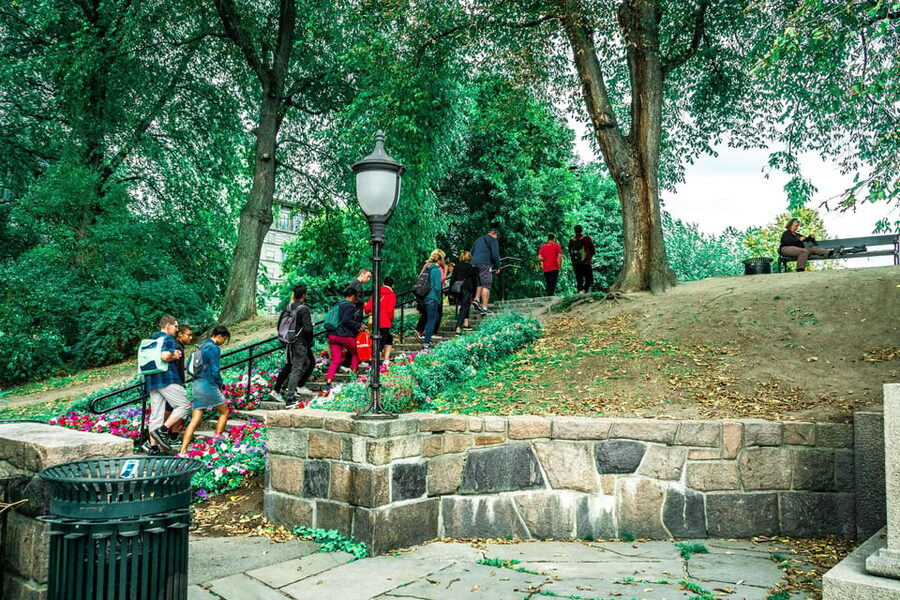
The tour then heads to Frogner Park and Vigeland Sculpture Park. You will be guided through the story of how one man created what the tour describes as the world’s largest sculpture park. The guide also helps you read the sculptures beyond just the surface impact, so you can make sense of why the pieces relate to one another.
You will see works by Gustav Vigeland, and a key detail to listen for is the material: many sculptures were crafted from local Iddefjord granite. That is a small fact, but it changes how you experience the park. Instead of seeing the sculptures as generic stone monuments, you start noticing the relationship between local resources and national artistic identity.
This is a stop where your attention can wander in a good way. The park invites pacing. You do not have to keep your eyes glued forward. You can look at how figures relate, then glance back to how paths and open spaces shape movement.
The only practical consideration is footwear. Park walking is still part of the overall route’s terrain, and the tour description warns about gravel or unpaved walkways in some areas. If you are in shoes with grip and support, you will feel calmer while you stop to admire details.
Also, because this portion is about a guided visit of about 1 hour, it is a sweet length. Long enough for the guide to explain the key threads, short enough that you likely will not feel museum fatigue before the next stop.
Fram Museum: Polar Exploration Stories Before Satellites
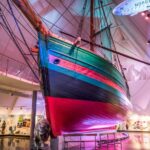
Next comes the Fram Museum, with a guided visit of about 1 hour. This is the tour’s most story-driven section, and it helps tie together Norway’s identity with a very human kind of adventure.
Inside, you are led through the history of polar exploration, including the feeling of navigating the world without modern tools. The tour frames it around what it meant to travel with no satellites, no Google Maps, and no aeroplanes. That comparison does more than set a scene. It helps you understand why decisions and bravery mattered.
You also focus on stories of three Norwegian polar explorers. The guide’s job here is to make those journeys feel personal rather than like facts on a display. In practice, that means you spend less time trying to decode what you are looking at and more time understanding the risks these explorers faced and why the routes were so significant.
This stop also helps balance the first half of the tour. You went from Nobel Peace and government buildings, to medieval fortifications, and then to national art in a sculpture park. Fram Museum changes the mood, shifting from power and politics into risk, navigation, and endurance.
One practical plus: the museum entrance is included. That reduces decision fatigue, especially if you are tight on time. You can walk in with a clear plan for what to look for, because the guide sets expectations before you start moving through the exhibits.
Where the path branches next in Oslo
- Oslo: Oslo Fjord Sightseeing Cruise by Sailing Ship
★ 4.5 · 5,790 reviews - Oslo: Scenic Fjord Cruise with Audio Guide Commentary
★ 4.5 · 5,375 reviews - Oslo Nature Walks: Island Hopping Tour
★ 4.8 · 2,713 reviews - Oslo: 24 or 48-Hour Hop-On Hop-Off Sightseeing Bus GrayLine
★ 4.0 · 2,088 reviews
Oslo Opera House Finish, a Glacier Floating in Modern Form
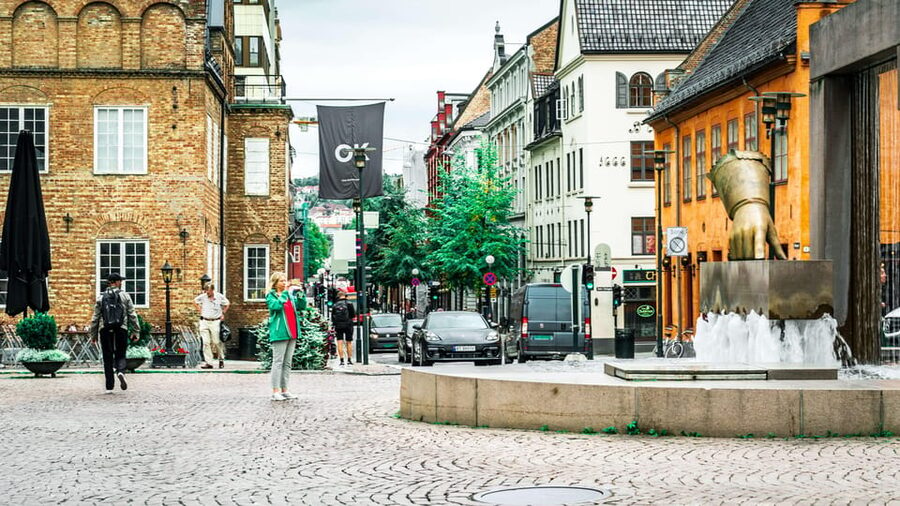
To close the day, you return toward central Oslo and get a look at the Oslo Opera House. The tour describes the architecture as reminiscent of a glacier floating in the waters, which is a fun mental image when you are seeing it in person.
This final stop works well because it gives you a contrast to everything you have seen earlier. Even if you only get a brief look, the Opera House feels like Norway’s modern confidence in built form. You finish the day on a “present tense” note, which is a smart way to end a tour like this.
It also acts as a visual recap. You have covered institutions of today, older fortifications, national sculpture, and polar exploration. The Opera House rounds it off by showing how Norway puts contemporary design front and center.
If you plan to continue exploring after the tour, the timing is also helpful. You are brought back toward the city center area rather than dropping off somewhere remote. That means it is easier to connect with cafés, waterfront walks, or other attractions without a big extra commute.
Price and Value for a $730 Private Group
The price is $730 per group, listed as up to 1. For a private 5-hour tour, that cost can feel high at first glance, and I get why. You are paying for exclusivity: your own guide time, a tailored pacing, and a route that includes both major outdoor highlights and an indoor museum.
So where is the value? It is in three places.
First, you are getting guided time at multiple “anchor” sights in one block. Instead of spending your daylight stitching together transit, tickets, and timing, you follow a prepared sequence designed to keep you moving without losing context.
Second, transport is included as a return public transportation ticket. The itinerary includes public transport segments, including about 30 minutes in between parts of the day. That is one less thing for you to handle, especially if you are unfamiliar with Oslo’s transit system.
Third, the museum entrance is included: Fram Museum. Vigeland Park entrance is free as well, so you are mostly paying for the guided experience, not a stack of extra fees.
If you are traveling solo and the price is meant for a private group up to 1, it is still a reasonable choice when you care about having a guide for context and you want a tight itinerary. If you are part of a larger group, you would need to check how pricing changes for additional people, but private format generally gives you more control over how long you linger at each stop.
Who This Tour Fits Best, and What to Bring
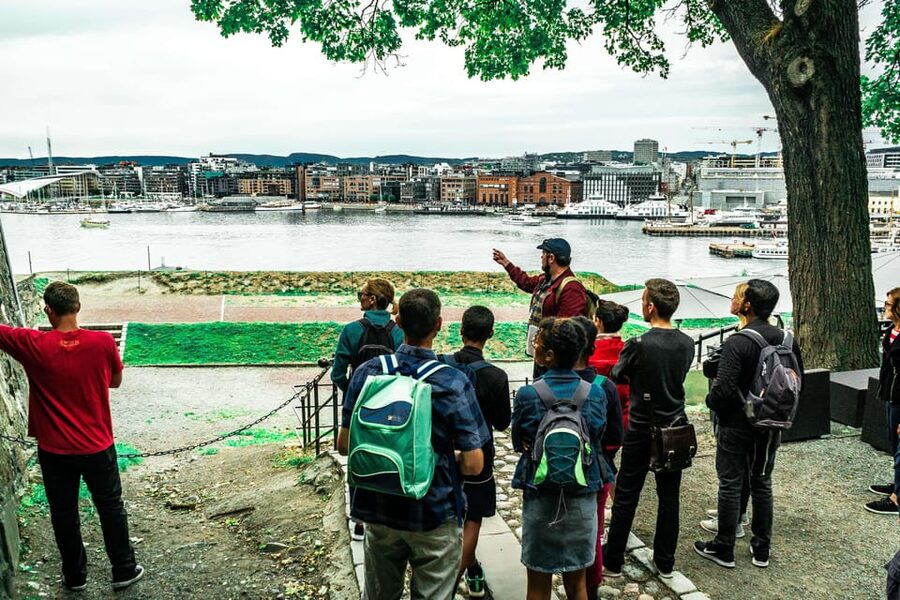
This tour fits best if you want a strong “best of Oslo” blend in a single half-day. You will like it if you enjoy architecture and landmarks, but you also want stories that make them mean something. The mix of Nobel Peace context, government buildings, medieval Akershus, Vigeland sculptures in Iddefjord granite, and polar exploration at Fram Museum creates a day that feels varied, not repetitive.
You will also get good mileage from this tour if your time in Oslo is limited. Five hours is long enough to cover major sights without turning into a full-day sprint.
For what to bring, keep it simple:
- Comfortable shoes, because you will walk and some areas include gravel or unpaved walkways
- Weather-appropriate clothing, since Oslo weather can shift quickly
If City Hall access changes due to events, do not get stressed. The day is built around multiple highlights, so even if one viewing is limited, you still get the rest of the route.
Languages are a plus too. The guide can run the tour in English, French, Italian, Spanish, Norwegian, and German. That means you can choose the language that helps you ask follow-up questions and really connect with the stories.
Should You Book This Private Oslo Highlights Tour?
I think you should book it if you want Oslo in one guided block, with built-in museum time and a smart mix of central sights and big outside landmarks. The strongest reason is the way the route ties together themes, not just locations, and the structure keeps the day feeling smooth.
Skip it if you are the type who hates walking on uneven ground, or if you only want one specific attraction rather than a guided sampler of Oslo’s key identities. If you want a flexible, story-led overview with Nobel Peace Center, Vigeland Sculpture Park, and Fram Museum all in the same 5-hour window, this is a solid bet.
FAQ
Where does the tour start?
The tour starts at the Nobel Peace Center, outside the entrance at Brynjulf Bulls plass 1.
How long is the Oslo highlights tour?
It lasts 5 hours.
Is the tour private, and what languages are offered?
It is a private group tour. The live guide is available in English, French, Italian, Spanish, Norwegian, and German.
What’s included in the price?
Included are a professional guide, a return ticket for public transportation, entrance ticket to the Fram Museum, and entrance to Vigeland Park (free).
What should I wear or bring?
Wear comfortable shoes and bring weather-appropriate clothing. Part of the tour involves walking on gravel or unpaved walkways.
Can I cancel if my plans change?
Yes. There is free cancellation up to 24 hours in advance for a full refund.
Newly marked on the map for Oslo
- Oslo: WWII History Private Walking Tour★ 5.0 · 1 review
- Oslo: All-Inclusive Self-Guided Kayaking & Camping Adventure★ 5.0 · 1 review
- Stand up paddleboard adventure in Leangbukta★ 5.0 · 1 review
- Kayak and Canoe Tour in Lake Bogstad★ 5.0 · 1 review
- Oslo All Inclusive Private Walking Tour★ 5.0 · 1 review
- Sightseeing Private Tour of Oslo and Viking Ship Museum★ 5.0 · 1 review
- 3days tour to Flåm-næroyfjord(or Preikstolen Hiking)-Bergen★ 5.0 · 1 review
- Departure Private Transfer from Oslo City to Oslo Airport OSL by Luxury Van★ 5.0 · 1 review
Museums, compared.
Troll Museum Entry Ticket with AR Media Experience
Read our review →

Aksla-Alnes-Giske-Sunnmøre museum 100 % Highlights 4.5 H
Read our review →Browse the lists this tour appears in