
Reviewed · MUSEUMS
The Fram Museum Admission Ticket
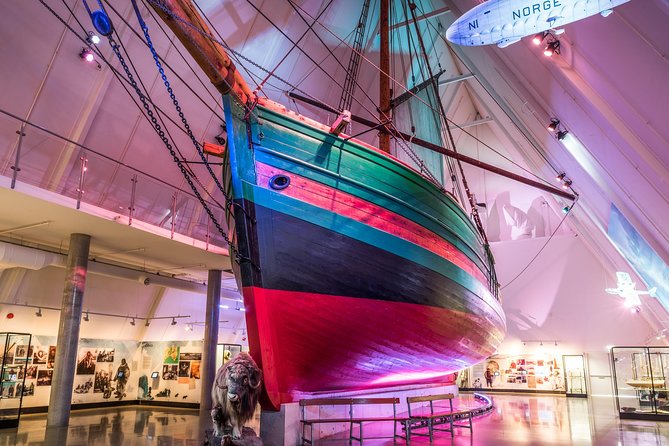
A ship you can climb makes history real. This ticket gets you into Oslo’s Fram Museum to explore the original vessels, walk the decks like the explorers did, and connect the past to what’s changing in the High North today. It’s part maritime adventure, part hands-on education, and it moves at a pace that works even if you only have a couple hours.
I love how straightforward it is: prepaid admission means no ticket hassle once you arrive. I also like the museum layout, because you can connect the big Fram story to the Gjøa story by walking through the linked spaces, including an underground tunnel, then cool down in the basement cinema with the N25 4D film.
One drawback to plan around: it can get busy, and some sections may be harder to see well if lighting feels dim or if a cinema area is closed on the day you go. Build a little buffer time so you are not stressed if you miss a film slot.
In This Review
- Quick hits before you go
- Price and what $19.38 buys you in Oslo
- Entering the Fram Museum with prepaid ease and English support
- Inside the Fram building: three great expeditions you can follow
- What to watch for as you explore
- The Gjøa building and the Northwest Passage story in a linked space
- A key value: how the museum links time periods
- N25 Flight 4D cinema and the basement polar film cycle
- High North today: polar bears, melting ice, and energy questions
- A realistic time plan: how to see the highlights without rushing
- Small pacing tip that really helps
- Crowds, lighting quirks, and the day-of realities in Oslo
- Who this ticket is best for (and who might want to pair it)
- Should you book the Fram Museum Admission Ticket?
- FAQ
- How much does the Fram Museum Admission Ticket cost?
- What are the opening hours?
- How long should I plan to spend at the museum?
- Is the ticket available on mobile, and is it offered in English?
- What is included with admission?
- Are food and drinks included?
- Are service animals allowed?
- Can I cancel for free?
Quick hits before you go

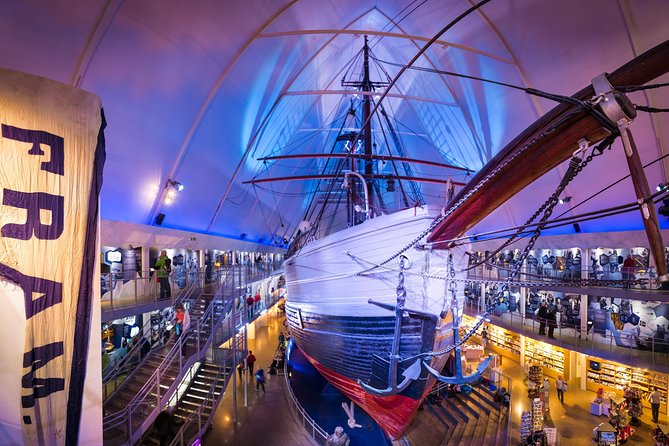
- Walk inside the preserved ship: you can go on board and explore real spaces rather than just stare through glass.
- The Fram story is clearly organized: main exhibitions use explanatory text in ten languages.
- Gjøa is the big centerpiece: the museum’s newer building focuses on the first ship to navigate the whole Northwest Passage.
- Underground tunnel link: the connection between buildings adds a memorable, cold-feeling moment.
- N25 Flight 4D cinema is included: you get a High North tech and exploration experience, not just static displays.
- Short polar films run often: a 116-seat cinema screens a polar introduction movie every 15 minutes.
Price and what $19.38 buys you in Oslo
At $19.38 per person, this ticket feels like a smart use of time and money for a “one stop” museum day. Why? Because you are not paying just for a building and a few panels. You’re paying for access to major parts of the exhibit, including Gjøa and the N25 Flight 4D cinema, plus the main Fram building exhibitions.
In plain terms, the value comes from two things: you get to go inside the ships, and you get to watch film-based storytelling that turns exploration into something you can feel. If you compare it to piecing together multiple attractions across town, it often comes out more efficient than trying to cram in too much.
Also, this is a small-group style experience with a maximum of 14 travelers. That helps the museum visit feel calmer than big-bus chaos, especially when you want time to actually look at maps, read labels, and take in ship details without rushing.
Entering the Fram Museum with prepaid ease and English support
You’ll use a mobile ticket, which is exactly what you want in a big museum on a travel day. Instead of hunting for printouts, you show your phone and move on. The experience is offered in English, and the museum panels also include explanatory text in ten languages, so you’re covered even if you wander off the main path.
Plan for about 1 to 3 hours for a solid visit. Reviews and the museum design suggest many people land around the 2 to 3 hour range, especially if you read wall text before stepping onto the ships.
One practical tip: because the cinema plays frequently, it’s easy to build a visit around timing. If you want the film to set the scene, look at the schedule and then work your way to the exhibitions afterward. If you prefer ships first, do that, then catch a film when you want a breather.
More Norwegian halls and collections:


Inside the Fram building: three great expeditions you can follow
The Fram Museum is built around the story of the ships and the expeditions they supported, and the Fram building is where you get the big picture. Expect the main exhibition to focus on the three great Fram expeditions, with explanatory texts presented in ten languages. That matters more than it sounds, because it helps you stay oriented even when the story gets detailed.
What I like about this kind of exhibit is that it gives you context before you get hands-on. You see the whys and whats, like why these expeditions were attempted and what “High North” meant in practical terms, not just in myth.
When you’re ready to switch from reading to seeing, the museum encourages movement through the ship spaces. This is not a museum where you just stand back and view artifacts. You can go on board and explore, which is the part that tends to make people remember the visit.
What to watch for as you explore
As you move through the Fram spaces, look for how the exhibition and ship layout connect. The point is not just to look at history, but to understand how the explorers lived and worked under harsh conditions. The better you pace yourself here, the more real the story feels when you later see the tunnel link and the Gjøa building.
The Gjøa building and the Northwest Passage story in a linked space
In June 2013, the museum added a new Gjøa building connected to the Fram by an underground tunnel. This connection is one of those small details that changes the mood of your visit. The tunnel feels like a transition, like you’re moving from a general museum space into the heart of Arctic exploration.
The centerpiece in the Gjøa building is the ship Gjøa, famous as the first vessel to navigate the entire Northwest Passage. The museum uses brand new historical exhibitions here, including the expeditions of Gjøa and Maud. It also expands beyond ships into aviation and air travel, with exhibits related to airplanes N24 and N25 as well as the airship Norge.
You also get coverage of major polar figures and expeditions, including John Franklin, Henry Larsen, and Eivind Astrup. That range is useful because it shows how exploration changed over time, from sea travel to aircraft and beyond.
Where the path branches next in Oslo
- Oslo: Oslo Fjord Sightseeing Cruise by Sailing Ship
★ 4.5 · 5,790 reviews - Oslo: Scenic Fjord Cruise with Audio Guide Commentary
★ 4.5 · 5,375 reviews - Oslo Nature Walks: Island Hopping Tour
★ 4.8 · 2,713 reviews - Oslo: 24 or 48-Hour Hop-On Hop-Off Sightseeing Bus GrayLine
★ 4.0 · 2,088 reviews
A key value: how the museum links time periods
The big advantage of the Gjøa building is that it doesn’t treat exploration as one moment in history. You can see how different tools and expeditions fit together. If you are curious about the “whole arc” of polar exploration, this section gives you a clearer timeline than you’d get in a smaller, single-topic museum.
N25 Flight 4D cinema and the basement polar film cycle
One included highlight is N25 Flight 4D cinema. This is where the museum leans into technology and storytelling, and for many visitors it’s the moment when the High North stops being a reading exercise.
There is also a 116-seat cinema that screens a polar introduction movie every 15 minutes. That frequency is great for travel planning. If you miss one showing, you can usually catch the next without burning half your day.
Here’s how I’d use the cinema to get more out of the exhibits:
- Watch the film early if you want your ship tour to feel like part of a bigger story.
- Watch it mid-visit if you need a break from labels and want a reset.
- Watch it last if you’re the type who wants to “complete the loop” after seeing artifacts and ship interiors.
If you are sensitive to crowds, the cinema can be a good calm pocket. If you are sensitive to motion effects, you may want to sit where you feel most comfortable and follow staff guidance, since 4D experiences often involve more than just a screen.
High North today: polar bears, melting ice, and energy questions
The museum does not lock itself in the past. In the Gjøa building, it also presents current issues facing the High North, including polar bears, ice melting, and questions around gas and oil.
Even if you only spend a few minutes here, it changes the visit. Suddenly, the Arctic story isn’t only about survival and bravery. It also becomes about environmental pressure and real-world choices now.
What makes this part valuable is that it gives you a bridge. You walk the ship and imagine life on board, then you turn toward today’s debate about what is changing and what the region needs. It’s a practical way to leave with something more than “cool old stuff.”
A realistic time plan: how to see the highlights without rushing
Most people should plan for a 2 to 3 hour visit if you want a comfortable pace. If you only have 1 hour, you can still do it, but you’ll likely skim labels and hit only the ship highlights plus one film. If you have 3 hours, you can read more carefully and catch at least one cinema showing without pressure.
A simple, low-stress route:
- Start in the main Fram exhibition area to get your bearings.
- Explore the ship spaces at a slow walking pace, looking for ship sections and how rooms are set up.
- Move through the connected buildings using the tunnel link so the Gjøa story lands with impact.
- Schedule a cinema stop when it matches your pace, especially since intro films run every 15 minutes.
- Finish with the current High North issues so the visit feels complete.
Small pacing tip that really helps
When you board the ships, slow down at the spaces that show how crew life worked, not just the “big view” decks. Those details are usually what people remember most, because they connect history to human routine.
Crowds, lighting quirks, and the day-of realities in Oslo
This museum can be busy, and at peak times the ship walk-through areas can feel tighter. One review comment pointed out that lighting could be improved in some areas, so if you rely on labels, consider bringing a phone flashlight app or just plan extra time to read calmly.
Also, plan your visit around the museum’s daily opening hours: 10:00 AM to 5:00 PM, Monday through Sunday. If your day is already packed, arrive early enough that you are not cutting the visit down to just “ship only.” A late start can make the cinema and reading sections harder to fit.
Some visitors also noted that the cinema area was closed on one visit day, which is a reminder to keep flexibility. If you see that a film room is not running when you arrive, adjust fast: focus on ship interiors and the main exhibition first, then come back to catch the film later if it reopens.
Finally, the museum is near public transportation, but it can feel somewhat out of the center. I suggest checking transit times before you go and building in a small buffer if you are combining this with other Oslo sights the same day.
Who this ticket is best for (and who might want to pair it)
This is a great choice if you care about polar exploration, maritime history, or how technology shaped exploration. If you’re traveling with kids or teens, the ability to walk around the ship interiors tends to be a bigger draw than you might expect from a “museum building.”
It also works well if you like a mix of formats. You get:
- Ship access and staged interiors
- Maps, timelines, and readable explanations in multiple languages
- Film storytelling, including the N25 Flight 4D cinema
- A connection to present-day High North topics
If you only like art galleries, this may not be your style. This is hands-on history and exploration content, and the tone is educational and factual rather than purely scenic.
Should you book the Fram Museum Admission Ticket?
Yes, I’d book it if you want one museum experience in Oslo that actually uses its collection in a practical way. The value is strong for the price because you get ship access, you get Gjøa-focused exhibits, and you get the included N25 Flight 4D cinema and polar film programming.
I’d hesitate only if your schedule is tight and you hate the idea of missing a film showing due to timing, or if you prefer very quiet museums where you can read without any crowd pressure. In that case, go early in the day and focus on the ship interiors and the main exhibition first.
If your goal is an honest, memorable, and genuinely learn-something visit, this ticket is one of the easiest yes decisions in Oslo.
FAQ
How much does the Fram Museum Admission Ticket cost?
The ticket price is $19.38 per person.
What are the opening hours?
The museum is open 10:00 AM to 5:00 PM, Monday through Sunday.
How long should I plan to spend at the museum?
Plan for about 1 to 3 hours.
Is the ticket available on mobile, and is it offered in English?
Yes, it’s a mobile ticket, and the experience is offered in English.
What is included with admission?
Admission includes Gjøa and the N25 Flight 4D cinema.
Are food and drinks included?
No, food and drinks are not included.
Are service animals allowed?
Service animals are allowed, but only with an ID.
Can I cancel for free?
Yes. You can cancel up to 24 hours in advance for a full refund.
Newly marked on the map for Oslo
- Oslo Scavenger Hunt and Highlights Self Guided Audio Tour★ 4.5 · 6 reviews
- Oslo easy walk★ 5.0 · 7 reviews
- Oslo: Oslofjord Electric Boat Cookie Cruise★ 3.8 · 7 reviews
- Oslo City Walks: The City of Contrasts★ 3.4 · 7 reviews
- The Oslo Beer Adventure★ 1.9 · 7 reviews
- 7-Day Scenic Scandinavian Tour from Oslo exploring Denmark, Sweden and fjords in Norway★ 4.5 · 7 reviews
- Private Oslofjord Island Hopping Tour★ 4.5 · 8 reviews
- Free Oslo Photo Tour: Iconic & Instagrammable Spots★ 5.0 · 8 reviews
Museums, compared.


Troll Museum Entry Ticket with AR Media Experience
Read our review →


Aksla-Alnes-Giske-Sunnmøre museum 100 % Highlights 4.5 H
Read our review →Browse the lists this tour appears in