
Reviewed · ANDALSNES TOURS & ACTIVITIES
Via Ferrata Åndalsnes West Wall
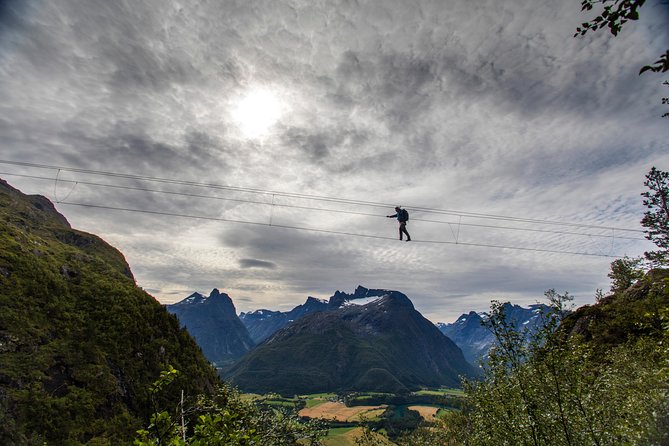
Norway has a way of turning simple climbing days into real stories. The Via Ferrata Åndalsnes West Wall is a half-day adventure with a guide, full technical gear, and jaw-dropping exposure in Romsdalen Valley. I love that you get all equipment sorted at the start, and you’re not guessing your way up. I also love the clear pacing, including an easy-to-follow walk-in, then a hike down to town. One drawback to plan for: you do need strong physical fitness, and the wall can feel reachy if you are very short or if conditions are wet.
At Norsk Tindesenter (Norwegian Mountaineering Center), you’ll handle the important stuff first. That means safety check, equipment instructions, then a short walk to the start. After the climbing sections, you’ll hike down via Nesaksla/Rampestreken back toward Åndalsnes town and return to the center.
In This Review
- Key points before you go
- Entering Romsdalen’s West Wall: what the climb really feels like
- Norsk Tindesenter start: safety brief, gear check, then a short walk
- On the wall: how the West Wall sections typically challenge you
- Your guide experience: safety, confidence, and even photos
- Descent and back to town: Nesaksla/Rampestreken hike time
- Price and value: what you get for $214.64
- What to bring: small items that prevent big annoyances
- Timing, group size, and why pacing can vary
- Who should book the West Wall via ferrata
- Should you book this tour?
- FAQ
- Where is the meeting point for Via Ferrata Åndalsnes West Wall?
- What time does the tour start?
- How long is the tour?
- What is included in the price?
- What should I bring since gloves and shoes are not included?
- Is food and drink included?
- How big is the group?
- Is the tour offered in English?
- Is there a cancellation fee or refund if plans change?
Key points before you go
- Small group size (max 16) so you usually get good attention on tricky moves.
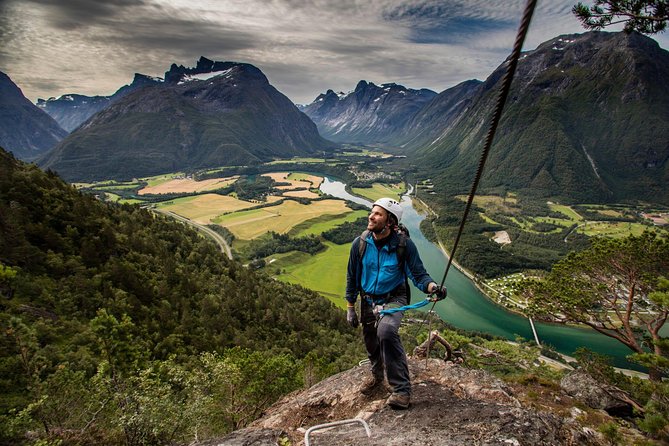
- West Wall route in Romsdalen Valley with exposed sections and several overhangs.
- Full technical equipment included, plus a guide who actively manages confidence and safety.
- Plan for a hike down, not just a climb, ending back at the meeting point.
- Gloves and hiking shoes aren’t included, and wet rock can make that more important.
Entering Romsdalen’s West Wall: what the climb really feels like
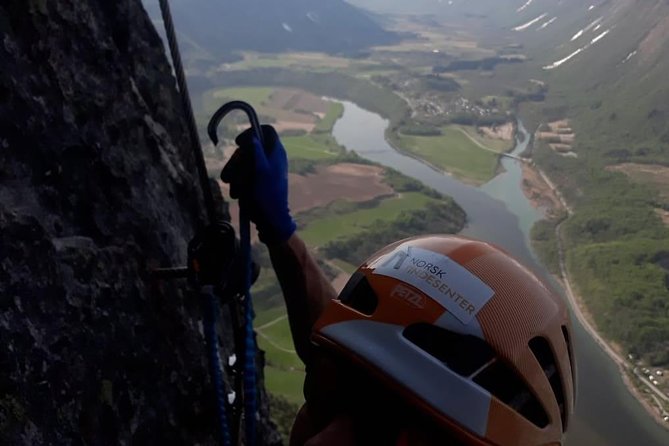
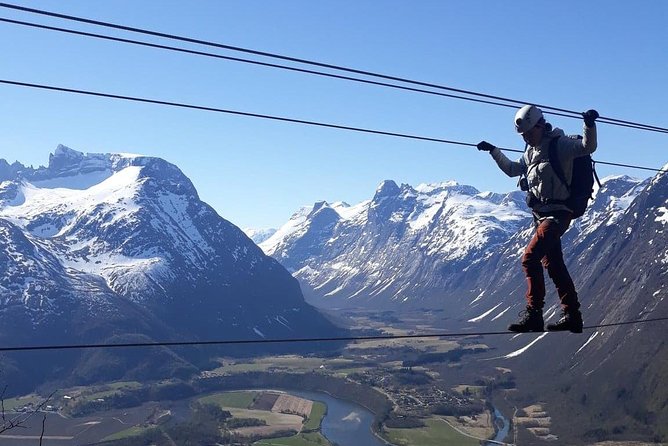
This isn’t a casual walk-up. You’ll be attached to fixed protection the whole way, so your job is focused on movement, balance, and breathing. The West Wall experience is known for being both dramatic and technical in the parts that matter.
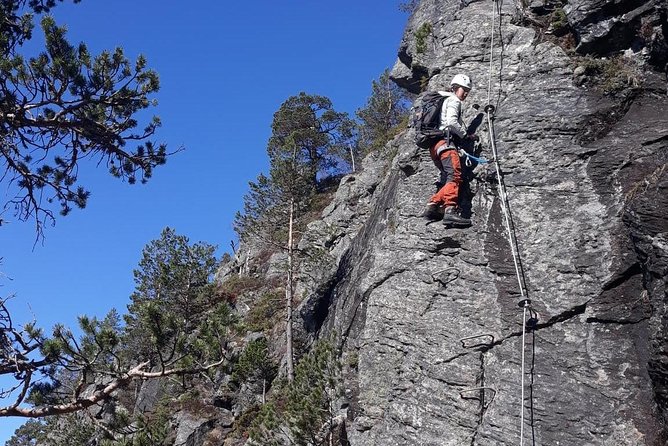
What I like most for first-timers and improvers is that the route mixes metal aids (bars, rings, and foot holds) with natural rock sections. That matters because it means you are not fighting every move with only your hands. Instead, you can build rhythm: clip, shift your feet, test the next hold, repeat.
The other thing that comes through again and again is exposure. You’ll see a lot, and you’ll feel it. One review called out vertical and very exposed wall segments, and that matches how these West Wall styles tend to work. It’s not just “tall,” it’s “out-there.” The guide’s job is to keep you calm while you manage that feeling.
Overhangs are another highlight. Multiple climbers described at least a few overhanging challenges, with good holds that still demand extra upper body effort. If you are the type who gets nervous when the rock angles toward you, plan to rely on technique, not force. The lanyard system helps you keep steady, but you still need to place your body right.
Norsk Tindesenter start: safety brief, gear check, then a short walk
Your day begins at Norsk Tindesenter, at Havnegata 2, 6300 Åndalsnes. The tour starts at 9:30 am and ends back at the meeting point. You’ll be in an English-speaking group, and it’s designed for up to 16 participants, which keeps things controlled on safety and spacing.
Right after you arrive, the guide goes through security declarations and reviews the equipment you’ll use for the via ferrata. This is the part that makes the rest of the climb feel manageable. In practice, it helps you avoid the most common mistake: treating a via ferrata like a playground while your harness and lanyards are still unfamiliar.
After the gear check, you walk about 20 minutes to the starting point. That short approach walk is useful. It gives your body time to warm up, and it lets you get your bearings before you’re stuck making decisions while attached to the wall.
One tip that sticks with me from people who’ve done this route: use the restroom before you start. Also, be aware that you typically won’t be taking your harness off during the trip. If water or snacks are in your plan, think practical. A camelback style setup can make hydration easier while you’re clipped in, and you can sip without stopping to dig into bags.
Where the path branches next in Andalsnes
On the wall: how the West Wall sections typically challenge you
The West Wall climb is where you’ll feel the biggest mix of thrill and effort. Reviews describe it as not necessarily “gym-hard,” but it does demand fitness and stamina. Expect steep uphill climbing in and around sections, especially early and between harder parts.
Here is what to expect in real terms:
- Steep upward sections at the start
Some people found that the steep up-climbing segments were harder than the vertical wall themselves. That matters because the start can trick you into burning too much energy too early.
- A mix of clips and hand placement
One review highlighted that the route leans heavily on traditional metal bars and rings for many moves. That usually makes it more doable than pure rock climbing, but it can still be tough on grip endurance.
- Overhangs that test body positioning
Several climbers described multiple overhangs. The good news is that there are helpful holds. The bad news is that you may need more upper-body control to get your hips and shoulders past the angle.
- Exposed vertical wall segments
When you’re higher and the wall drops away, your brain reacts. This is where a calm guide makes a big difference, not just for safety, but for momentum.
Wet conditions change everything. One review described the route as wet and muddy in places after heavy rain. If the bars feel slick or the footing feels unstable, you will want to move slower, clip more deliberately, and trust the guide’s line choice. Even in misty or cool weather, people still completed the route safely, but it required attention.
If you’re short, pay special attention to reach. One climber who is quite short said it was doable with extra effort and helpful guidance. Another person suggested that if you’re under about 5 feet 4 inches, certain sections might be harder because you have to reach clips and holds with less leverage. Translation: the route is fair, but your height changes how often you feel stretched out.
Your guide experience: safety, confidence, and even photos
A via ferrata guide is not just a “watcher.” The best guides teach your hands where to go and your feet how to move, especially around the tricky bits.
On this route, multiple reviews specifically praised guides by name. Mathias was described as fun and informative, with lots of reassurance that kept the group feeling safe. Isaac earned points for being professional and funny, with stories about the trolls said to live in the area. Another climber praised Axel for making all the difference on a first via ferrata, describing the route ahead of time and showing how to handle tricky parts.
That guide style matters because the West Wall is not mindless. When you are clipped in, you still make micro-decisions: where to look, when to test a hold, how to keep your breathing steady before the next clip. A guide who times those cues well can make the whole experience feel smoother.
Also, one bonus people mentioned: guides may take photos and videos during the climb. That’s not guaranteed by the core tour description, but it’s a nice example of what the guide operation can include in practice.
Descent and back to town: Nesaksla/Rampestreken hike time
After you finish the climbing sections, the day shifts to legs. You’ll hike down via Nesaksla/Rampestreken to Åndalsnes town, then return to the center.
This descent is part of the overall experience, not just an afterthought. It’s your reset moment. Your arms and shoulders will likely appreciate it, while your legs keep working. If you’ve never done via ferrata before, remember that you are still in an active outdoor day. Plan for tired muscles, especially if the wall took longer than expected.
People also talked about the gondola and a restaurant in the area for day-planning comfort. The key point for you is this: the via ferrata itself includes the hike down back toward town. If you want to use other local options like a gondola for a separate plan or an extra ride, you can, but it’s not presented as part of the core program.
Still ahead on the route through Andalsnes:
- Andalsnes Shore Excursion: the Troll Road and Troll Wall
★ 4.5 · 144 reviews - Geiranger: Excursions.no Mount Dalsnibba & Eagle’s Bend
★ 4.5 · 101 reviews - Åndalsnes – Panoramatour Trollstigen & Troll Wand
★ 4.1 · 97 reviews - Via Ferrata Åndalsnes Intro Wall
★ 5.0 · 84 reviews
Price and value: what you get for $214.64
At about $214.64 per person for a 6-hour (approx.) experience, this tour can feel pricey at first glance. Here is why it still makes sense for most people who want a safe, guided day.
You are paying for three big value pieces:
- A professional guide, who handles the route knowledge and safety management.
- All technical equipment for via ferrata climbing.
- GST included in the price.
That combination reduces your risk and your hassle. You’re not trying to source gear last-minute, and you’re not figuring out how the safety system works in a place where mistakes are costly.
What’s not included is also clear. You’ll need to plan for food and drinks unless specified, and you should bring rubber gloves and hiking shoes on your own.
If you want a practical budget, I suggest you treat this as: pay for the climbing package, then cover your comfort items yourself. That includes water, a light snack, and footwear that gives stable grip on wet stone.
What to bring: small items that prevent big annoyances
The tour includes your climbing equipment, but your comfort gear matters. Here’s what you should plan around:
- Rubber gloves
Not included. Several climbers recommended gloves to avoid blisters, and especially if conditions are wet.
- Hiking shoes
Not included. This matters most on the descent and on muddy or slick sections.
- Water and snacks
Food and drinks aren’t included unless specified. A camelback-style setup can help you stay hydrated without constant stopping.
- A rest-stop mindset
Consider using the restroom before you start, since you won’t be taking your harness off during the activity.
If you’re thinking about clothing, focus on comfort for climbing and hiking. The wall and hike back to town are both part of the physical load, so dress for movement, not just warmth.
Timing, group size, and why pacing can vary
This is listed as around 6 hours, and that estimate makes sense for a group with normal pacing and some teaching time. But real time can vary based on how quickly the group moves through clips, rests, and the trickier segments.
The tour caps at 16 travelers, and smaller group conditions can speed things up. One account described finishing in under 3 hours for two fairly inexperienced climbers, and another described a faster time when the group was not busy on the wall. Translation for your planning: if you’re comfortable and moving smoothly, you might finish earlier than the full half-day block. Still, treat the day as active and expect you’ll spend meaningful time on the wall and the hike down.
Also, the tour is popular enough that it’s often booked about 25 days in advance. If you are traveling in peak season or you have tight plans, don’t wait until the last minute.
Who should book the West Wall via ferrata
This is best for people who want a guided, safe-feeling outdoor climbing challenge with serious views. If you have strong fitness, you’ll likely enjoy it even if you’re new to via ferrata.
It suits you if:
- you want a thrilling Norway nature day with a structured guide
- you like climbing style challenges but want the fixed protection of a via ferrata
- you want to handle equipment and safety setup without DIY stress
- you enjoy exposed experiences and scenic rewards
It may feel like the wrong fit if:
- you don’t have strong physical fitness for steep uphill effort and a hike down
- you hate the idea of overhangs and reachy hand and foot placements
- you’re going in with no gloves and no hiking shoes, especially if weather is wet
And for shorter climbers, don’t automatically skip. One short climber managed the route with extra effort and a helpful hand from the guide. Just go in with the right expectations: some clips and holds may feel tight.
Should you book this tour?
I’d book it if you want the West Wall experience with the “pressure off” gear and safety setup. The biggest strength here is that you’re not doing a complex climbing system alone. You get a guide, full technical equipment, and a route that delivers big exposure and big views.
Skip it or choose a different day if you cannot handle steep uphill effort or if you are going underprepared on gloves and shoes. Also, if you are particularly nervous about heights, take that seriously and rely on your guide’s pacing and reassurance.
If you want an authentic Norway adventure that feels like more than a scenic walk, this via ferrata is a strong match. Book it when you can, bring the right footwear and gloves, and go in ready to climb and hike.
FAQ
Where is the meeting point for Via Ferrata Åndalsnes West Wall?
You meet at Norsk Tindesenter, Havnegata 2, 6300 Åndalsnes, Norway.
What time does the tour start?
The start time is 9:30 am.
How long is the tour?
The duration is about 6 hours.
What is included in the price?
The tour includes a professional guide, all technical equipment, and GST.
What should I bring since gloves and shoes are not included?
Rubber gloves and hiking shoes are not included, so you’ll need to bring them yourself.
Is food and drink included?
Food and drinks are not included unless specified.
How big is the group?
The maximum group size is 16 travelers.
Is the tour offered in English?
Yes, the tour is offered in English.
Is there a cancellation fee or refund if plans change?
This experience is non-refundable and cannot be changed for any reason.
Newly marked on the map for Andalsnes
- Geiranger Fjord Tour with Waterfall Tasting★ 4.5 · 13 reviews
- 2-Hour Guided Kayak Experience in Geiranger★ 4.5 · 14 reviews
- Geiranger: Excursions.no Geiranger Highlights★ 3.5 · 19 reviews
- The Golden Train on Rauma Railway in Romsdalen★ 4.5 · 21 reviews
- Geiranger: Sky to Fjord Downhill Biking Adventure★ 4.5 · 23 reviews
- Kayak Tour with Waterfall Views in Geiranger★ 4.5 · 45 reviews
- Guided kayak tour “The Seven Sister Tour” on the Geiranger Fjord – 4 h★ 5.0 · 47 reviews
- Via Ferrata Åndalsnes Intro Wall★ 5.0 · 84 reviews
Andalsnes Tours & Activities, compared.
Geiranger Shore Excursion: Mt. Dalsnibba and Eagle Road
Read our review →
Andalsnes Shore Excursion: the Troll Road and Troll Wall
Read our review →
Guided kayak tour “The Seven Sister Tour” on the Geiranger Fjord – 4 h
Read our review →Browse the lists this tour appears in