
Reviewed · OSLO TOURS & ACTIVITIES
Unknown war. Oslo and Norway during 1940-45
Oslo hits different when the war comes into focus. This 1940-45 WWII walk through the city center uses WWII Oslo landmarks and period photos to explain what occupation and resistance looked like on real streets.
I love how Rami pins the story to what you can see in front of you. The stop-by-stop approach is built around matching old pictures to the exact spots, and it makes the occupation feel immediate rather than textbook. I also like the private, customizable format, so you can move at a pace that works for your group.
One thing to consider is that some major sites can involve paid entry. The Royal Palace, the Norwegian Parliament building, Nationaltheatret, and Akershus Castle and Fortress are listed as not included for admission, so you may want to plan for extra ticket costs if you go inside.
In This Review
- Key highlights to know before you go
- What makes this WWII Oslo walk feel different
- Royal Palace stop: power, symbolism, and what still looks familiar
- Karl Johans Gate and the Norwegian Parliament: the city’s main spine under pressure
- Stortorvet Kebab square and University square: where history meets daily routines
- Nationaltheatret and the Gunnar Sønsteby monument: culture and courage in one stop
- Akershus Castle and Fortress: the ending point that tightens the story
- Rami’s photo-led storytelling, and why it works
- How much this private WWII walk costs, and what you get for it
- Getting ready: meeting point, walking tempo, and weather reality
- Should you book this WWII Oslo tour?
- FAQ
- How long is the Oslo WWII walking tour?
- Where does the tour start and end?
- Is this a private tour?
- What language is the tour offered in?
- Are admission tickets included for the main sites?
- Does the tour run in poor weather?
- What is the cancellation deadline for a full refund?
Key highlights to know before you go
- A private 2.5-hour WWII walking route through Oslo’s historical center, ending near the Norway’s Resistance Museum
- Rami’s photo-and-place method: historic images shown at the same corners you’re standing on
- Occupation and resistance, explained with care and attention to what life looked like for ordinary people
- Big-city landmarks plus everyday squares, so you get more than only government buildings
- Flexible pacing that works for different interests and energy levels
- Good weather matters, since this is a walking tour outdoors
What makes this WWII Oslo walk feel different
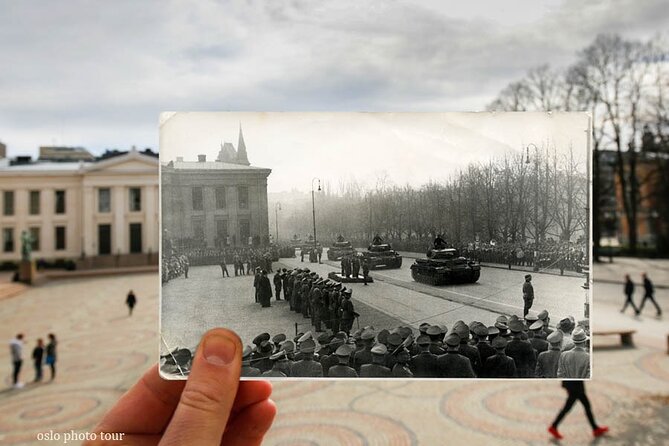
This tour has a simple idea: you are not just sightseeing, you are reading the city like a document. Oslo between 1940 and 1945 carries wartime traces in plain sight, from civic power centers to cultural landmarks. Rami guides you through those zones with a story arc that connects occupation to daily life and to resistance.
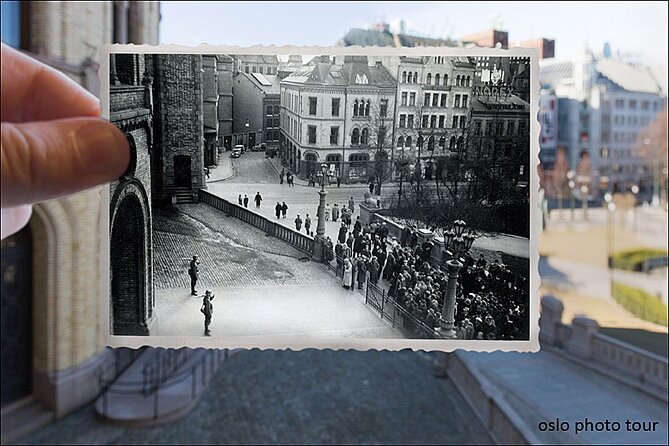
What I like best is the visual bridge. Instead of relying only on speeches and dates, you see historic photos linked to the same buildings and streets. That photo trick helps you understand how the war affected where people lived, worked, and gathered.
It is also framed in a balanced way. You do not get a one-note, good guys versus bad guys lecture. You get facts, context, and the uncomfortable gray areas that come with any occupation era, including how collaboration and resistance could exist side by side.
Royal Palace stop: power, symbolism, and what still looks familiar
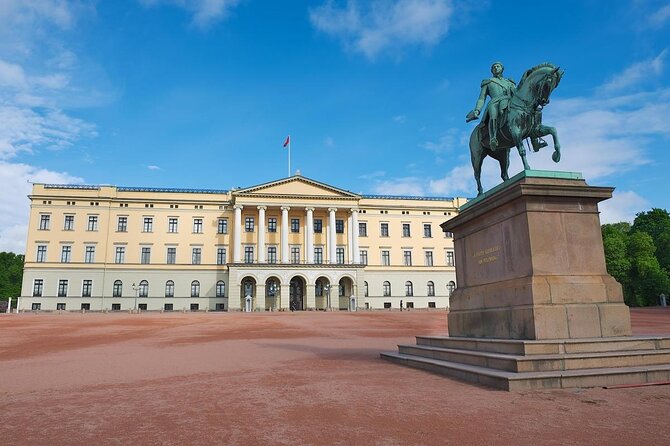
You begin at the Royal Palace area, a starting point that sets the tone fast. Even if you have never studied Norwegian history, the message is clear: the occupation era touched the highest political symbols in the country.
As you walk nearby, Rami’s focus is less about the palace as a postcard and more about what it represented during those years. You learn how control of institutions trickles down into rules, restrictions, and pressure on daily routines.
Practical note: admission is not included at this stop. If you want to go inside, you will need to plan for tickets and timing. If your group prefers to keep things mostly outdoors, you can still get a lot from the street-level context and the photo comparisons.
Where the path branches next in Oslo



Karl Johans Gate and the Norwegian Parliament: the city’s main spine under pressure
From the Royal Palace area, you head toward Karl Johans Gate, Oslo’s major boulevard and a natural stage for how wartime forces moved, watched, and governed. This is one of those streets that feels obvious today. The tour makes it feel newly complicated, like you are seeing the same boulevard through a different lens.
Rami connects the area’s significance to World War II in Norway in a way that feels grounded. Instead of treating the war as a distant event, the stories describe what occupation could mean in a city where people still had to commute, work, study, and find ways to survive.
Then you reach the Norwegian Parliament area. The focus here is not only politics as abstract ideas. It is politics as physical presence. When buildings are central to government, occupation changes what happens around them. You learn how authority works during wartime, and why civic spaces became charged with tension.
Admission is listed as not included for this stop too, so consider whether you want to pay to enter. Either way, the value comes from the explanation tied to what you see and the photographs that show how the streets looked before today’s details took over.
Stortorvet Kebab square and University square: where history meets daily routines
Not every part of the story happens at government buildings. You also stop in areas tied to everyday city life. Stortorvet Kebab at the market square gives you a chance to step into the kind of public space where people gather, talk, and go about their errands.
This matters because occupation is not only made of official documents. It is made of line-ups, conversations, and choices people made under watchful conditions. Market squares are perfect for that theme, because they already feel human, and the tour keeps the focus on people, not only uniforms.
Next comes the University square area, specifically connected to the Faculty of Law. Universities and legal institutions often sit at the intersection of power, rights, and enforcement. Even without going inside, you get context for why the legal side of society mattered during occupation years.
Admission is listed as free for the University square stop. That means you can spend more time listening and less time managing tickets.
If your group likes history that shows up in normal life, this is the segment that delivers. It is also a good spot to ask questions, because the setting makes abstract concepts feel less distant.
Nationaltheatret and the Gunnar Sønsteby monument: culture and courage in one stop
Oslo’s Nationaltheatret area is both cultural and visually striking. It also works well for a WWII story because theaters are gathering places in any era. When power is contested, cultural spaces can take on added meaning.
Rami ties what you see around Nationaltheatret to the war and to the resistance story, including the Gunnar Sønsteby monument. Sønsteby is a name you will hear more than once in Norwegian WWII conversations, and here the tour gives you a clear reason why.
This stop tends to be a favorite for history lovers and for anyone who wants the war story to include courage and personal action, not only fear and compliance. The monument area gives you a place to slow down. The photos help too, because you can compare the modern surroundings with how events played out in the same public zone.
Admission is not included at Nationaltheatret, so think of this as a storytelling and photo stop more than a museum stop. If you do want to go inside a venue, plan extra time, since your walking route already runs as a tight 2.5-hour experience.
Still ahead on the route through Oslo:
- Oslo: 24 or 48-Hour Hop-On Hop-Off Sightseeing Bus GrayLine
★ 4.0 · 2,088 reviews - Oslo: 100% Electric Oslofjord Sightseeing Cruise
★ 4.4 · 2,041 reviews - Oslo: Fjord Evening Cruise with Shrimp Buffet
★ 4.5 · 1,956 reviews - Oslo: Guided Sightseeing Fjord Cruise on Premium Silent Boat
★ 4.7 · 1,826 reviews
Akershus Castle and Fortress: the ending point that tightens the story
You finish at Akershus Castle and Fortress, near Norway’s Resistance Museum. Ending here is smart, because it pulls the thread from the earlier civic and everyday stops into a more concentrated wartime setting.
Akershus is one of those places that feels like it has always been important. The tour uses that sense of weight to explain why fortresses, command structures, and the surrounding grounds mattered during the occupation and the resistance period.
This is where the tour’s broader meaning lands. If earlier stops help you understand how occupation affected daily life across Oslo, the Akershus area helps you connect that daily reality to the larger struggle around power and safety.
Admission is listed as not included at Akershus, but the tour still gives you what you need: the walking route plus the explanations. Also, because the Norway’s Resistance Museum is nearby, you can extend your visit if your schedule allows. The museum hours are listed as Monday to Thursday, 9:00 AM to 4:00 PM, for the period shown on the tour details.
Rami’s photo-led storytelling, and why it works
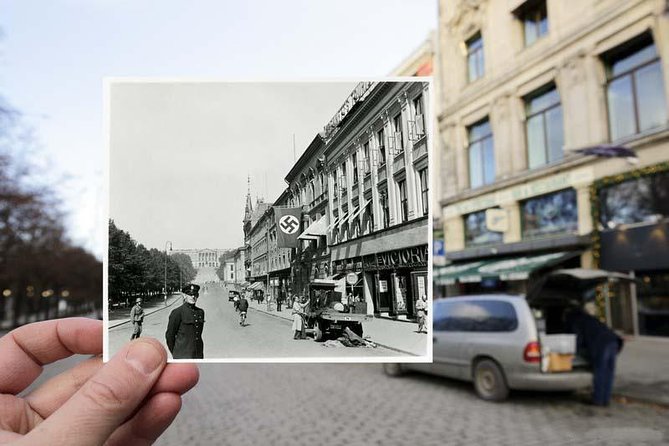
The consistent praise for this tour is not random. The approach is a simple mix of three things: places, photos, and clear narration.
Rami uses photos from the wartime period to show the same locations from the past. That might sound like an extra detail, but it changes how your brain processes history. You stop thinking in dates and start thinking in streets. The buildings stop being background and start becoming evidence.
Rami also brings a personal energy to the topic. The effect is that you get more than facts, you get momentum. The tour moves in short segments, about 10 minutes each at the main stops, which keeps things digestible even if you are tired from other days in Oslo.
One more thing that shows up in the experience is flexibility. The tour is private and customizable, so if you want more time on one subject, or you need to slow down, you can. That is a real value for couples, families, and anyone traveling with limited attention spans.
And yes, it is a walking tour, so bring normal city-walking common sense. If it is cold, wear layers. If rain is possible, pack a compact umbrella, since Oslo weather can change fast.
How much this private WWII walk costs, and what you get for it
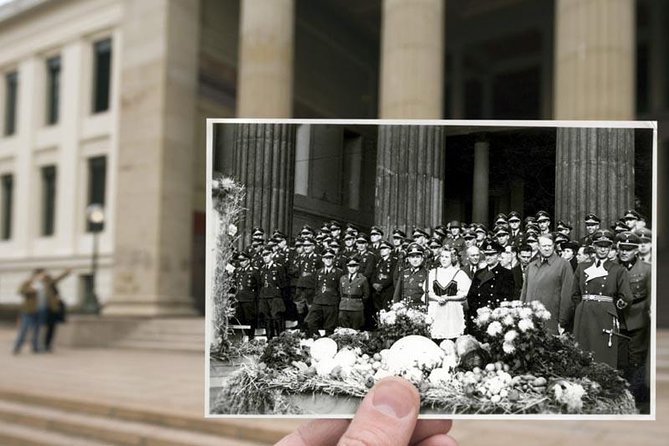
The price is $307.50 per group, for up to 5 people. On paper, that can look like a high daily rate. In practice, it often works out well because it is private, and you are paying for an expert guide who tailors the experience to your group.
Here is how I think about the value. A tour at this price becomes most worthwhile when at least two things are true for you:
- You want real depth on WWII in Norway, not just a quick highlight run.
- You are traveling with people who enjoy discussion, photos, and focused storytelling.
If you are a solo traveler, it can still be a great way to get personal attention, but your math depends on whether you would otherwise book a cheaper group tour and read about the rest later.
I also like the time efficiency. At around 2 hours 30 minutes, you get a concentrated storyline without swallowing an entire day. It fits nicely into a first-time Oslo visit, and it is a strong use of limited time if you are on a short schedule.
One extra practical tip: the tour is often booked well ahead of time, with an average booking window listed at 77 days. If you are traveling in peak seasons or on a tight itinerary, I would not wait.
Getting ready: meeting point, walking tempo, and weather reality
Plan for a downtown meeting at Karl Johan-monumentet in Sentrum, Oslo 0010. The ending point is Akershus Fortress in Oslo 0150, near the Norway’s Resistance Museum. That start and finish are useful because they keep you moving logically through the center, then depositing you at a major historic area.
The tour is offered in English, and you get a mobile ticket. If you are the type who hates digging through email confirmations, you will likely appreciate that.
In terms of who can join, most travelers can participate, and service animals are allowed. Since it is a walking route with multiple outdoor segments, comfortable shoes matter more than fancy outfit choices.
Weather matters here. The tour details state it requires good weather, and if it gets canceled due to poor weather, you are offered a different date or a full refund. Even when it is not fully canceled, rain can make the walking part less fun, so bring gear that handles damp streets. A small umbrella can save your mood and your photos.
Should you book this WWII Oslo tour?
Book it if you want WWII in Norway to feel specific, not generic. This tour is for you if you like walking through a real city while learning how occupation and resistance played out across everyday spaces, civic institutions, and cultural landmarks.
It is also a good choice if you enjoy photo-based storytelling. The wartime image comparisons are a major part of the magic, and they help you see the city with new clarity.
Skip it only if you are looking for a mostly casual overview with minimal walking and minimal talking. This is a guided narrative experience that works best when you are ready to listen and ask questions, even if the walk is short by Oslo standards.
If your goal is one great afternoon in Oslo that turns history into something you can picture, this is an easy yes.
FAQ
How long is the Oslo WWII walking tour?
It lasts about 2 hours 30 minutes.
Where does the tour start and end?
It starts at Karl Johan-monumentet in Sentrum, Oslo 0010, and ends at Akershus Fortress in Oslo 0150, near Norway’s Resistance Museum.
Is this a private tour?
Yes. It is a private tour, and only your group participates.
What language is the tour offered in?
The tour is offered in English.
Are admission tickets included for the main sites?
Admission is not included for several stops, including the Royal Palace, the Norwegian Parliament, Nationaltheatret, and Akershus Castle and Fortress. Some stops are free, like the market square at Stortorvet Kebab and University square.
Does the tour run in poor weather?
It requires good weather. If it is canceled due to poor weather, you will be offered a different date or a full refund.
What is the cancellation deadline for a full refund?
You can cancel up to 24 hours in advance for a full refund. If you cancel less than 24 hours before the experience starts, the amount you paid is not refunded.
Newly marked on the map for Oslo
- Oslo Scavenger Hunt and Highlights Self Guided Audio Tour★ 4.5 · 6 reviews
- Oslo easy walk★ 5.0 · 7 reviews
- Oslo: Oslofjord Electric Boat Cookie Cruise★ 3.8 · 7 reviews
- Oslo City Walks: The City of Contrasts★ 3.4 · 7 reviews
- The Oslo Beer Adventure★ 1.9 · 7 reviews
- 7-Day Scenic Scandinavian Tour from Oslo exploring Denmark, Sweden and fjords in Norway★ 4.5 · 7 reviews
- Private Oslofjord Island Hopping Tour★ 4.5 · 8 reviews
- Free Oslo Photo Tour: Iconic & Instagrammable Spots★ 5.0 · 8 reviews
Oslo Tours & Activities, compared.

Oslo Fjord Sightseeing Cruise by Sailing Ship
Read our review →
Scenic Fjord Cruise with Audio Guide Commentary
Read our review →
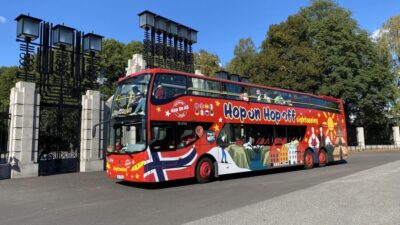
24 or 48-Hour Hop-On Hop-Off Sightseeing Bus GrayLine
Read our review →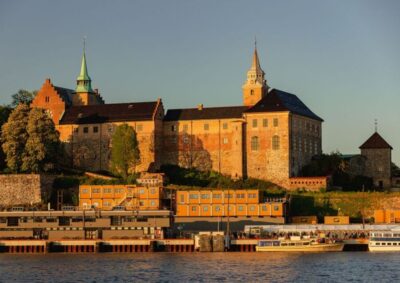
Guided Sightseeing Fjord Cruise on Premium Silent Boat
Read our review →
Browse the lists this tour appears in