
Reviewed · STAVANGER TOURS & ACTIVITIES
Stavanger: Prison Island Adventure Game
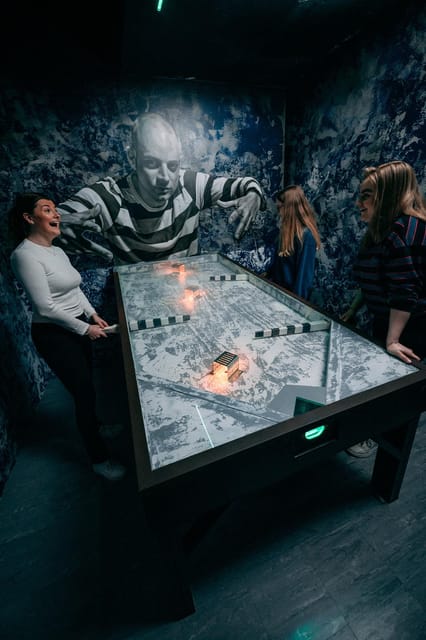
Prison Island in Stavanger is all attitude. You step into a prison-themed challenge setup at Fangene på Fortet, where teamwork and quick thinking matter more than fancy gear. It feels like a mix of escape rooms and TV challenge shows, with multiple game rooms that keep things moving.
What I like most is the way it pushes you to communicate. You solve puzzles and tasks together, and the shared scorecard turns the whole experience into a friendly competition. I also love the range of rooms and the chance to keep improving your score, so the fun does not end after one attempt.
One thing to consider: the game is played in English, so if your group is very rusty with English, some tasks may take extra time. Also, a few teams reported that not every challenge worked smoothly, so expect an occasional hiccup and roll with it.
In This Review
- Key highlights at a glance
- Entering Fangene på Fortet, where the prison theme drives the fun
- How the game flows: rooms, puzzles, tasks, and a team scorecard
- Timing and what 1 to 2.5 hours really means for your strategy
- Team play with 2 to 5 people: roles that work fast
- Inside the challenge rooms: what you are solving and how to handle obstacles
- Staff support and the no-personal-guide setup
- Price and value: $30 per person, and why the scoring matters
- Who should book Prison Island Stavanger, and who might not love it
- Should you book Prison Island Adventure Game in Stavanger?
- FAQ
- Where is the meeting point for the Prison Island Adventure Game?
- How long does the game take?
- What is the price per person?
- How big are the teams?
- What language is the game played in?
- Is the experience wheelchair accessible?
- What is included in the ticket price?
- Do you get a personal guide?
- Is transportation provided to and from the venue?
- Can I cancel and get a refund?
Key highlights at a glance
- Score as a team with a scorecard that keeps pressure fun, not stressful
- Many challenge rooms (one booking noted 46 options) so you are not stuck doing the same thing
- Try again to improve your results, which makes repeat visits and second attempts worthwhile
- Built for groups 2 to 5, perfect for families, friends, and work teams
- Physical comfort helps, since you will be on the move between rooms
- English game play, with staff able to greet you in English or Norwegian
Entering Fangene på Fortet, where the prison theme drives the fun
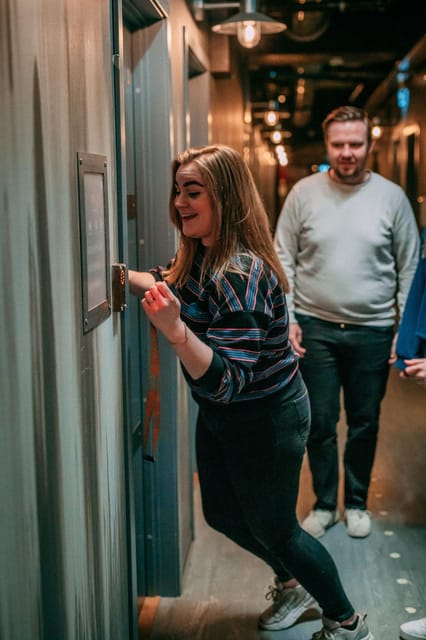
The adventure starts at Fangene på Fortet, at the welcome reception. Plan to arrive about 15 minutes early so you can get briefed and get your bearings before the clock starts. Once you are inside, the prison setting is not just decoration. It is part of the game feel, which helps even non-puzzle people stay engaged.
This is also one of those activities where the venue matters. Fangene på Fortet is set up to handle groups and multiple challenge rooms, so you are not wandering around trying to figure out what to do next. You get a clear start, then you jump into tasks that reward group coordination.
If your group has mixed ages or abilities, the format helps. The challenges are designed for different skill levels, so you can split roles naturally. One person might read the instructions closely, another might focus on physical tasks, and someone else keeps the team moving when you get stuck.
How the game flows: rooms, puzzles, tasks, and a team scorecard
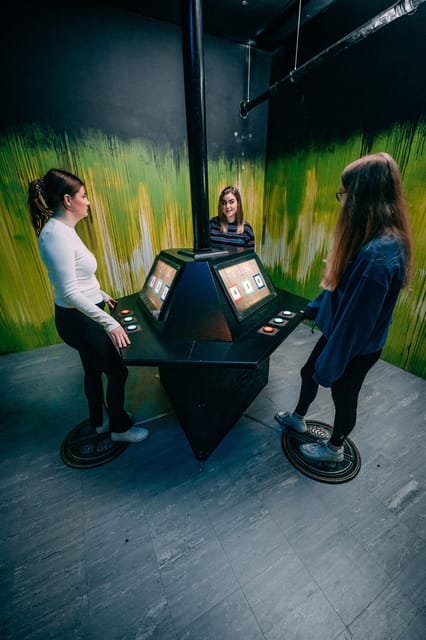
The core idea is simple. You go through multiple challenge rooms filled with puzzles, obstacles, and mission-style tasks. The goal is to solve what you are given, finish within the time limit, and rack up points together on the team scorecard.
The time pressure is key. It makes you stop overthinking and start collaborating. You are not just trying to escape one room, you are trying to manage momentum across several challenges. That is why the group size range (2 to 5 people) is perfect. In a small team, you can react quickly, swap roles, and keep the logic moving.
A nice twist is that you can try rooms again to improve your score. That matters because it changes the experience from one-and-done pressure to a more playful, learn-as-you-go challenge. If you miss a clue the first time, you do not lose the fun, you get a second shot.
Where the path branches next in Stavanger



Timing and what 1 to 2.5 hours really means for your strategy
The duration is listed as 1 to 2.5 hours, and you check availability for starting times. In practice, that range changes how you plan. With shorter sessions, you need to keep decisions quick and avoid long detours. With longer time, you can afford a bit more exploration and more careful puzzle-solving.
One useful move is to treat the first room like a warm-up. You learn how the venue expects you to communicate, whether tasks are solved by observation, physical interaction, or combining clues. Then you adjust. You will likely feel the pace pick up after the first challenge.
If you tend to get stuck in a loop, bring the team back to the mission. Pick a default rule like this: if one idea fails in a set time, you rotate roles and try a different approach. It sounds basic, but it keeps your score moving when a puzzle refuses to click.
Team play with 2 to 5 people: roles that work fast
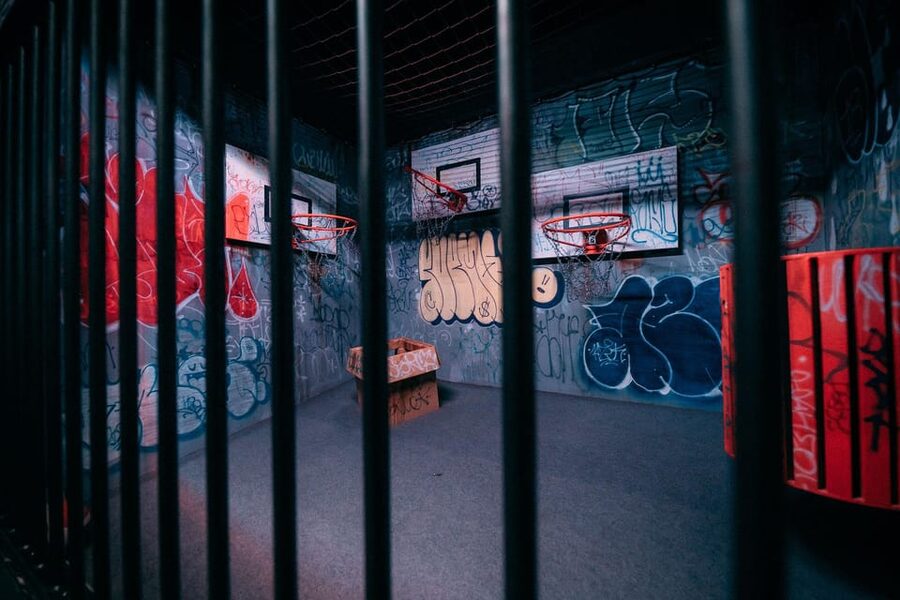
This game is built for teamwork and communication, and it shows immediately once you start. With two people, you have to be very deliberate. You cannot split into too many roles, so you rely on clear back-and-forth. With three to five people, you can distribute tasks without losing cohesion.
Here is a practical way to split up without overcomplicating it:
- One person acts as the “reader” who tracks instructions and key clues.
- One person acts as the “doer” for hands-on or obstacle sections.
- One person acts as the “time and logic checker,” watching the clock and prompting the next step.
- For teams of four or five, add a “tester” role to try ideas without derailing the group.
This setup helps because these rooms often reward the combination of logic and movement. If you only focus on one type of challenge, you can hit friction. When everyone contributes, the team tends to recover faster from mistakes, which directly impacts your score.
Inside the challenge rooms: what you are solving and how to handle obstacles
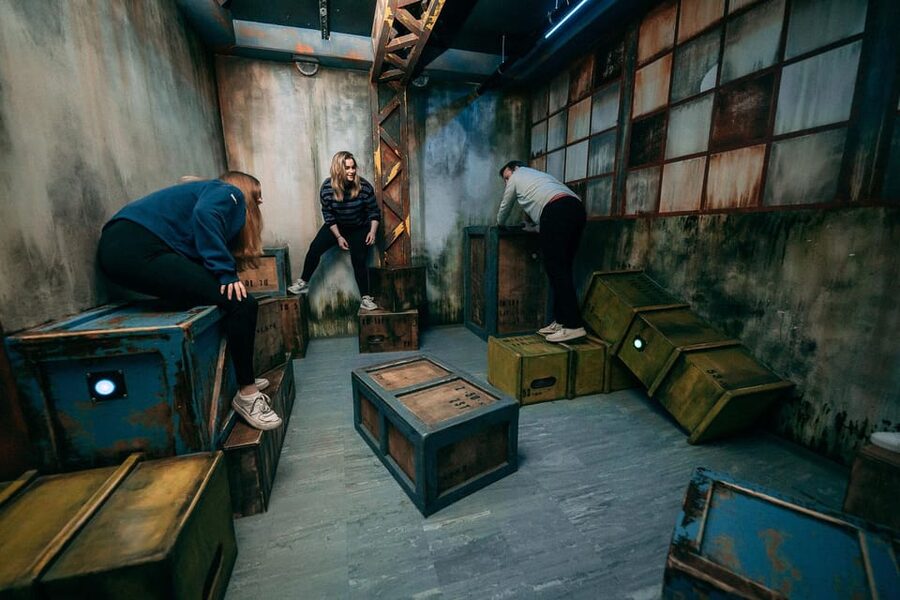
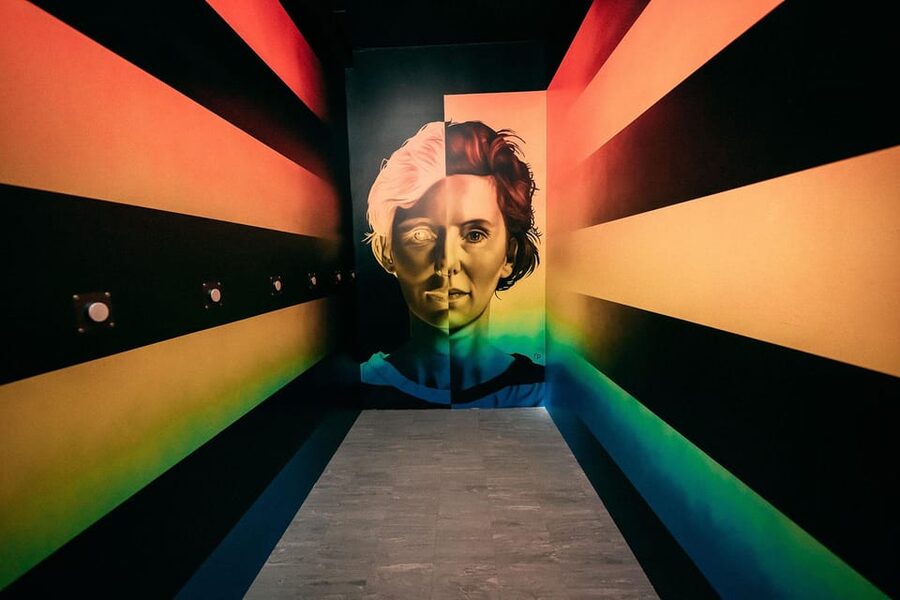
Each room presents a new task, usually with a puzzle element plus a physical or procedural component. That combination is why the experience tends to land well across different ages. It is not all mind games, and it is not all running around. You get a blend.
Expect to solve puzzles, overcome obstacles, and complete tasks within the set time. The obstacles are part of the game design, meaning you will not just walk in and out casually. Wear comfortable clothing and shoes that you can move in, since you will shift between challenges during the session.
The biggest “how to win” tip is simple: keep communication short and specific. Instead of long explanations, try quick calls like: what we noticed, what we tried, what we think the next action should be. When someone gets lost, the best teams do not argue. They reset, re-read, and try again.
Also, if you get a puzzle that is unclear, do not stall. Try to make progress on what you can see. Then, if you are missing something, rotate roles. The format is designed to be challenging but fair, and staff are there to keep things friendly if you need help understanding what you are supposed to do.
Still ahead on the route through Stavanger:
- From Stavanger: Lysefjorden & Pulpit Rock RIB Boat Tour
★ 4.8 · 1,156 reviews - Lysefjord RIB Safari from Stavanger
★ 5.0 · 665 reviews - Haugesund Shore Excursion: Åkrafjorden & Langfoss waterfall
★ 4.5 · 554 reviews - Guided hike to Pulpit Rock Preikestolen
★ 5.0 · 390 reviews
Staff support and the no-personal-guide setup

You do not get a personal guide included. Instead, the experience relies on a self-guided flow with a briefing and then game instructions inside the rooms. That can be great for groups who enjoy figuring things out together. It is also why teamwork matters so much. You are not waiting on an instructor to tell you every step.
Staff do show up as helpful and friendly, especially at the start and when you need guidance. That support helps reduce frustration, which is important because these puzzles can be tricky. It is still your job to work the challenges, but you are not left alone if you truly do not understand.
One more practical point: the game is played in English. The staff you meet are available in English and Norwegian, but the game language is English. If your group has mixed language comfort, build in a little patience and keep instructions in view. Quick translation by the team often solves what feels like a language barrier.
Price and value: $30 per person, and why the scoring matters
The price is $30 per person, with sessions running 1 to 2.5 hours. On the surface, that might sound like a lot if you compare it to a normal attraction. But in an escape-room style challenge, you are paying for more than entry. You are paying for time, multiple rooms, puzzle design, and the competitive scorecard structure.
One booking shared that a group of four paid 103 euros for about 1.5 hours. That makes the cost per person around a level that often feels reasonable for an activity where you actually do stuff together. The value also improves if you have friends or family who enjoy games, because the experience turns into a shared memory instead of a passive stop.
The ability to try rooms again and improve your score also boosts value. You are not only paying for one attempt, you are paying for a chance to learn and do better. That is especially good if you have teenagers or competitive adults who want a rematch.
Who should book Prison Island Stavanger, and who might not love it
This works best if your group likes puzzles and group problem-solving. It is a good fit for families, friends, corporate teams, and school groups, since it is designed to be suitable across skill levels. If you enjoy teamwork challenges, this will feel like a fun way to bond without turning into a forced icebreaker.
You might want to think twice if your group hates competitive time pressure. The game uses a set time limit and scoring, so it can feel intense if you prefer slow and relaxed activities. Also, if your group strongly struggles with English, some tasks may slow you down. The good news is that the team format helps, because one person can often interpret while others act.
Should you book Prison Island Adventure Game in Stavanger?
Book it if you want an active, team-based experience that is easy to group up for and built around problem-solving. The prison-themed rooms at Fangene på Fortet, the team scorecard, and the option to try rooms again make it a standout choice when you want something more interactive than sightseeing.
Skip it if your group needs a totally language-light activity or if you are looking for something quiet and low-effort. But if you are traveling with people who like puzzles, communication, and a bit of challenge, this one is a strong bet.
FAQ
Where is the meeting point for the Prison Island Adventure Game?
You meet at Fangene på Fortet, at the welcome reception.
How long does the game take?
The duration is listed as 1 to 2.5 hours, depending on starting time availability.
What is the price per person?
The price is $30 per person.
How big are the teams?
Teams can be from 2 to 5 people.
What language is the game played in?
The game is played in English. The host or greeter is available in English and Norwegian.
Is the experience wheelchair accessible?
Yes, the activity is wheelchair accessible.
What is included in the ticket price?
Entry to multiple challenge rooms and a team scorecard are included.
Do you get a personal guide?
No personal guide is included.
Is transportation provided to and from the venue?
Transportation is not included.
Can I cancel and get a refund?
Yes. You can cancel up to 24 hours in advance for a full refund.
Newly marked on the map for Stavanger
- Discover Sensational Stavanger: Self-Guided Audio Tour★ 3.5 · 7 reviews
- e-Scavenger hunt Stavanger: Explore the city at your own pace★ 4.0 · 7 reviews
- The Pulpit Rock Air★ 4.5 · 8 reviews
- Stavanger: 5-Hour Fishing Trip with Equipment and Guide★ 3.1 · 8 reviews
- Stavanger’s Historic Sites Smartphone App GPS Audio Walking Tour★ 5.0 · 8 reviews
- Stavanger/Sandnes: Preikestolen Guided Hidden Nature Hike★ 4.9 · 8 reviews
- Stavanger Private Safari and Fishing’s★ 5.0 · 8 reviews
- Discover Haugesund with the locals, visit the rising tides★ 5.0 · 8 reviews
Stavanger Tours & Activities, compared.

Electric Fjord Cruise to Lysefjord & Preikestolen
Read our review →
Haugesund Shore Excursion: Åkrafjorden & Langfoss waterfall
Read our review →

Lysefjorden & Pulpit Rock RIB-Safari from Stavanger
Read our review →Browse the lists this tour appears in