
Reviewed · 1-HOUR EXPERIENCES
Explore Oslo in 60 minutes with a Local
Oslo hits different when you walk it with a local. This 60-minute experience strings together the city’s biggest landmarks and a few less obvious stops, with recommendations you can actually use after the tour. You also get a small-group feel, with a pace that adapts to your interests and walking speed.
What I like most is the focus on getting your bearings fast and the chance to learn what to look for at places like the Opera House and Oslo Cathedral. You’ll also come away with specific suggestions for coffee, where to eat and drink, and what to do for the rest of your trip, not just a list of sights.
The one drawback to consider is logistics and expectations: this is a short walk, entry tickets are not included, and the route is not recommended if you have impaired mobility. Also, while most tours run smoothly, there has been at least one report of a guide not showing up, so it’s smart to be on time and keep your booking details handy.
In This Review
- Key things to know before you go
- Getting oriented fast in Oslo in about an hour
- What this Oslo walk includes (and what you still need to pay)
- Meeting point at Rådhusgata 32 and ending at Oslo Opera House
- Stop by stop: Opera House roof, Tiger at Jernbanetorget, and the civic core
- Stop 1: Oslo Opera House roof views over fjord and city
- Stop 2: The Tiger statue at Jernbanetorget
- Stop 3: Oslo Cathedral, murals and ceremonial traditions
- Stop 4: Norwegian Parliament and the politics behind the façade
- Stop 5: Oslo City Hall, grand murals and Nobel Peace Prize connections
- Why the small group up to 8 matters more than you think
- Using your local guide’s recommendations the right way
- Price and value: is $95.54 for 60 minutes fair?
- Weather and comfort tips for an Oslo walking route
- A quick note on reliability, based on real-world reports
- Should you book this Oslo in 60 minutes with a Local?
Key things to know before you go
- A very short, focused route: around 60 minutes, built for quick orientation.
- Small group of up to 8 people: you get more back-and-forth than on big bus tours.
- Local recommendations included: coffee, food and drink ideas, and plans for the rest of your Oslo time.
- Iconic stops plus a few curveballs: Opera House, Tiger statue, Cathedral, Parliament, City Hall.
- Weather can change the plan: stops may vary depending on conditions.
- Entry and transit costs are on you: tickets for public transport, museums, and monuments are not included.
Getting oriented fast in Oslo in about an hour

If you only have a slice of time in Oslo, this kind of guided walk can be the best use of your day. It is built around a tight route that makes the city feel logical, so later when you explore on your own, you are not bouncing around randomly.
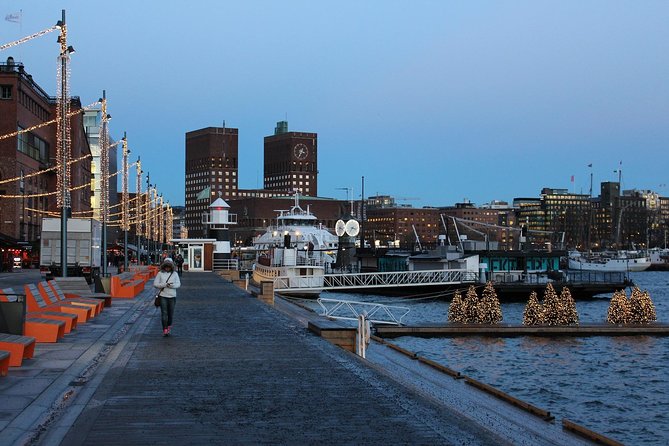
You start with the Oslo Opera House, which is more than a photo stop. The big draw is that you can walk on the roof area for wide views back over the fjord and the city. That roof perspective is useful because it gives you a mental map of where everything sits, water on one side and neighborhoods radiating out from the center.
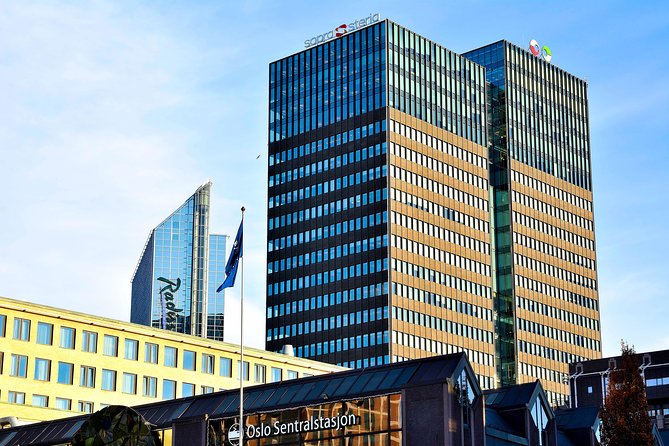
Then the tour pivots into civic Oslo. You will see the central-station area and landmark public buildings, which makes the city’s identity click in a way that museum-only visits often miss. For me, the value is that you are learning how Oslo’s public spaces work, not just collecting stamps.
What this Oslo walk includes (and what you still need to pay)
You pay $95.54 per person for a local-led, small-group experience in English, with a mobile ticket and a group-discount structure. The core inclusions are a local guide, a small-group experience (up to 8 people), and personalized recommendations for coffee, food and what to do next.
What is not included is also important. Personal expenses are on you, and entry tickets for public transportation, museums, and monuments are not included. That means if you want to go into any area that requires a paid ticket, you should plan to cover it separately.
In plain terms, you are paying for guidance and context, not for admission. That is a common setup in walking tours, and it usually works out best when you treat the stops as look, learn, then continue your day.
Where the path branches next in Oslo



Meeting point at Rådhusgata 32 and ending at Oslo Opera House
Your start point is Rådhusgata 32, 0151 Oslo, Norway. The end is at Oslo Opera House, Kirsten Flagstads plass 1, 0150 Oslo. You finish where the city looks its best for a quick self-guided wander, which is great if you like to keep momentum instead of turning back.
It is also listed as near public transportation, which matters because Oslo can be spread out. If you are traveling in and out of the center, you will likely find it easier to connect to the walk without wasting time.
One practical move: arrive a bit early and take a moment to check the exact meeting spot. There has been at least one issue in the past where a guide did not contact or show up, and while the platform refunded quickly in that case, your best protection is simple: be early, stay aware, and keep your confirmation details accessible.
Stop by stop: Opera House roof, Tiger at Jernbanetorget, and the civic core

This route is designed like a storyline. Each stop adds a different layer, architecture, public identity, and everyday culture. You also get flexibility, because the itinerary adapts to your interests and walking pace, and stops can shift with weather.
Because the tour is about 60 minutes, you should treat each location like a focused introduction. If you want deep time inside any building, plan to do that afterward on your own.
Stop 1: Oslo Opera House roof views over fjord and city
The Oslo Opera House is the first big anchor. It is iconic for a reason, but what makes it especially strong on a short tour is the immediate payoff: panoramic views over the fjord and the city from the roof area.
Even if you think you already know what the Opera House looks like, seeing it in person changes things. It sits in a way that makes the waterfront feel central, not distant. After this stop, you will likely understand why people describe Oslo as a city that balances city life with the water close by.
What to do with this stop: spend an extra minute finding your own angle. Look out for the skyline line and how the waterfront wraps around the center. That will help later when you do independent exploring.
Possible drawback: roof areas can be windy or slippery depending on conditions. Since the tour can vary with weather, wear shoes with decent grip and plan for a bit of standing and walking outdoors.
Still ahead on the route through Oslo:
- Oslo: 24 or 48-Hour Hop-On Hop-Off Sightseeing Bus GrayLine
★ 4.0 · 2,088 reviews - Oslo: 100% Electric Oslofjord Sightseeing Cruise
★ 4.4 · 2,041 reviews - Oslo: Fjord Evening Cruise with Shrimp Buffet
★ 4.5 · 1,956 reviews - Oslo: Guided Sightseeing Fjord Cruise on Premium Silent Boat
★ 4.7 · 1,826 reviews
Stop 2: The Tiger statue at Jernbanetorget
Next up is Jernbanetorget and the Tiger statue, which you will find in the central station area. It is a great stop because it is the kind of landmark most guidebooks skip over, even though it is right where people naturally flow through the city.
The Tiger matters because it gives you a quick sense of Oslo’s personality. It is not a grand building that demands silence. It is a public symbol in a busy transit zone, which makes it feel like part of daily life rather than a distant monument.
Why I like this stop on a short itinerary: it breaks up the heavy architecture and political sites. It also helps you orient yourself around the station district, which is handy if you plan to hop on trains or just use the station area as your base.
Practical note: station zones are active. If you are sensitive to crowds or noise, keep your expectations realistic and use it as a quick visual moment rather than a long stop.
Stop 3: Oslo Cathedral, murals and ceremonial traditions
Then you move into history and art with Oslo Cathedral. This stop focuses on what you can spot without needing a long visit: ceiling murals and the cathedral’s central role in Norwegian ceremonial traditions.
Ceiling murals are one of those details that people often miss when they rush. On a guided walk, you tend to get a stronger sense of where to look and what the symbolism is meant to convey. Even without going super deep, it adds emotional texture to the route.
The cathedral also gives you a sense of continuity. Oslo is often talked about as modern and design-forward, but this stop makes it clear that the city’s identity includes ceremony, tradition, and a long-lived sacred space.
Possible consideration: cathedrals can have rules about where you can stand and how loudly you can talk. Keep your volume down, and be ready for limited time since this is a 60-minute experience.
Stop 4: Norwegian Parliament and the politics behind the façade
After the cathedral, the walk shifts to the Norwegian Parliament. You get the classical architecture and guided learning about Norway’s political history.
This is a smart inclusion for an Oslo newcomer because political institutions shape how a country thinks and how it builds public life. When you understand the basics, you see the buildings as more than architectural backdrops.
One value of this stop is that it gives you a framework. You do not need to become an expert in Norwegian politics overnight. You just need enough context to ask better questions later when you visit other national landmarks or read about Norway.
Because it is a walk tour, you will likely get the big visual impressions from the outside and a guided story. If you want deeper detail through official tours or indoor access, plan to add that separately since entry tickets for monuments and similar sites are not included.
Stop 5: Oslo City Hall, grand murals and Nobel Peace Prize connections
The final stop is Oslo City Hall, known for grand murals and its link to the annual Nobel Peace Prize ceremony.
This stop is useful because it ties art and civic identity together. Murals on a city hall are not just decoration. They are part of public storytelling, the kind of thing a local guide can point out so you notice things you would otherwise walk past.
The Nobel Peace Prize connection is another reason City Hall works well in a short itinerary. It makes the building feel connected to the world, not only to local politics. Even if you do not plan to watch a ceremony, learning the connection helps you understand why this site is treated with respect.
Practical angle: plan to end your day here with the mindset that you have seen the core. The tour finishes at the Opera House, so you will have a nice arc for your evening plans, either staying nearby or continuing around central Oslo.
Why the small group up to 8 matters more than you think
This experience caps at 8 travelers, which is the sweet spot for a walking tour. With a larger group, questions get delayed and stops turn into quick look, move on, repeat. With a smaller group, the guide can adjust the pace and actually tailor answers to what you care about.
It also helps with practical moments. When the itinerary adapts to your interests and walking pace, you are less likely to feel like you are sprinting to catch up. That matters when the tour is only about an hour and you do not want it to feel rushed.
If you are the type who likes to ask, this tour is a good fit. You can bring questions like where to find a good coffee spot, where to eat nearby, or what makes sense to do next based on your schedule.
Using your local guide’s recommendations the right way
One of the best parts of this type of experience is not the landmarks. It is what you do after you finish walking.
You will get recommendations for the best places to get coffee and where to eat and drink, plus what to do for the rest of your trip. The key is to ask for choices you can act on immediately.
Here is how you can get more value in real time:
- Ask for one option close to where you are finishing, plus one option slightly away so you get a different flavor of the city.
- Tell your guide your food vibe, like quick and casual, sit down and enjoy, or something that feels local.
- Ask what area makes the most sense for your next block of time. You just ended near the Opera House, so the guide can point you to a smooth follow-on plan.
If you do this, the tour becomes more than 60 minutes. It turns into better decision-making for the rest of your Oslo days.
Price and value: is $95.54 for 60 minutes fair?
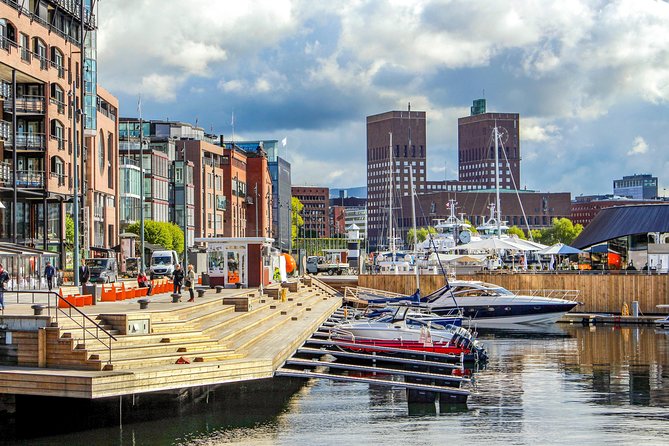
At $95.54 per person, this is not a budget add-on. The value comes from three things that tend to justify the spend for many first-time visitors: the local guidance, the small group size, and the practical recommendations.
You are essentially paying for:
- A tight route that covers multiple major landmarks in a short time
- Context you might not get by walking on your own
- Personal suggestions that help you avoid wasting time searching later
If you already know exactly what you want to see and you like planning yourself, you might prefer self-guided walks with a map. But if you want someone to point out what matters and steer your next decisions, this price starts to feel more reasonable.
The biggest value-to-cost factor is your situation. For a quick first day, when your time is limited, this tour can be a smart shortcut.
Weather and comfort tips for an Oslo walking route
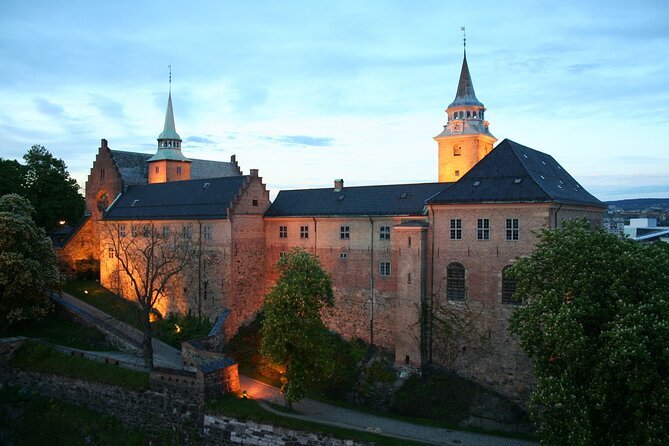
This experience is outdoors walking, and stops may vary depending on weather conditions. Oslo weather can change fast, even within a day, so it helps to be ready.
Bring:
- Comfortable shoes you can walk in for about an hour
- A layer for wind, especially near open waterfront-view areas like the Opera House roof
- Rain gear if forecasts look sketchy
Also note it is not recommended for guests with impaired mobility. That is a practical signal that you should expect stairs, curbs, and uneven walking surfaces during the route.
A quick note on reliability, based on real-world reports
There is a low-star review reporting a guide no-show and no contact at the meeting spot, followed by a full refund from the booking platform. That is not something you can ignore, even if it is only one data point.
How to protect yourself:
- Confirm the meeting location details you receive at booking
- Arrive a little early and wait within the expected timeframe
- Keep your confirmation ready in case you need to resolve an issue quickly
Most tours operate normally, but for your time and money, it pays to be proactive.
Should you book this Oslo in 60 minutes with a Local?
I would book this if you want a fast orientation to Oslo and you like learning through context, not just sightseeing. It is especially attractive if you only have one short window and you want a guided route that ends in a great location for continuing your day at the Opera House.
I would skip or rethink it if you need step-free access, if you want a longer, in-depth museum-style visit, or if you dislike paying for guidance when you prefer self-guided exploring.
If you do book, go in with a simple game plan: use the tour to understand what to look for, then use the local coffee and food recommendations to turn the rest of your time into a smooth, personal Oslo day.
Newly marked on the map for Oslo
- Oslo: WWII History Private Walking Tour★ 5.0 · 1 review
- Oslo: All-Inclusive Self-Guided Kayaking & Camping Adventure★ 5.0 · 1 review
- Kayak and Canoe Tour in Lake Bogstad★ 5.0 · 1 review
- Stand up paddleboard adventure in Leangbukta★ 5.0 · 1 review
- Oslo All Inclusive Private Walking Tour★ 5.0 · 1 review
- Sightseeing Private Tour of Oslo and Viking Ship Museum★ 5.0 · 1 review
- 3days tour to Flåm-næroyfjord(or Preikstolen Hiking)-Bergen★ 5.0 · 1 review
- Departure Private Transfer from Oslo City to Oslo Airport OSL by Luxury Van★ 5.0 · 1 review
1-Hour Experiences, compared.



Legendary Viking Treasures. One hour from Oslo. Private Tour.
Read our review →Browse the lists this tour appears in